ICNC's Academic Webinars are a series of online talks and visual presentations on critical ideas, cases, and questions related to civil resistance and nonviolent movements. They are intended for general learners, students, and interested professionals.
These hour-long webinars are offered bi-weekly, typically on Thursdays from 12:00-1:00pm EST. Scholars deliver 30-40 minute powerpoint presentations, which is followed by a 20-30 minute question and answer period. Preliminary readings may also be recommended prior to the presentation and will be sent in advance to those who register for the webinar.
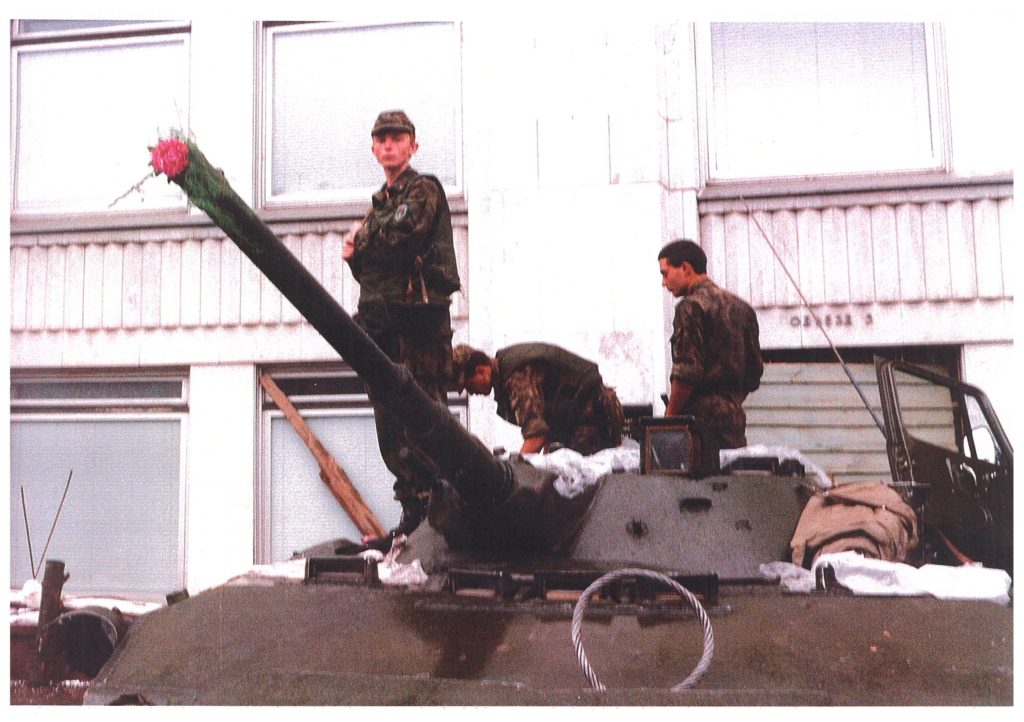
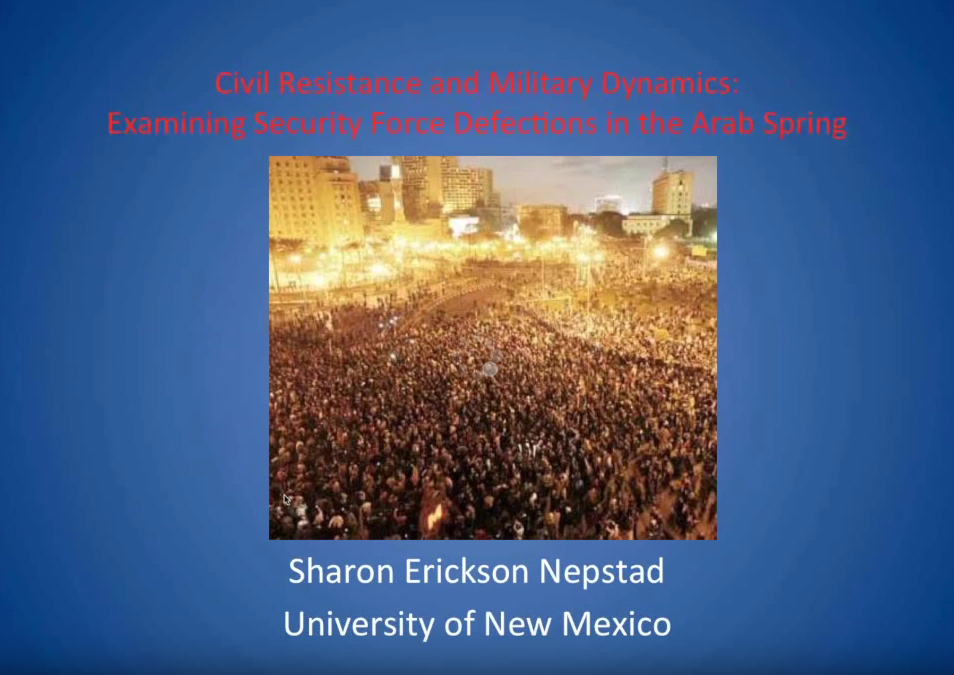
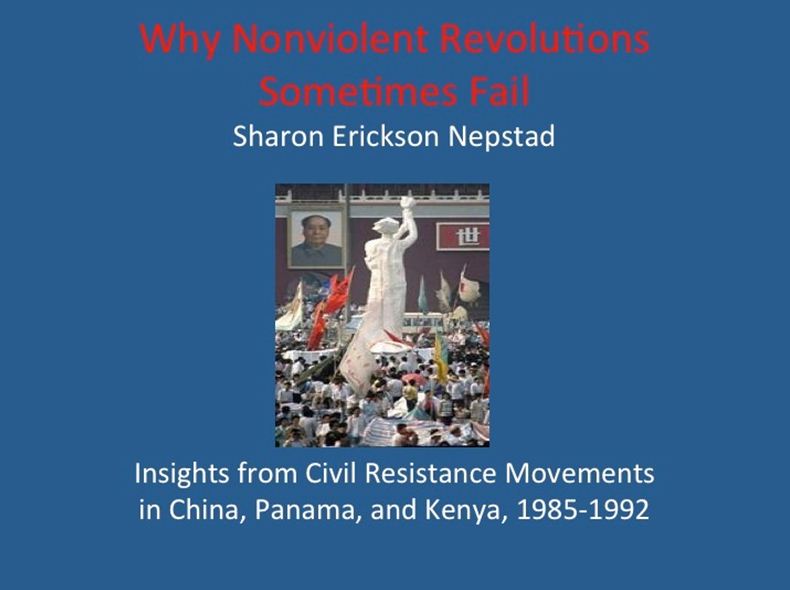
In the 1980s, the world was captivated as East Germans brought down the Berlin wall and the Filipino “people power” movement ousted long-standing dictator Ferdinand Marcos. Yet other civil resistance movements during this time failed to achieve political change. Researchers have largely focused on successful nonviolent uprisings. Little attention has been given to those movements that had great potential but did not achieve their goals. In this webinar, Dr. Nepstad explores three cases of failed civil resistance: the Chinese democracy movement of 1989, the struggle against Panamanian dictator General Manuel Noriega (1987-1989), and the attempt in Kenya to oust President Daniel arap Moi (1985-1992).
She highlights internal movement problems that undermined resisters’ effectiveness such as divided leadership, lack of cross-group cooperation, and insufficient nonviolent discipline. She also focuses on regime counter-strategies, including massive repression, maintaining troop loyalty, and the fragmentation of opposition groups. Additionally, Dr. Nepstad examines the impact of international sanctions, showing how they can generate new allies for authoritarian leaders and shift the locus of power from local resisters to international actors. She concludes by discussing what civil resisters can do to prevent these problems: building unity by emphasizing resisters’ shared goals; implementing careful measures to ensure nonviolent discipline, encouraging security force defections by increasing the costs of regime loyalty, and making judicious choices about international involvement.
Sharon Erickson Nepstad is Professor of Sociology at the University of New Mexico. She received her Ph.D. from the University of Colorado and did post-doctoral studies at Princeton University. She has been a visiting scholar at Notre Dame University’s Kroc Institute for International Peace Studies. Her areas of interest are in social movements, civil resistance, and religion. She is the author of numerous articles and three books: Nonviolent Revolutions: Civil Resistance in the Late 20th Century (published in 2011 by Oxford University Press); Religion and War Resistance in the Plowshares Movement (published in 2008, Cambridge University Press); and Convictions of the Soul: Religion, Culture, and Agency in the Central America Solidarity Movement (published in 2004, Oxford University Press). Her book on the Plowshares movement won the 2009 Outstanding Book Award from the American Sociological Association’s section on Peace, War, and Social Conflict.
When Occupy Wall Street and the ensuing Occupy movement captured the world's attention in the fall of 2011, the world wasn't exactly sure what hit it. Through a series of up-close portraits of the movement in both planning and execution, this webinar will explore how it has succeeded as well as what its challenges will be in the coming months. Drawing from his experience covering the Occupy movement since the early planning stages, Nathan Schneider will focus on the role of strategizing.
The story of Occupy Wall Street, of course, is not solely one about Occupy Wall Street. This was just one among other daring attempts to mount major mobilizations in the United States that season, several of which I was covering concurrently. As the Occupy movement spread, it became ever more clear that what was taking place was one manifestation of an emerging global movement. Now, as the movement enters an election year in the United States, it faces the challenge of launching a cluster of focused, interrelated campaigns, as well as mounting successful mass mobilizations that can change the media narrative and win tangible gains.
Nathan Schneider is an editor of Waging Nonviolence, a website of news and analysis on struggles for justice and peace around the world. Beginning in July and August of 2011, he was the first journalist to be allowed to cover the planning of what would become the Occupy movement. He has since written about it for Harper's, The New York Times, The Nation, the Boston Review, Truthout, Yes! magazine, The Catholic Worker, and more. He has also contributed to two of Occupy Wall Street's print publications, The Occupied Wall Street Journal and Tidal: Occupy Theory, Occupy Strategy.
In this webinar Bahraini journalist Nada Alwadi discusses the ongoing civil resistance movement in Bahrain (a small island monarchy in the Persian Gulf) which has been a part of the recent wave of popular revolts in the Middle East known as the Arab Spring. She revisits the timeline of events in Bahrain beginning in February 2011, when state repression of marches and protests around the country motivated the population to sustain their civil resistance mobilization and call for political reform. She also examines the role of U.S.-backed Saudi Arabia, which sent troops to help shore up the Bahraini monarchy and suppress the popular uprising. Alwadi sheds light on the media blackout in Bahrain, and the current political and communication challenges facing the country and its society in the wake of a brutal state crackdown on protesters, the media, hospital staff, and ordinary members of the movement. She also relates the untold story of a struggle which has been forgotten and abandoned by the world and received little coverage from international media outlets. Finally, Alwadi discusses the importance of civil resistance in Bahrain and its larger role in building a new, freer Middle East.
Nada Alwadi was a reporter for Alwasat, the most popular newspaper in Bahrain, and covered the pro-democracy protests this spring for multiple local and international media outlets (including USA Today). Ms. Alwadi was detained in April while reporting on the pro-democracy movement and forced to sign a statement saying that she would not write on or engage in any political activities, and was fired from her job. Ms. Alwadi is the co- founder of the Bahrain Press Association, which seeks to defend Bahraini journalists from government repression. She chose to leave Bahrain earlier this year due to concerns over her personal safety, and is currently working from the U.S. to spread knowledge about the situation in Bahrain and the Middle East as a whole.
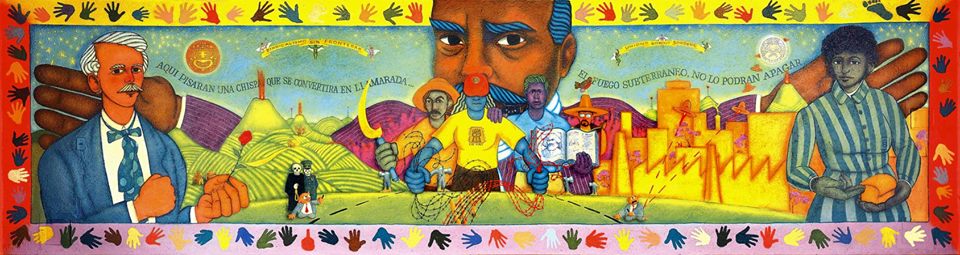
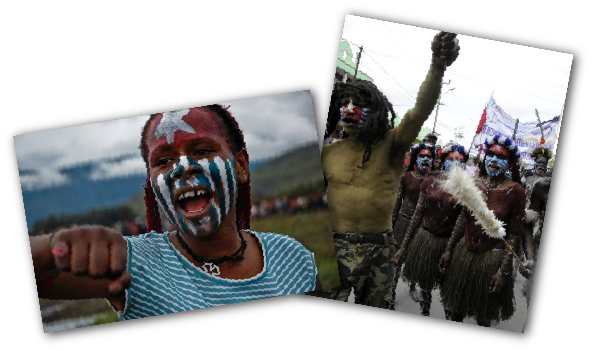
Nadine Bloch, creative resistance and nonviolent direct action educator and practitioner, explores how some of the most impactful and memorable moments from civil resistance and nonviolent movements are sung by the masses, printed by the thousands, enacted through craft, painted in vivid color, or performed in traditional dress. This webinar takes a critical look at Creative Cultural Resistance: the broad use of arts, literature, and traditional practices in the service of protest and political and social actions.
Nadine Bloch teases out the strategic powers of cultural resistance. Through compelling examples this talk covers the immense diversity of methodologies that have been employed in resistance, from 2-D and 3-D arts, to sound/music and theater/movement arts. From literature and crafts, to documentation and delineation of space, as well as rituals and language preservation, we will look at the power of cultural work in organizing, mobilizing and grounding actions.
"Often such little small cultural experiments open up space and possibility for the bigger changes to happen. The real seeds for revolutionary changes can grow in artistic practices."--John Jordan
"Art is not a mirror held up to reality, but a hammer with which to shape it."--Bertolt Brecht
"The role of the artist is to make the revolution irresistible."--Toni Cade Bambara
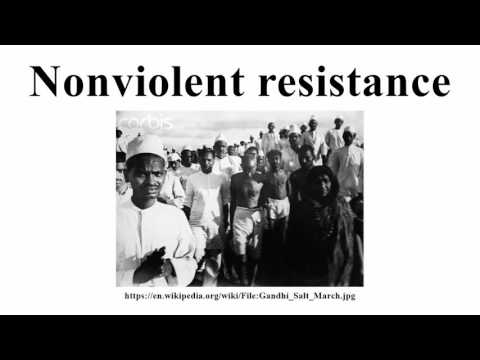
In this webinar Dennis Dalton, Professor Emeritus at Barnard College, Columbia University, examines the stages in Gandhi's life as a political theorist and activist, beginning with his birth into an orthodox Hindu family and his observance of the traditional Hindu ideal of nonviolence (ahimsa). The webinar looks at Gandhi's initial emulation of British culture and loyalty to the British colonial government in India (the Raj), followed by his subsequent disillusionment after an experience with racist rule in South Africa. Gandhi's campaign of mass civil disobedience against white apartheid shows him as an ultimate strategist in terms of his use of the media and mobilization of hitherto unpoliticized groups. Furthermore, his talents as a brilliant nonviolent strategist are exhibited through the case of the salt march and satyagraha, which are examined in depth. After the Amritsar massacre of 1919, Gandhi, in a spirit of forgiveness rather than retribution, moved to consolidate the last stage of his development, when he broke through narrow, exclusivist separatism to a broad, inclusivist embrace of human unity in a mature spirit of nonviolence. The context and meaning of each of these stages lead us to ask the question: what led Gandhi, when Indian terrorists demanded that he resort to their methods in the face of brutal British domination, to declare famously, "an eye for an eye and the whole world goes blind?" This is above all a story of an individual leader's journey to humanity, discovering a politics of both nonviolent strategic actions as well as a true compassion together with a quest for personal and political liberation.
In this webinar, Mary Joyce, Founder of the Meta-Activism Project, presents a framework that divides digital technology into seven activist functions: documenting, co-creating, mobilizing, broadcasting, synthesizing, protecting and transferring resources. She uses the recent case of the Egyptian Revolution to explore these functions. When thinking about the use of digital technology and social media in resistance we are often overwhelmed by anecdote. Look at a dozen cases and you will see three dozen examples of how activists are using digital technology in their work. This endless variety can be confusing not only to observers, but to activists themselves. There are few guidelines for what tech can and cannot do or strategic frameworks to use in planning whether and how to use digital technology in a campaign. Mary is an expert in the field of digital activism and travels the world training, speaking, and consulting on the topic. In 2007 she founded DigiActive.org, an all-volunteer organization dedicated to helping grassroots activists around the world use digital technology to increase their impact, and in 2008 she was New Media Operations Manager for Barack Obama’s national presidential campaign. She is also the editor of Digital Activism Decoded, the first book explicitly devoted to the topic of digital activism, to be published in the spring of 2010.
Presented by: Jørgen Johansen Lecturer and Faculty Member, Syracuse University, Strasbourg, France
This Webinar presents a short history of what civil resistance have achieved the last 90 years. This is the history of societal conflicts handled with peaceful means. How can unarmed movements succeed against states with their police and armies? What are the building blocks of a successful nonviolent strategy?
It includes a discussion on the recent development in Northern Africa and Middle East. What can be expected in the time to come and what are the main obstacles when a movement moves from 'opposition' to 'position?'
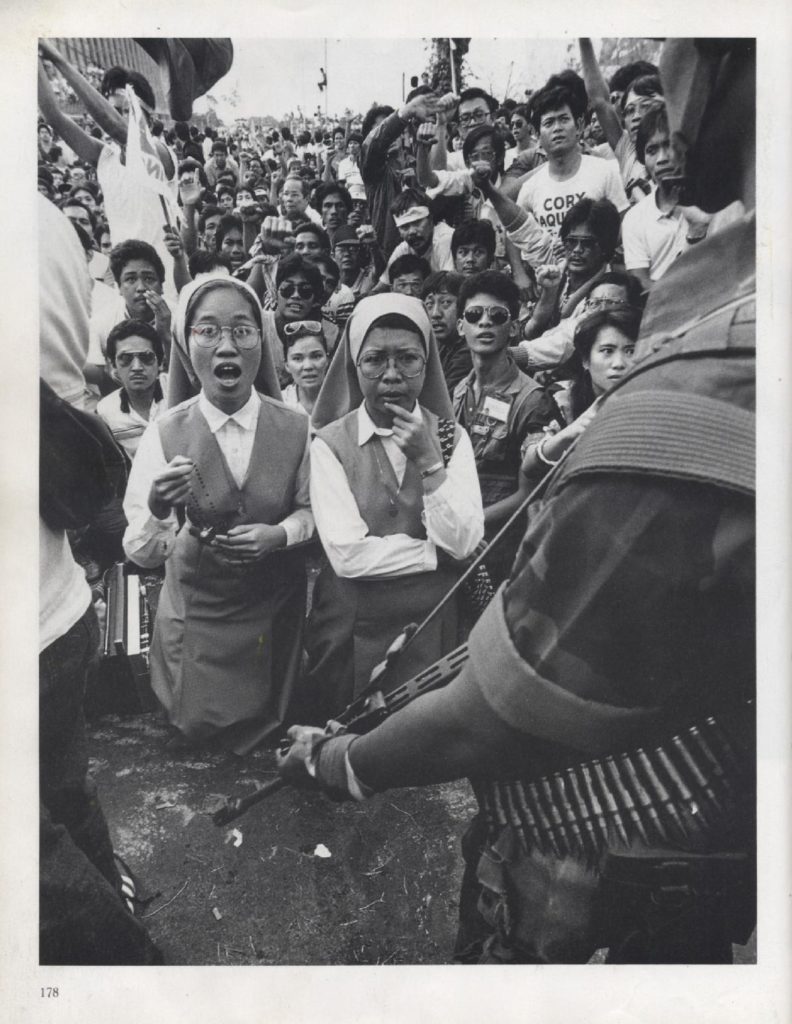
Tom Hastings, Professor in the Department of Conflict Resolution at Portland State University presents on image management in civil society campaigns. Most civil society campaigns seem to acquire an image; Gandhi's movements, for the most part, were nonviolent, rooted in the increasing appearance of being persistent and cross-culturally Indian. Gandhi cultivated the image of civil discourse as a nonviolent challenger seeking justice. The images of the Birmingham Children's Crusade in 1963 were of innocence attacked by brutality and responding with more nonviolence. Cesar Chavez transformed the macho Hispanic image to gentle but unified migrant workers intent on gaining basic collective bargaining rights even when their members were physically attacked and even when some were killed. Filipina nuns and Cory Aquino presented an image of moral leadership and nonviolence, sincere women determined to gain democracy. What are the possible effects of creating a certain image of a campaign waged by civil society? How important is image? How can one be created and defended? This presentation and discussion will ask what general principles can help organizers think about this aspect of struggle and how research might illuminate this component of nonviolent resistance.
Sherif Mansour, Senior Program Officer of the Middle East and North Africa at Freedom House, examines the recent Egyptian uprising that ousted former President Hosni Mubarak, focusing on the major turning points, the organizational tactics that were employed by Egyptian activists, and the early and recent manifestations of these tactics on the ground.
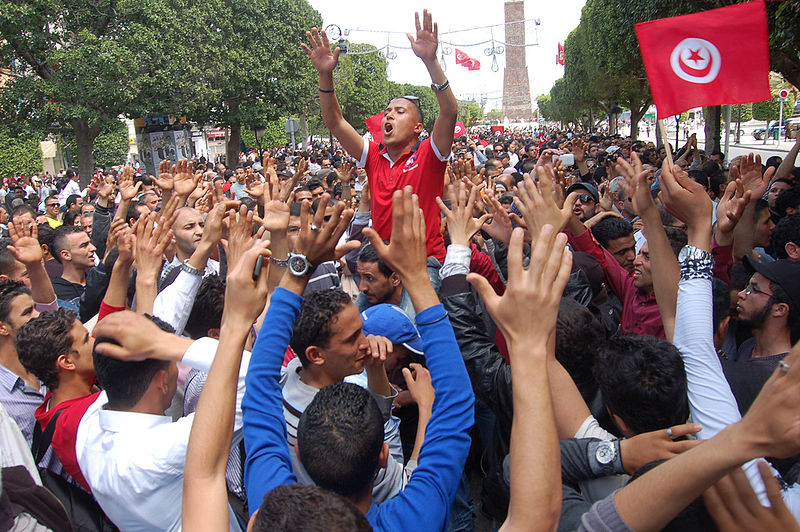
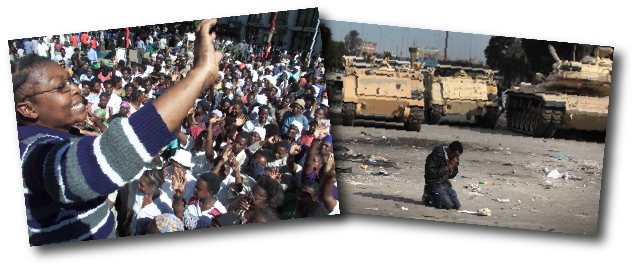
The Egyptian nonviolent uprising was a surprise for many. The world’s attention was primarily focused on the last two weeks. But the struggle for overthrowing Mubarak started over seven years before. Major transformations inside the pro-democracy movement from online activism to street organization mainly happened over the past three years. The breakthrough only happened in the past six months. This webinar examines some of the major turning points, the organizational tactics that were employed by Egyptian activists, and show some of the early and recent manifestations of these tactics on the ground. The webinar also highlights important logistical and moral support for the demonstrators during the uprising, and highlights some of the lessons learned and some of the critical points which can be utilized by other nonviolent struggles in the Middle East.
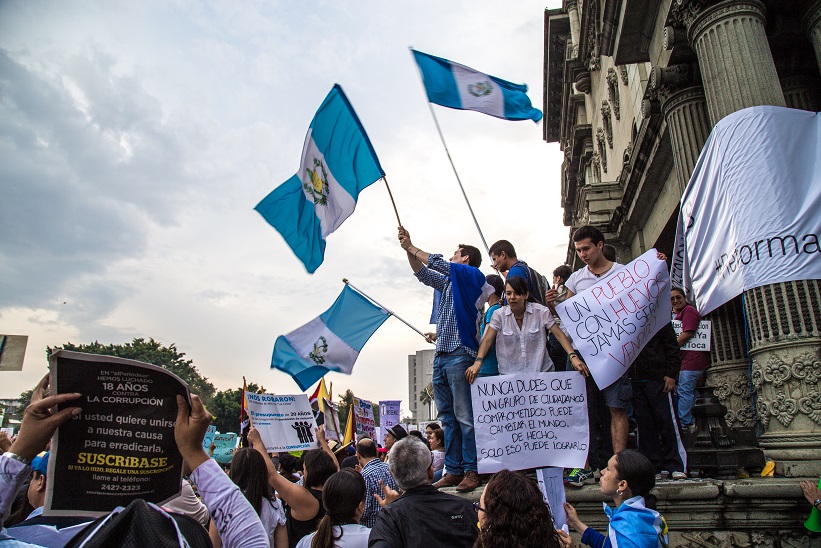
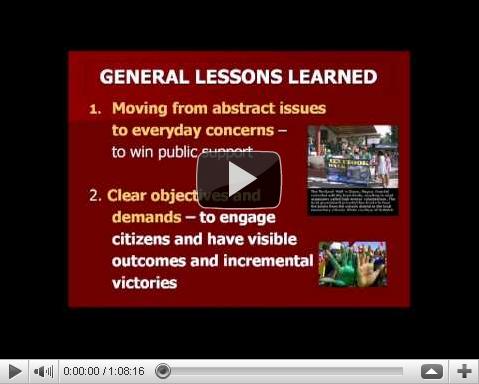
Shaazka Beyerle is a writer and educator on people power and strategic nonviolent action and a Senior Advisor with ICNC. This webinar explores how empowered citizens are engaging in civil resistance to curb graft and abuse. Corruption is intimately linked to violence, human insecurity, and oppression. For the everyday person, this means the denial of basic freedoms and rights. In virtually every part of the world over the past 15 years, citizens are proving that they are not passive onlookers of elite-driven corruption. Rather, they are drivers of accountability, reform and participatory democracy. The webinar will: identify the limitations of top-down, technical approaches to combating corruption and; present successful cases of citizen empowerment through nonviolent campaigns.
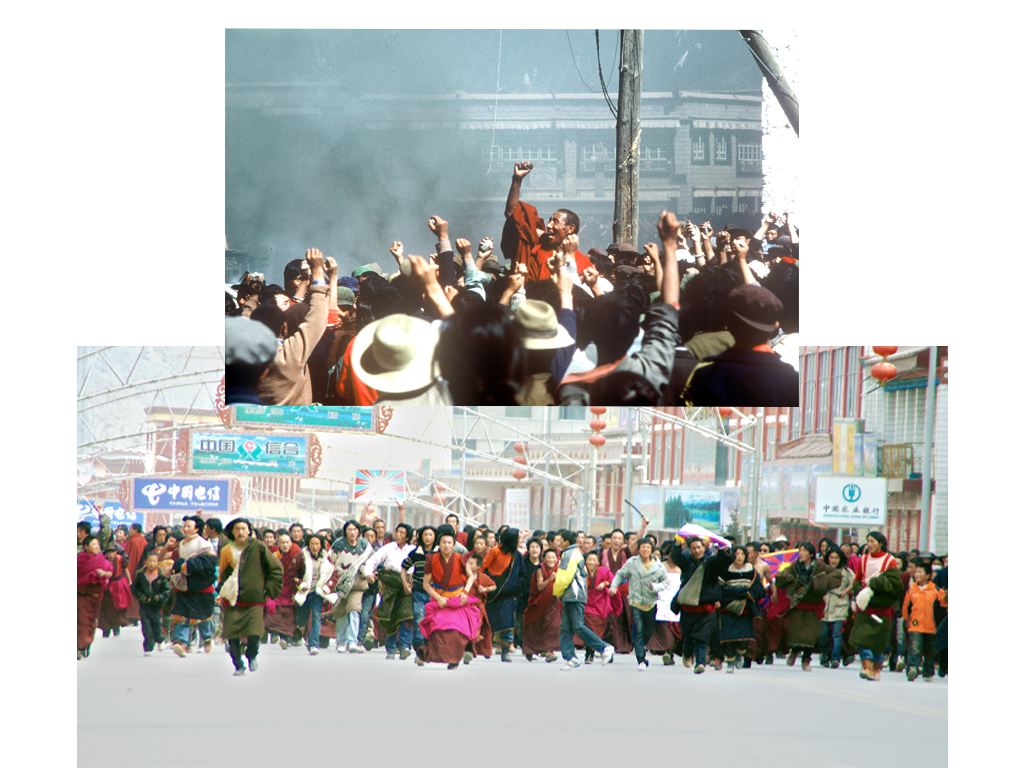
Dr. Stellan Vinthagen, Associate Professor in Sociology and Senior Lecturer in Peace and Development Studies at Göteborg University in Sweden looks at how real world events and statistics show how civil resistance or nonviolent action movements, contrary to conventional assumptions, are very effective means to change societies. Several authoritarian regimes have fallen (e.g. Apartheid South Africa or Milosevic's Serbia) after popular, relatively peaceful rebellions. Recent quantitative research reports have shown a great effectiveness of civil resistance campaigns (Karatnycky & Ackerman 2005; Stephan & Chenoweth 2008). At the same time there are several conflicts in which civil resistance has yet to be successful, e.g. in Palestine/Israel, Tibet/China, Colombia or Western Sahara/Morocco. And we also see how some “nonviolent revolutions” are having serious democracy problems (e.g. Georgia or Kyrgyzstan). There are reasons to reflect on the role of various conditions and contexts when applying resistance strategies. Here nonviolent action studies have something to learn from other, more advanced, social science areas, e.g. social movement studies or revolution studies. This presentation tries to inspire and illustrate possible improvements of civil resistance strategies. What happens when we apply e.g. political opportunity theory or resource mobilization theory, or Foran’s theory of revolutions to civil resistance practice and studies? It is argued that greater effectiveness is possible if we build strategies on some established theories and understandings of movements and social change.
Dr. Michael Nagler, Professor Emeritus of Classics and Comparative Literature at UC Berkeley and President of the Metta Center for Nonviolence, gives an overview of the present state of awareness and practice of nonviolent techniques, stressing several new developments that give cause for hope despite the grim ‘realities’ of the global problématique. His presentation consists of four parts: (1) a general introduction and definition of terms: what does he mean by ‘nonviolence’ and how it is generally used in scholarly and activist discourse; similarly with associated terminology in vogue today; (2) The quantitative spread of global nonviolent action since Gandhi and King; (3) the qualitative differences in the general climate of dissent and specific advantages employed or waiting to be employed in nonviolent action today; and (4) where do we go from here?