
Our Work
Civil resistance movements—featuring tactics such as strikes, boycotts, mass demonstrations, acts of noncooperation, and many other nonviolent actions—are capturing the world’s attention as never before.
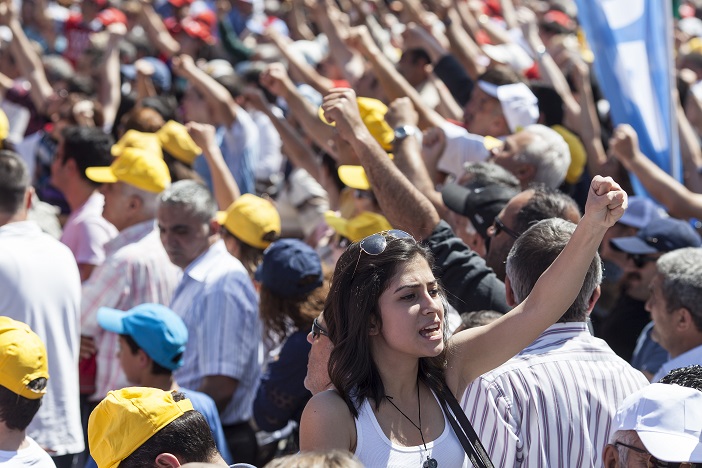 The International Center on Nonviolent Conflict (ICNC) focuses on how these movements can build their effectiveness and win rights, freedom, and justice.
Our mission is educational. We develop and share knowledge and resources on civil resistance with interested recipients throughout the world. This includes activists, scholars, educators, nongovernmental organizations, media professionals, and members of the policy community.
What We Do
We both run free programs and also offer services to clients who have the ability to pay. Since our founding in 2002, our programs and initiatives aim to:
CREATE AND SHARE RESOURCES ON CIVIL RESISTANCE
- Support the development of educational materials for activists, scholars, members of NGOs and the policy community, and journalists
- Make information about civil resistance widely accessible through our Resource Library
- Translate educational materials on civil resistance into diverse languages
- Connect people with educational resources and each other to help them in their work
SUPPORT CUTTING EDGE SOCIAL SCIENCE RESEARCH
ICNC has been a major supporter and collaborator on new research in the field of civil resistance.
- See ongoing and past research that we’ve supported
- View our current research-support opportunities
LEAD EDUCATIONAL PROGRAMS
- Organize educational events that are attended by diverse audiences, including activists, scholars, members of NGOs, policy professionals, and journalists
- Create and teach online courses on civil resistance
- Convene Regional Institutes on civil resistance around the world
- Lead university seminars and practitioner workshops
PROVIDE FUNDING TO PRACTITIONERS AND SCHOLARS
- Provide grants and funding for practitioners and scholars
HIGHLIGHT CURRENT EVENTS AND COMMENTARY ON CIVIL RESISTANCE
- Offer commentary on civil resistance and current events through our blog, Minds of the Movement
- Provide commentary and analysis to news media around the world
Impact and Theory of Change
ICNC is a leading global organization advancing the study and practice of nonviolent civil resistance to achieve rights, freedom and justice around the world.
Our programs, achievements and impact reflect our ongoing dedication to using social science insights and lessons from practitioners to improve outcomes for civil resistance movements worldwide.
Learn more about our impact and theory of change.
Mission and Operating Guidelines
The International Center on Nonviolent Conflict (ICNC) is an independent, non-profit educational foundation that develops and encourages the study and use of civilian-based, nonmilitary strategies aimed at establishing and defending human rights, democratic self-rule and justice worldwide.
In doing our work, we abide by the following operating guidelines:
1. ICNC’s programs aim to reach diverse individuals and groups who seek understanding about civil resistance movements and are committed to establishing and defending human rights, democratic self-rule and justice worldwide.
2. Our work with activists, organizers, and other practitioners is demand driven. In response to contacts and requests initiated by groups or people seeking to end oppression or injustice through nonviolent methods, ICNC can help in enabling seminars, workshops, and educational events to be held; and/or supporting general educational projects related to civil resistance.
3. ICNC is an educational organization that aims to develop and share knowledge and information. In our work, we do not provide political or strategic advice to those contemplating or engaged in civil resistance; we do not assist activists in conducting civil resistance actions; and we do not furnish funds to subsidize a movement’s operations.
4. ICNC can support research and general educational projects by other nongovernmental organizations and individuals, if they are directly related to expanding understanding of the principles and skills involved in civil resistance.
5. ICNC observes the right to privacy of those who contact it, for the protection of people who may face repression or intimidation for exercising their rights. Accordingly, ICNC abides by requests for confidentiality from individuals who communicate with it.