For Scholars & Students
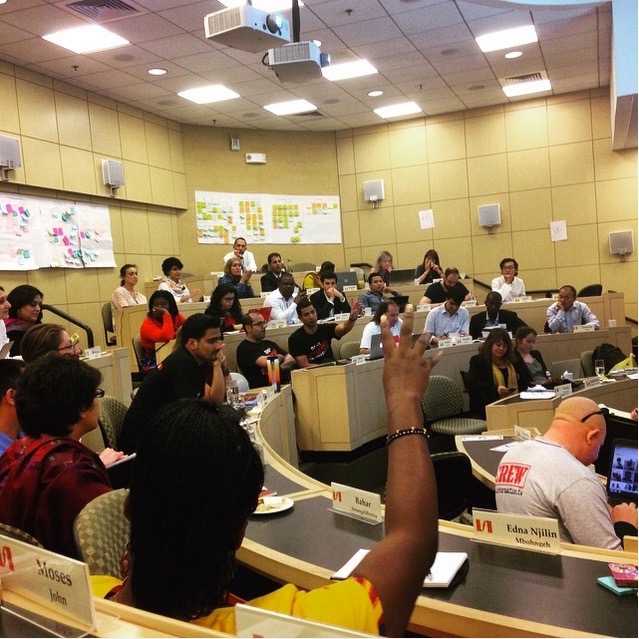
The discipline of civil resistance has developed enormously in recent years. Driven by new quantitative and qualitative research–as well as by practitioners around the world applying, adapting, and advancing knowledge in struggles for freedom, rights, and justice–it is clear that the civil resistance has come of age as a growing area of academic interest and research.
ICNC’s academic initiatives aim to:
- Support groundbreaking research to fill knowledge gaps in the scholarly literature and in areas of relevance to practitioners such as activists, organizers, members of the policy community, and journalists;
- Increase exposure to the study of civil resistance among students and faculty around the world;
- Foster interdisciplinary understanding, sharing, collaboration and the development of networks among scholars;
- Increase communication and information exchange between scholars and practitioners;
- Disseminate significant work and scholarly writing on civil resistance to diverse audiences;
- Build and share a body of knowledge about how individuals and groups can be more strategic and effective in waging civil resistance struggles despite adverse conditions.
In all of our academic work and the research we support, we are committed to scientific objectivity grounded in sound and transparent methodologies of social science inquiry so as to ensure reliability, validity and replicability of findings. Our ongoing and past research and academic writing that we have supported attest to that commitment.
To make it easier for educators, teachers, and academics to access our most popular classroom resources, ICNC has compiled them into one central location. Visit ICNC Resources for Your Classroom for information on our resource library, webinars, Academic Online Curriculum, and more.
Please check out our various programs and resources below.
Calls for Applications & Proposals
Check out our past and current Calls for Applications for different ICNC academic programs. This should be your first stop for learning our current opportunities for students, educators, and scholars; and to see past opportunities that will likely re-occur over the next year.
Learning Opportunities
Whether you are a student, educator, or scholar interested in civil resistance studies, we have several opportunities to deepen  your own knowledge and understanding of the field.
- Academic Online Curriculum (AOC) on Civil Resistance
Our Academic Online Curriculum offers an extensive and regularly updated set of resources on civil resistance, organized into clearly structured topics and cast studies, to facilitate easy learning and curriculum development. It requires basic free registration to use. - Webinar Presentations
Since 2010, ICNC has offered a webinar series of online talks on critical ideas, cases, and questions related to civil resistance and nonviolent movements. - Regional Institutes
ICNC works with local partners in South America, Eastern Europe, and South Asia, among other regions, to develop Regional Institutes on the study and practice of nonviolent action. These Institutes offer structured and hands-on learning on civic organizing and dynamics of nonviolent struggles to activists, practitioners, educators and academics from different regions around the world. - ICNC Online Courses
 Each year, ICNC offers a moderated online course on civil resistance. ICNC has also developed a specialized participant-led online course which is offered yearly.
Curriculum Support
 We place a special emphasis on expanding and supporting teaching in the field of civil resistance. Three of our programs are particularly relevant to this effort:
- Curriculum Development & Teaching Support
ICNC supports faculty and educators in developing curricula and teaching classroom-based and online courses on civil resistance for university students and professionals around the world. - High School Curriculum Fellowships
This program supports high school teachers in developing and incorporating curricula on civil resistance into existing junior- or senior-level social science and history courses. - Academic Online Curriculum (AOC) on Civil Resistance
Our Academic Online Curriculum offers an extensive and regularly updated set of resources on civil resistance, organized into clearly structured topics and cast studies, to facilitate easy learning and curriculum development. It requires basic free registration to use.
Research Grants
In all the research we support, we are committed to maintaining scientific rigor and integrity while, at the same time, striving to advance studies that are consequential for the practice of civil resistance, more effective strategic planning by activists and better understanding of how external actors can assist nonviolent campaigns and practitioners. 
Check our ongoing and completed research that we have supported.
With help from our academic advisors, we have also developed a wide range of research priorities that we are interested to pursue. Please check them out to see if your research interests match our priorities. Then view our programs for researchers:
- Doctoral, Post-Doctoral & Junior Faculty Research Fellowships
This competitive fellowship enables prospective doctoral students, post-doctoral and new, non-tenured faculty to carry out research on civil resistance as part of their dissertation, book or journal article writing. - Monograph Series
ICNC supports the development of, and publishes, peer-reviewed monographs. Each monograph builds on in-depth scholarly research on a particular topic and is written for both practitioner as well as scholarly audiences. - Rapid Field Research & Data Collection Grant
ICNC supports local partners, such as journalists, activists, and scholars, in recording, documenting, and analyzing the dynamics and events of current or recently ended civil resistance movements or campaigns. This grant opportunity has a rolling application process and proposals can be submitted at any point.
Writing Opportunities
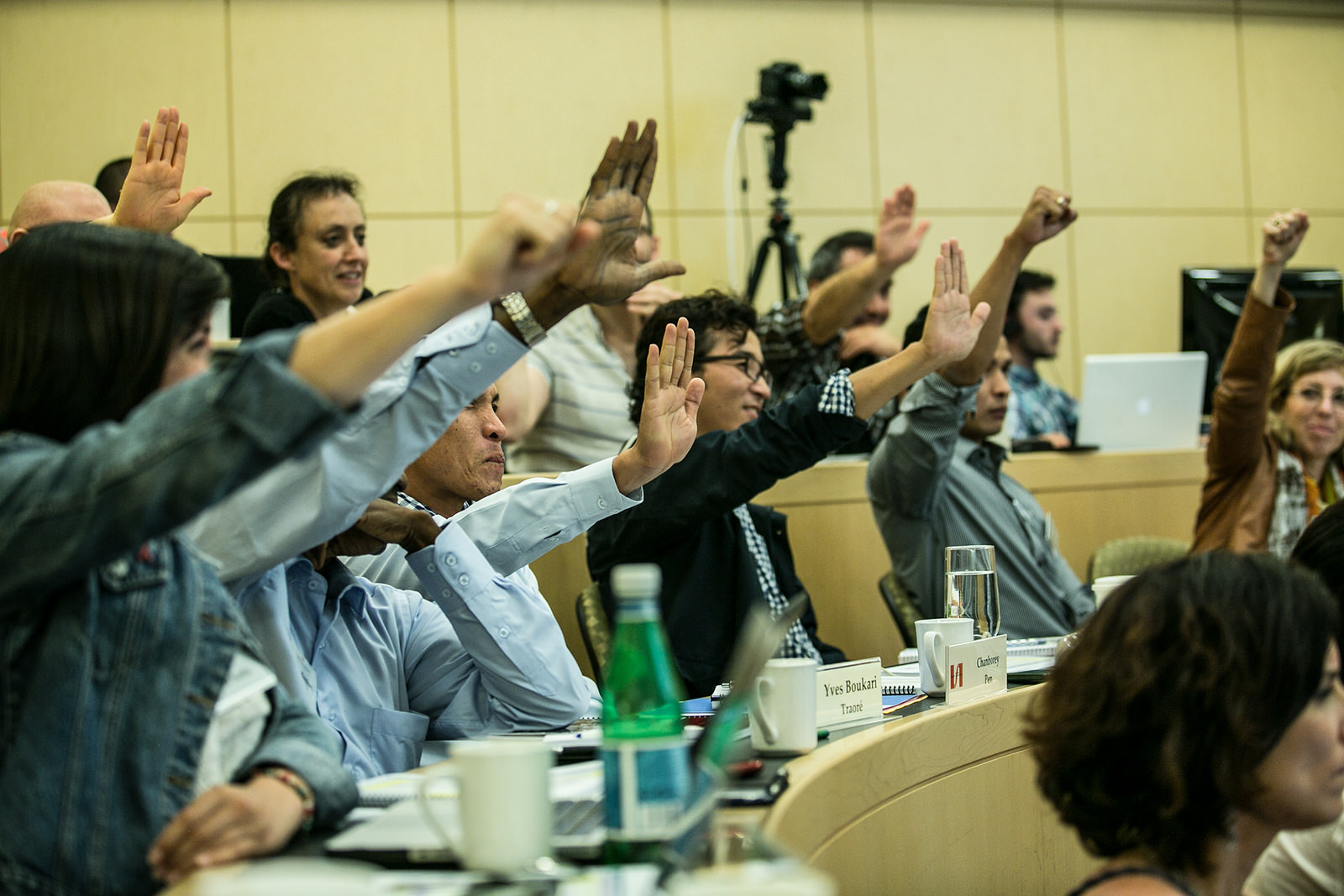 We offer advanced scholars, junior faculty, educators and reflective practitioners several specific opportunities to publish with ICNC directly or with our support:
- Monograph Series
ICNC supports the development of, and publishes, peer-reviewed monographs. Each monograph builds on in-depth scholarly research on a particular topic and is written with the aim of reaching both practitioners as well as scholarly audiences. Monographs undergo external review process prior to their publication. - Special Reports Series
ICNC supports research and writing of shorter publications on civil resistance subjects that are relevant to a larger policy community, including policy experts, decision and opinion-makers and international governmental and non-governmental practitioners.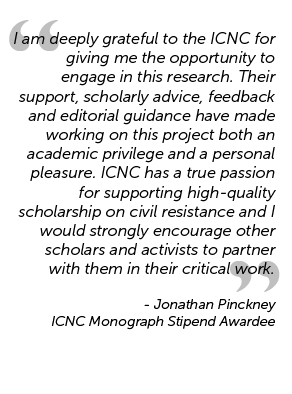
- ICNC’s Minds of the Movement Blog
Minds of the Movement is a forum for activists, scholars, students, journalists, members of the INGO and policy community, and others interested in the growing field and practice of civil resistance. Drawing from experiences of people on the front line of civil resistance, as well as breaking new scholarship in this field, our blog is aimed at those who seek to understand the art and science of nonviolent struggle. See our Submission Guidelines. - ICNC supported Academic Publications
ICNC supports ground-breaking research on civil resistance. Books, edited volumes, chapters and journal articles have all been supported by ICNC.
In order to facilitate wide circulation of free or low-cost resources on civil resistance ICNC launched its own press in 2015. Since then a number of works was published through the ICNC Press.
Online Courses
- ICNC Online Courses
Each year, ICNC offers a moderated online course on civil resistance. ICNC has also developed a specialized participant-led online course which is offered yearly. - Academic Online Curriculum (AOC) on Civil Resistance
As an online resource, ICNC offers the Academic Online Curriculum offers an extensive and regularly updated set of resources on civil resistance, organized into clearly structured topics and cast studies, to facilitate easy learning and curriculum development. The AOC is free and requires basic registration on ICNC’s online platform.
Presentation Opportunities
We encourage scholars, educators, aspiring researchers, and reflective practitioners of civil resistance to share with the public their studies 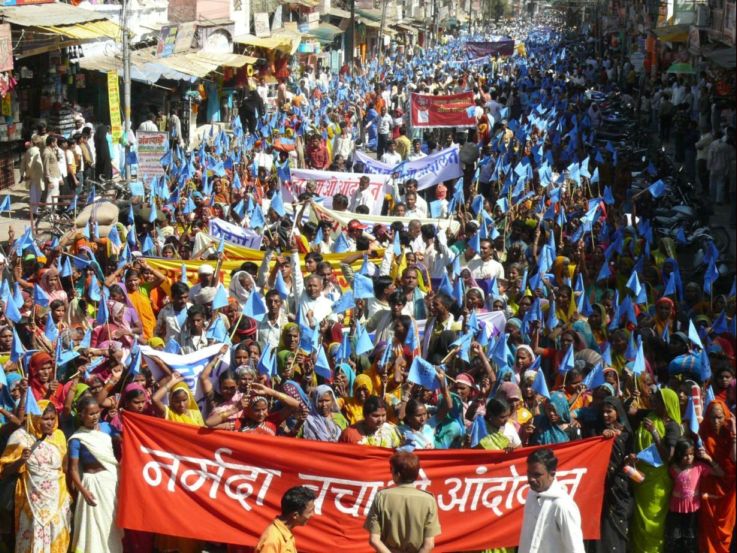 and perspectives around our key research interests through our frequent online webinars, which are offered live and recorded for later use by others.
- Webinar Presentations
Since 2010, ICNC has offered a webinar series of online talks on critical ideas, cases, and questions related to civil resistance and nonviolent movements.
Past Opportunities
- Summer Institute
Between 2006 and 2016, ICNC organized the ICNC Summer Institute for the Advanced Study of Nonviolent Conflict (formerly called the Fletcher Summer Institute) at the Fletcher School of Law and Diplomacy (Tufts University). This five-day, intensive educational program aimed for a global audience of international professional, journalists, civil society leaders and educators. While no longer offered, the videos of the important presentations made at many of these summer institutes are available for online viewing. These links include videos of the lectures delivered at the Institutes: 2016; 2015; 2014; 2013; 2012; 2011; and 2010. - Academic Seminars
In response to submitted proposals ICNC develops and conducts intensive, 2- to 4-day long classroom-based academic seminars hosted by academic institutions from around the world.
ICNC Academic Council & Advisors
To support our research, teaching and academic programs in general, ICNC’s Academic Council and Academic Advisors provide regular and invaluable guidance to ICNC.