Minds of the Movement
An ICNC blog on the people and power of civil resistance
Nearly 100 people gathered under a cashew tree in Youtou to listen to Txetx’s testimony. Credit: Author
The idea for this mission arose from a previous experience of mine. In 2011, at the “Ayette Conference,” the ETA (Basque separatists) began its public process of renouncing arms. Basque activists then benefited from the first-hand testimonies of other armed groups regarding their own processes of laying down arms: the ANC in South Africa and the IRA in Ireland, in particular. I was aware of the positive impact these testimonies had on the long process of disarming. I also witnessed the decisive role played by Basque non-violent activists in this process, which was fully realized in 2018 with ETA’s announcement of its dissolution.
When Camille Gomis, president of the Senegalese organization Génération Non Violente (GNV) and a long-standing partner of Non-violence XXI, told me in 2022 that violence had resumed in Casamance, the idea of replicating a process of testimonies among militants wishing to lay down their arms immediately struck me as relevant. It was, in fact, not difficult to convince a few Basque activists involved in ETA’s disarmament to take part in such a mission.
After three long and arduous years of preparation, the peace mission in Casamance finally took place in November 2025. Txetx, an independence activist for decades, was its key figure. He was among the Basque activists most involved in the ETA disarmament process, notably within the ‘Artisans of Peace’.
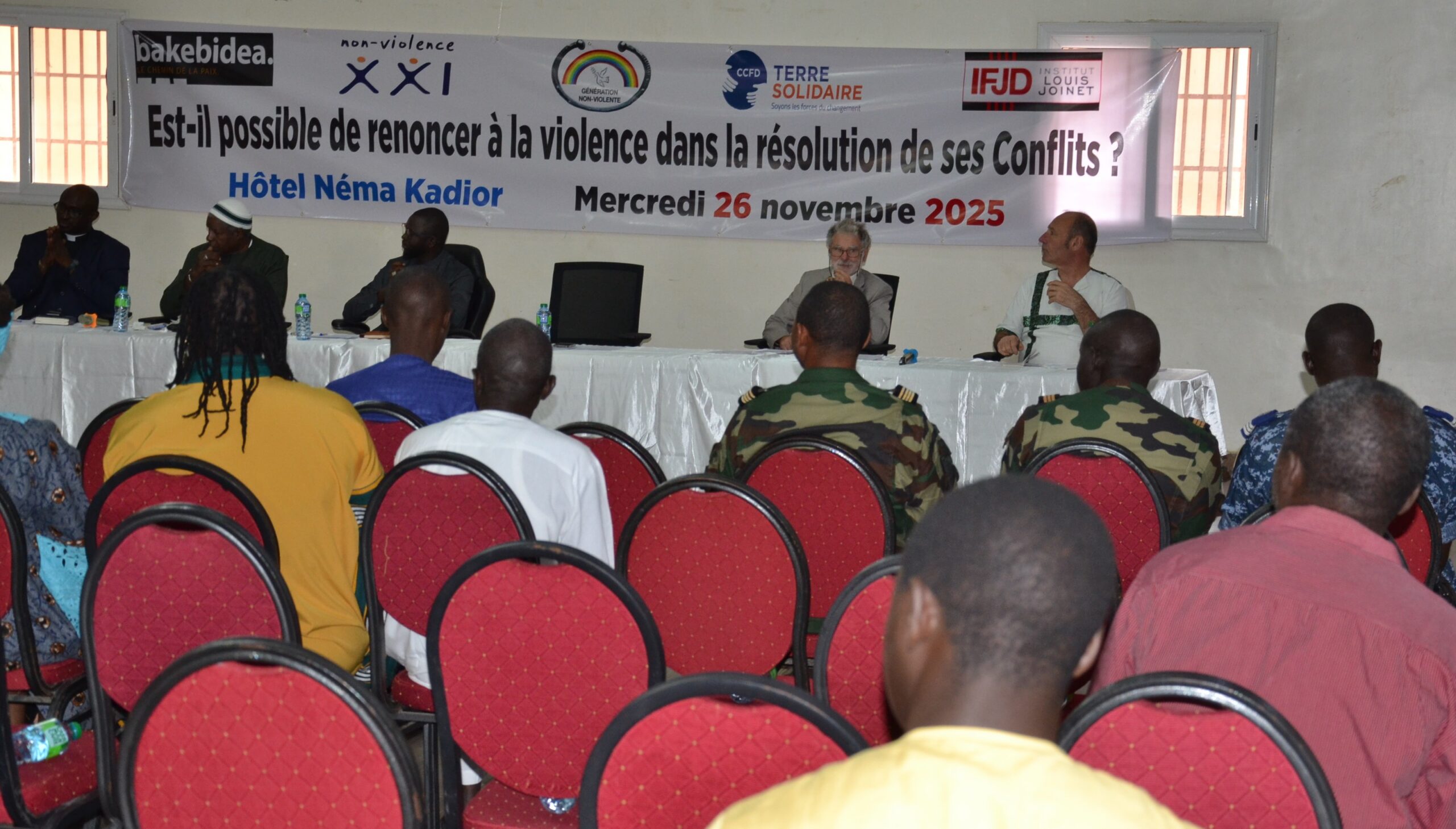
A round-table discussion brought participants together to address a central question for movements seeking to end armed conflict: “Is it possible to renounce violence in the resolution of conflicts?” Credit: Author.
During those eight intense days, remarkably, we not only met multiple stakeholders, but we brought them all together: military personnel and former rebels sat in the same meetings, while Muslim, Catholic, and traditional religious leaders worked side by side. The civilian gatherings mostly included women. They form the largest civilian organization for peace: the “Women’s Platform for Peace in Casamance,” which has a network across the 500 villages of Casamance.
Several meetings also took place in secondary schools and at the university. In addition to the presentations, the film Peace in the Basque Country served as a useful tool to “show” the resolution of the Basque conflict and highlight the similarities with the situation in Casamance. The Senegalese press also gave extensive coverage to the mission, particularly in Casamance.
The Basque Experience Explained to the Diola People, Inhabitants of Casamance
The Basque independence movement has resulted in thousands of deaths, prisoners, disabled people, and deportees. After 2011, Basque civil society, deeply imbued with the values of peace, adopted non-violence as its mode of action. At the risk of their own freedom, the ‘Artisans of Peace’ succeeded in convincing ETA members to take charge of the storage and neutralization of their vast arsenal of weapons. Six ‘Artisans’ carried out the first weapons dismantlement, after which they were all arrested and imprisoned for thirty days.
A strong mobilization of civil society then took shape at local, national, and international levels. This led to the release of the "Artisans" and the continuation of the complete disarmament process, which was completed on April 24, 2017, during a large public gathering in Bayonne. In 2018, ETA officially announced the dissolution of its armed movement, bringing an end to several decades of suffering.
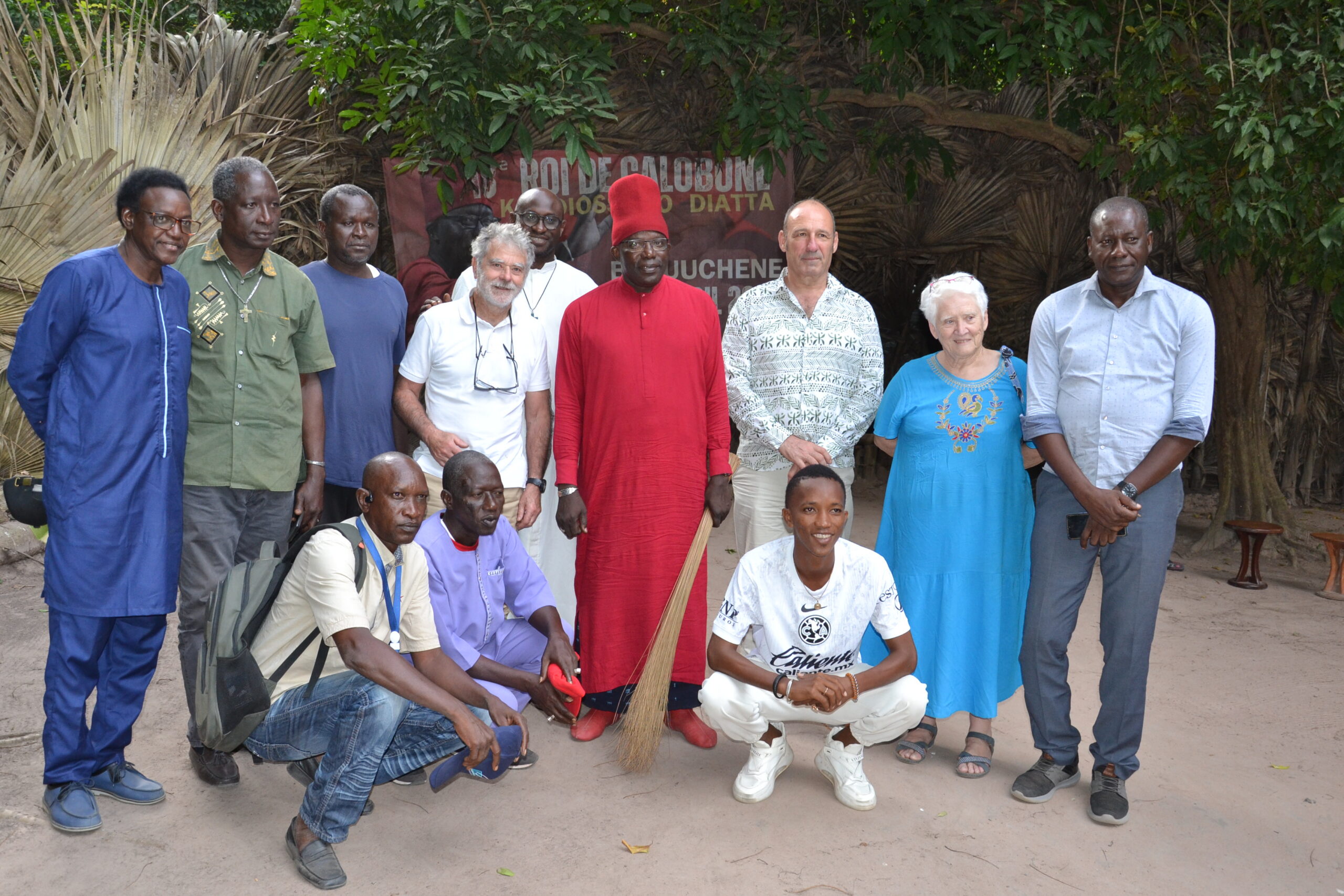
Photo taken after discussions with Koudiossiobo Diatta, King of Calobone. Credit: Author
Since then, the struggle for self-determination has continued in the Basque Country through exclusively non-violent actions. The “Artisans of Peace” understood that transformation and autonomy also required personal development and collective organization. They therefore set up a school dedicated to teaching the Basque language, which was officially banned at the time. Another example in Bayonne is that farmers and livestock breeders have set up cooperatives to produce and meet local needs for cereals, fruit, vegetables, milk, meat, and cheese. A chamber of commerce and agriculture, focused on the local market, was created to replace those controlled by the state, which were often focused on import-export. The Basques, keen on autonomy, adapted the slogan ‘the armed people will never be defeated’ to ‘the organized people will never be defeated’.
The Casamance Testimony
In Djinaky, the spokesman for the Initiative for the Reunification of the Political and Armed Wings (IRAPA) shared the local experience, highlighting both similarities and differences with that of the Basque Country. Since 1982, fighters in Casamance have been waging an armed struggle to liberate the territory and achieve independence. Although there has been a relative lull over the past decade, clashes are occasionally reported in certain areas.
The prolonged duration of the conflict (43 years) and the huge suffering it has caused have divided communities and fractured the Movement of Democratic Forces of Casamance (MFDC). While the armed factions in central Casamance, where civilians live, are receptive to messages of non-violence, those based in the northern (border with The Gambia) and southern (border with Guinea-Bissau) regions wish to continue the war.
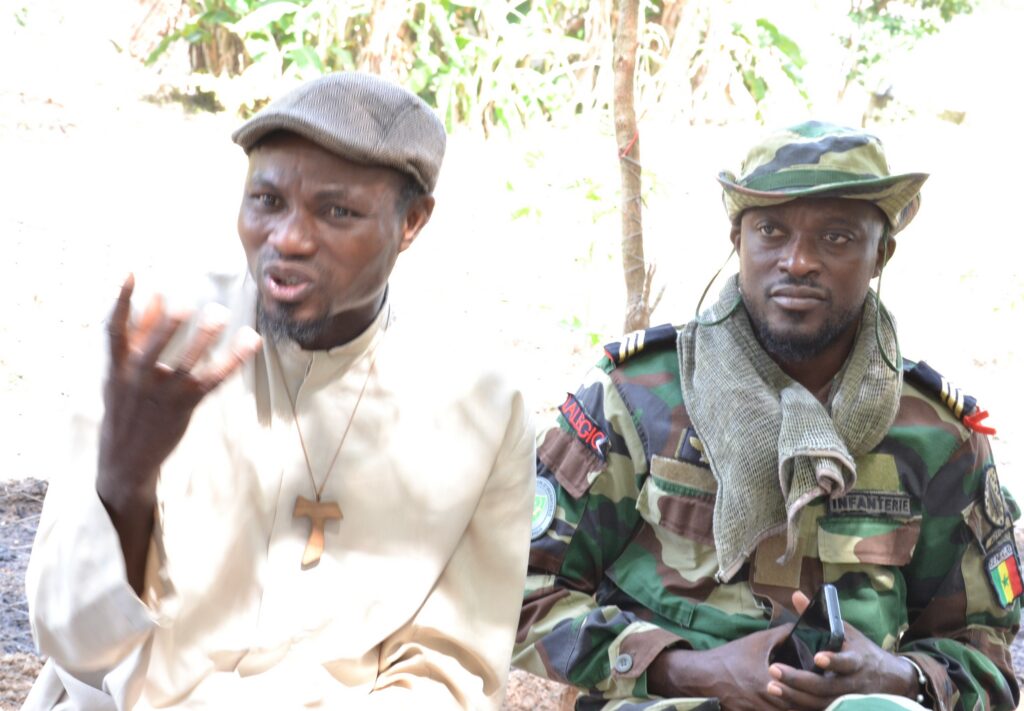
Religious leaders and soldiers joined the disarmament discussions, reflecting the broad range of actors needed to move communities from armed conflict toward nonviolence and collective peacebuilding.
Within this dynamic, civil society played a crucial role in the pursuit of a peaceful resolution. The Coalition of Civil Society Organizations for Peace in Casamance, alongside its partners, facilitated dialogue with the 'Djakaay' militant camp. This led to the peaceful decommissioning of weapons on May 13, 2023, in the neighboring village of Mongone. Today, the main challenge is all about the social security of ex-combatants, social cohesion, opening up isolated areas, and the effective implementation of agreements to secure the final border cantonments in the North and South.
If we were to summarize the impact of this mission (which could be followed by others), it is that these mutual exchanges helped to loosen tongues a little more when it came to discussing the conflict, including within the camps of each of the opposing sides: within a village, between wives and husbands, amongst the community of young pupils and students, and in dialogues with the administrative authorities.
Many have realized that the problems of Casamance are found elsewhere and that the colonized are not always who we think they are. A member of the Génération Non Violente (GNV) team summed up this conclusion with this double-edged phrase, which is worth pondering: “The Basques are the Diolas of France.”