Minds of the Movement
An ICNC blog on the people and power of civil resistance
Anni Pohto and Olga Kravets during their roadtrip to Kyiv, summer/fall 2025. Credit: Author.
Read Part I, "'My Grandmother's Crime against History': Where Family Ancestry and Putin's War Meet".
This article is part of the Ukrainian Freedom Series, powered by ActionAid Denmark and the Organization for Nonviolent Movements.
We were blessed to have had a quiet day at my uncle Samuil’s home in a Kyiv suburb, so that he could tell me all that he knew as Anni filmed us.
My grandfather Maxim was born in 1907 in the village of Rulikiv in Kyiv region, orphaned at 7, and became an apprentice to a shoemaker at 14 on a busy commercial street in Kyiv. Sometime in the 1920s he became a member of the Pentecostal church. Sometime in the late 1920s or early 1930s he “refused to denounce his faith” and spent several years doing forced construction around Lake Baikal, where he contracted tuberculosis. He survived, came back to Kyiv, and married my grandma Teklya Sheremet in 1936.
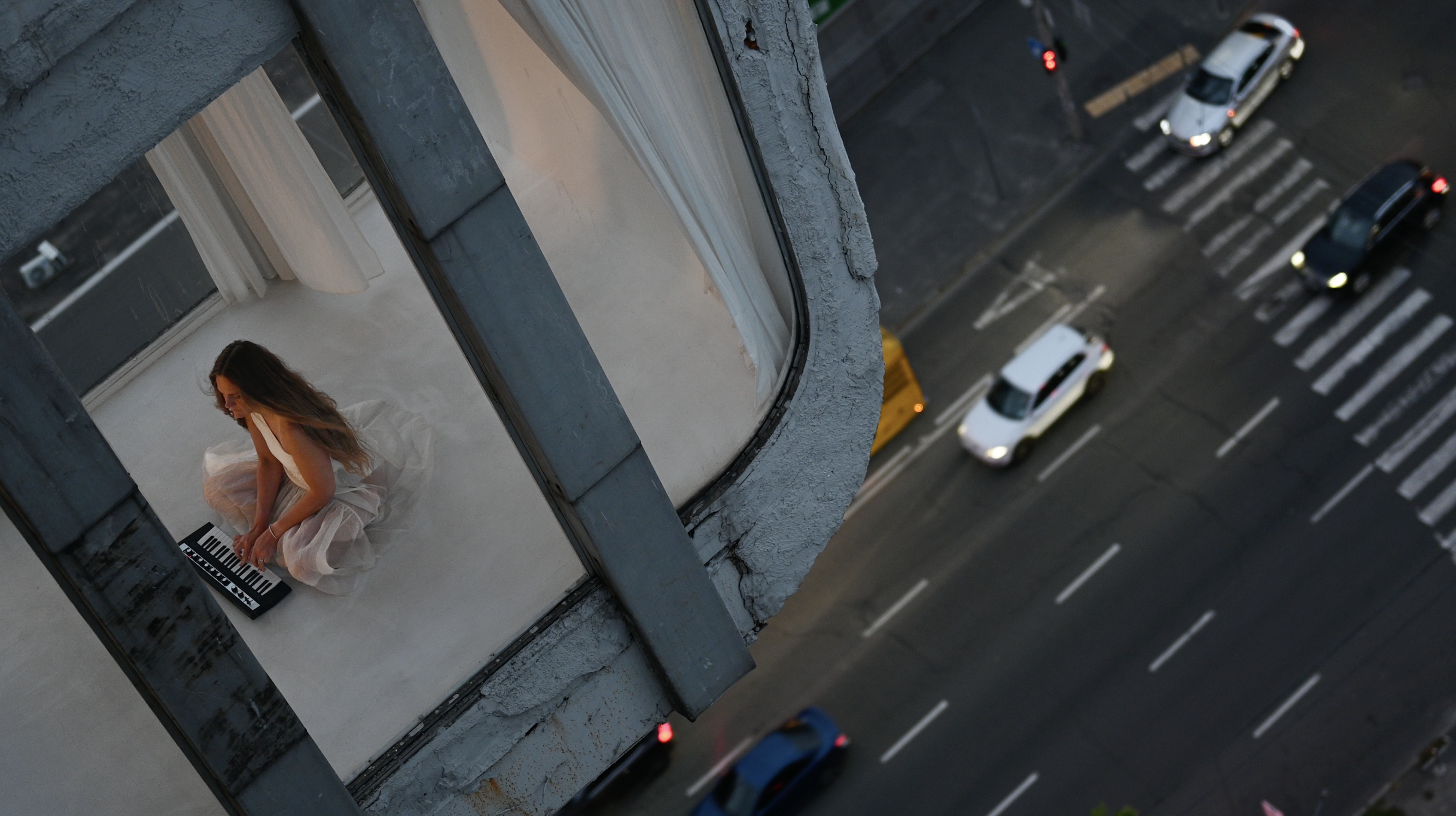
Anni Pohto performs on the top of the brutalist building in Kyiv that previously housed the Ukrainian Ministry of Motor Transport and Highways. Credit: Author.
Despite the religious persecution by Soviet authorities, my grandparents attended an underground Pentecostal church led by Teklya’s uncle Spiridon Sheremet during the Great Terror years, as the photograph from 1938 testifies. During the Nazi occupation of Kyiv in 1941-1943, they did not leave their house. They also shared prayers with German Protestant soldiers, the family story goes. They had nine children, eight of whom survived. After the war, Maxim continued to work as a shoemaker and host Pentecostal prayers at home. He died of tuberculosis at the age of 57.
Too many gaps. Too many questions. Frustrating for a granddaughter in search of answers, mesmerizing for an investigative journalist.
What year was he arrested? Which camp? What was the actual charge? How did he survive? Why was he released in time to marry in 1936, right before the Great Terror, when thousands of religious believers were being shot? Was he accused of collaborating after the end of World War II?
When Samuil finished the story, we cried and laughed at the miracle of our wartime reunion, ate fantastic borscht and sang together in Finnish and Ukrainian, thanks to another wonderful nonviolent resistance initiative, Solovey Music, which translated Ukrainian songs into Finnish allowing Anni to perform it in her native language.
I came back to France carrying a different weight of history under my skin. My generation thought that the Soviet Union collapsed
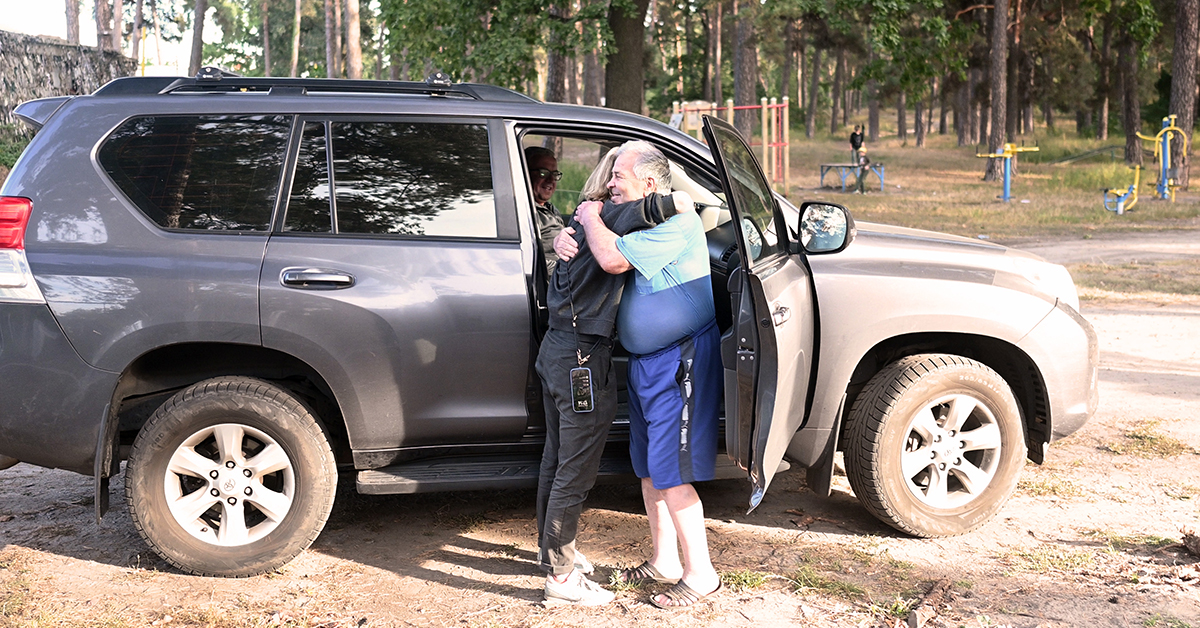
"When Samuil finished the story, we cried and laughed at the miracle of our wartime reunion..." Credit: Author.
bloodlessly and were really proud of it. So were the politicians in Europe and the U.S. In fact, the Soviet Union is only collapsing now, and this collapse is very bloody, with genocidal intentions from the former colonizer who still cannot get over the dissolution of his empire. And this blood already starts to spill into Europe. Thanks to Ukraine, it has not yet been flooded—but a war an Interrail trip away is a war at your doorstep.
And my role as a European, French, Slav, who bears the heritage of the perpetrator and the victim at the same time, is to reclaim what my Russian grandmother tried to erase from my family: the Ukrainian part of myself. Because what Putin really wants is to erase it from the entire nation. This is the same violence, scaled up across generations from personal to geopolitical.
As I am writing these lines, on January 12, 2026, Ukraine has spent 1,418 days resisting Russia in every way possible. It's exactly the amount of days it took the Soviets to crush Hitler's troops. Putin, who had hoped to capture Kyiv in a few days, and takes himself for a history mastermind, must feel at least a bit uncomfortable in his Kremlin office. His very own propaganda bloggers praise Americans for kidnapping Maduro and whine about “the great Russia" failing to have done the same with Volodymyr Zelensky.
Anni and I will finish our film of this pilgrimage, Rising Is A State of Mind, as Ukraine enters its fifth spring of resisting Russian aggression. The lesson I take away from our journey to Kyiv, the lesson we can all draw from recovering my double heritage, is that the Russian side chooses to be blind and hide and the other chooses to resist and create. I believe in Ukrainian freedom and will continue to devote my art to documenting the people's fight for it.