Minds of the Movement
An ICNC blog on the people and power of civil resistance
Nonviolent protest in Syria. 15th May, 2017.
How can something happening silently, far away, make such a deafening sound?
He was leading a demonstration in a risky area, even though he was among the regime's most wanted activists. It was a narrow street with few escape routes; the security forces surrounded the protesters. I was recovering from an injury miles away.
News of his arrest traveled across the region like the shockwave of an explosion; for days, the echoes resonated in the streets, on people's faces, and in the growing doubt about the effectiveness of nonviolent action.
Islam AlDabbas was one of the most prominent leaders of the nonviolent movement in Syria; the reverberations of his arrest, and those of many other frontline leaders, continued to shake the movement's nonviolent foundations until they fractured.
2011: a nonviolent movement and its limits
In 2011, Syrians nationwide took to the streets in organic, peaceful protests demanding change, freedom of expression, freedom of the press, freedom of assembly, and justice. Participation by men, women, children, and the elderly was extremely high; for the first six months, it was mostly a nonviolent movement. But the dictatorial regime's response was brutal from the first weeks. The government's security forces and army cracked down on people with violence, guns, enforced disappearances, and torture.
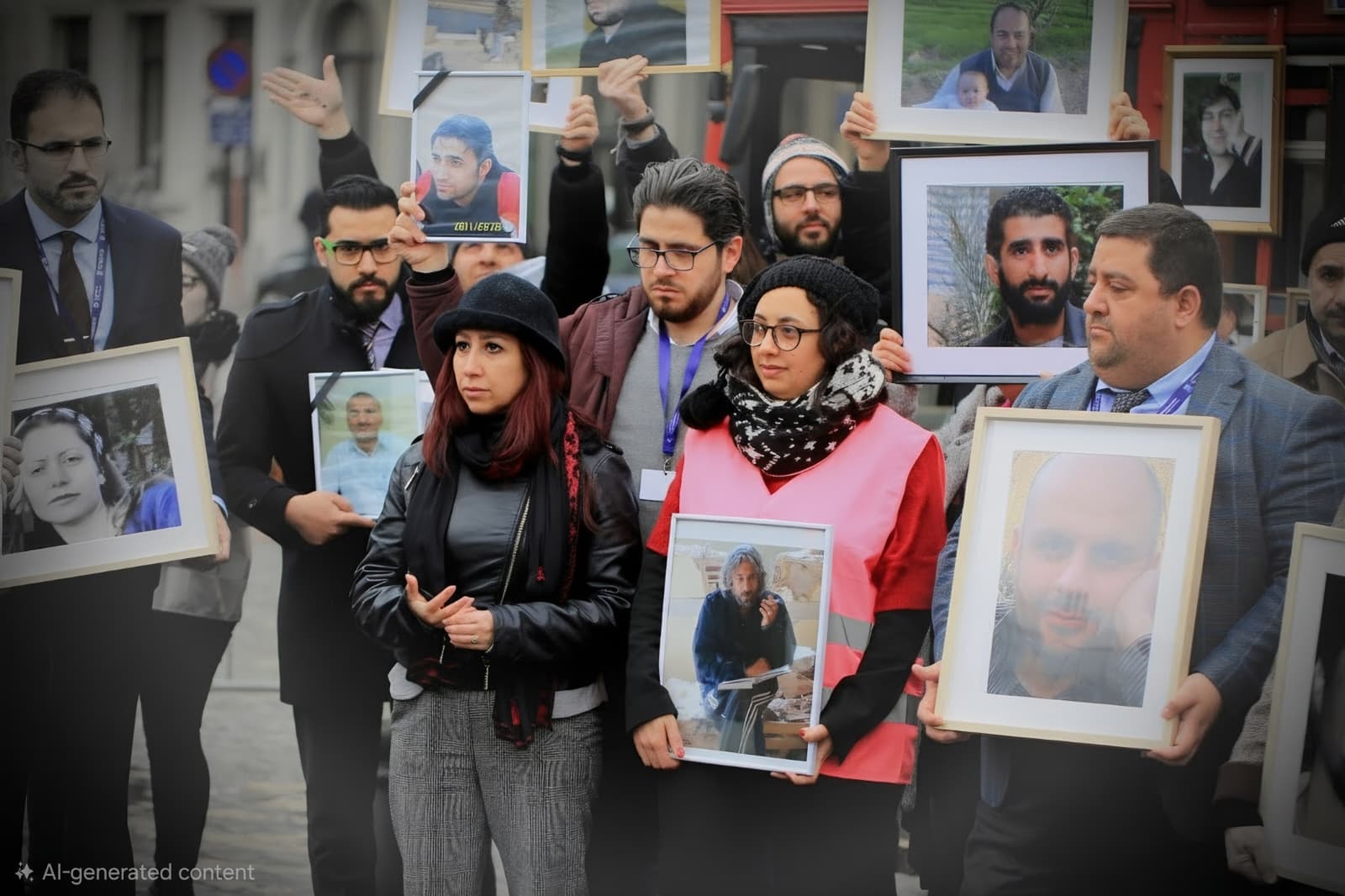
Even though the nonviolent movement stirred core social change, the regime's extreme brutality caused communities to doubt the efficacy of peaceful protest, especially as the emerging movement had not yet developed a diverse repertoire of alternative tactics to achieve results with less exposure to danger.
Meanwhile, the former Syrian Assad regime resorted to a familiar tactic: security forces systematically assassinated or kidnapped successive layers of leaders, including my best friend Islam. Despite this predictable strategy, the movement failed to produce new leaders who truly believed in nonviolent action and possessed the charisma to sustain its momentum.
Although the social transformation within the community was profound, it remained intangible. The movement lacked clear, achievable, short-term milestones to demonstrate progress and maintain hope in nonviolent action.
How the turn to arms happened
As hope declined, public confidence waned. Armed resistance increasingly appeared to offer better results, leading men to take up arms against the brutal crackdown. Within a year, much of the nonviolent movement had faded, giving way to armed struggle against the dictatorial regime.
Due to the nature of armed conflict and complex geopolitical factors, participation became limited largely to willing men, excluding a vast segment of society. The Syrian movement, once united, fragmented across conflict lines, ideologies, and identities. Groups that had previously set aside differences to pursue social change stopped collaborating.
I am not arguing that strategic foresight could have prevented the movement from turning to armed struggle, or overcome the external forces that shaped it. Nor am I comparing the relative effectiveness of nonviolent versus armed struggle. But I would argue that genuine social change requires transforming minds and ideologies—and guns do not speak that language.
In December 2024, the Syrian regime collapsed under a military campaign by armed groups, alongside a unique set of political events. A new interim government, formed by a prominent armed group and allied factions, assumed power, bringing a dramatic turn toward international openness: 50 years of international sanctions were lifted, prisons were emptied, a transitional justice process was initiated, and a semi-open political environment emerged.
But…
It is not all butterflies and rainbows. Rebuilding is never simple after five decades of dictatorship and 15 years of a brutal conflict that tore the fabric of society apart. Major obstacles remain, and the path toward the change Syrians demanded in 2011 is long and unpaved.
What emerging movements can take from this
Nonviolent movements offer the endurance and capacity this path requires. The 2011 movement initiated change and broke long-standing barriers: fear of state brutality, restrictions on women's rights, limits on political participation. What it could not do was anticipate its own disillusionment. A movement organizing now would need the readiness to shift tactics across the full range of civil disobedience, and a structure that grows successive tiers of leadership, so that when the top layer is taken, the next one is already standing.
The regime's violent crackdown on social movements has ended. Enforced disappearances and torture must now become relics of the past. Compared to the early 2010s, a broader political window now exists for nonviolent movements to shape the future Syrians paid so dearly for. We must seize this opportunity.
Even though the fabric of the 2011 movement was severely damaged, emerging movements can learn from our recent past. Armed insurgency can overthrow regimes, but it cannot transform minds, foster social cohesion, or reconcile past grievances. Syria cannot bear further violence; meaningful social change requires strategic foresight, diverse tactics, tangible milestones, open dialogue, and broad public participation to build lasting influence.
Islam AlDabbas did not survive prison, but his legacy and sacrifice, alongside those of thousands of others, demand that Syria never return to violence and that freedom remains its most enduring legacy.