Minds of the Movement
An ICNC blog on the people and power of civil resistance
Cafe Kyiv (Berlin) organizes events in support of Ukraine. It is an initiative of the Konrad Adenauer Foundation. Credit: Cafe Kyiv Instagram.
This article is part of the Ukrainian Freedom Series, powered by ActionAid Denmark and the Organization for Nonviolent Movements. Check back through March 2026 for many more articles in this series.
As the Russian full-scale invasion of Ukraine enters its fifth year, Ukrainian resistance has mostly been viewed through the prism of its military capabilities. Yet, Ukrainian resistance goes far beyond the battlefield fronts, and the Ukrainian diaspora has played an essential role in the resistance by countering narratives, channeling resources, and mobilizing non-Ukrainian actors to their cause through protests, lobbying, academia, culture, and social media.
The strategic and tactical importance of the diaspora’s contribution grew as the lessons from the shortcomings of Ukraine’s empathy-framed diplomatic narrative and the growing “Ukraine fatigue” were acknowledged. The diaspora plays a key role in the successful adjustments made to overcome these challenges.
This article examines how the nature of diaspora activity has evolved since 2022, its impact on resistance activities, and the lessons other nonviolent movements might take away from the Ukrainian experience.
Adapting to lessons learned
A number of challenges have shaped the Ukrainian diaspora’s strategy over the years. First, many countries, particularly in Europe, have a long-standing, beneficial relationship with Russia and were initially unwilling to buy into the Ukrainian narrative. Secondly, many countries in the Global South see Western support for Ukraine as evidence of double standards in conflict assistance. Third, as the war in Ukraine continued, growing “Ukraine fatigue” in Europe and North America began affecting whatever political and military support had been successfully mobilized up to that point.
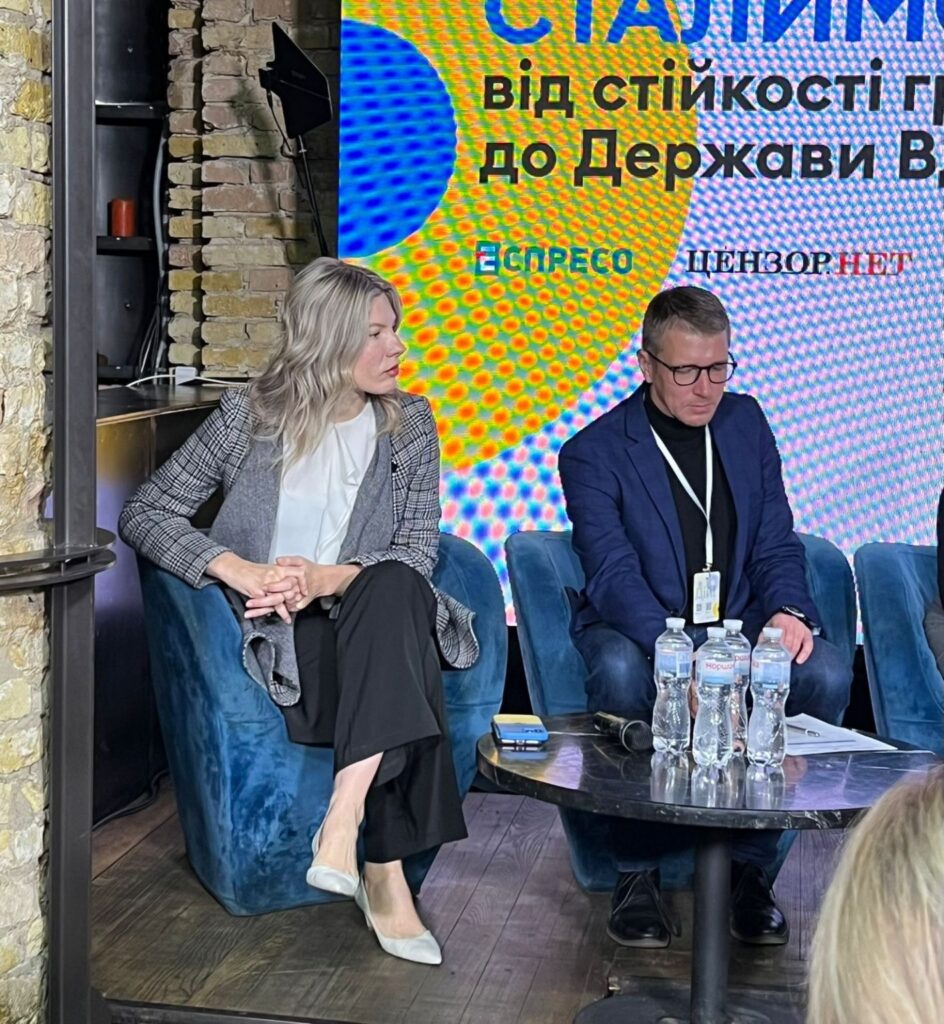
Credit: Cafe Kyiv Instagram.
In 2022 and 2023, the focus was primarily on building support for Ukraine by underlining the suffering of the Ukrainian people and portraying Russia as evil and treacherous, while following the government-led narrative of dangling carrots, such as wheat or energy. From early to mid-2024 forward, Ukrainian diaspora shifted from pleading discourse to one that highlights Ukrainian contributions, ranging from the military to the academic. This evolution affected all facets of Ukraine’s lobbying, for example in Mali, at fora such as the Paris Defense and Strategy Forum, political and artistic events such as the Cafe Kyiv in Berlin, or at film festivals such as the Berlinale.
The diaspora was instrumental in changing this situation by promoting the success and positive contributions Ukrainians are making in various domains. The most prominent example of this change is how the diaspora is promoting Ukraine’s drone technology and its ability to counter disinformation not only online but through the development of tools that increase resilience against such threats. In both cases, the narrative shifted to what others can learn from Ukraine, how its knowledge can strengthen its allies and be applied elsewhere. It is about emphasizing strength rather than weakness, on creating partnerships rather than seeking donors.
This change reverberated in other areas where the diaspora is active. In academia, it led to the establishment of new think tanks and contributing to research projects that use the lessons from the battlefield and apply them to both the war in Ukraine and other fields, such as medicine, economy, psychology, AI, crisis and political communication, geography, or aerospace. Culturally, the diaspora promoted the talent of Ukrainian artists beyond the narrative of the war, notably using digital art forms that appeal to a younger and broader public and have a global reach. Economically, the diaspora’s narrative was able to create new markets for Ukrainian products by focusing on the quality, reliability and affordability of the products and the ingenuity and resourcefulness of Ukrainian industries.
This approach gained greater importance as the rhetoric surrounding Ukrainians outside Ukraine became more negative, both organically and fueled by Russian-based propaganda, like the Paris “bed bug plague” allegedly brought by Ukrainian refugees to France.
How the diaspora sets the narrative tone
The impact of the narrative change is significant both inside and outside Ukraine and in the short and long term. Financially it created new supply lines and revenue flows as well as long-term business partnerships, as recent economic reports suggest. Politically, it allowed the Ukrainian government to adapt its communications and diplomatic strategies, and to become more effective as it took into account the feedback and initiatives of the diaspora. This helped Ukrainian foreign policy representatives improve their overall approach, especially with countries with whom they had a very limited or poor relationship. The diaspora helped provide the tools, the products and the approach to deal at eye level and to project strength, power, and reliability in the long term.
Socially, the asset-focused discourse helps counteract the “Ukraine fatigue” and growing negative political instrumentation of Ukrainian refugees, while ensuring that the lobbying efforts for support remain well-received and of interest. This is particularly true in Europe, where the diaspora is instrumental in mitigating the negative effects of the Trump administration’s fluctuating position on Ukraine. It does so by ensuring that European decisionmakers understand that investing in Ukraine’s resistance equates investing in Europe’s security and future, and therefore continue to look for ways to compensate for the losses incurred by the reduction in US support to Ukraine.
A new playbook for nonviolent resistance
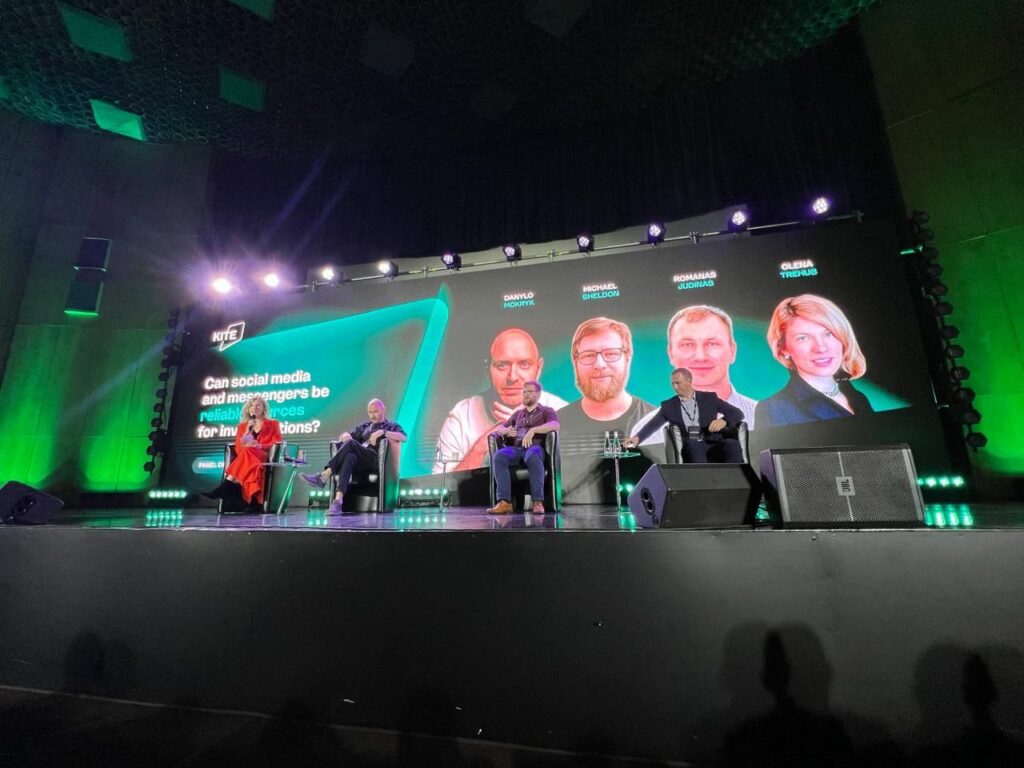
Olena Tregub moderates a discussion in Kyiv on the role of social media and messengers in investigations. In contemporary conflicts, digital platforms are not only sources of evidence but also spaces where narratives are shaped and contested. Credit: Olena Tregub
For the world’s nonviolent movements for freedom, and the fields of defense and security in general, the work of the Ukrainian diaspora represents a new model of support and involvement. Whereas historically, the appeals were largely limited to financial support and lobbying efforts, the Ukrainian diaspora today mobilizes broader support, compensates for the weaknesses of governmental policies, creates strategic and tactical shifts, as well as strong opportunities and assets in the short and long term, i.e. during and beyond the conflict period.
More importantly, it shows an adaptability and a sociopolitical awareness that mitigates topic fatigue and allows it to maintain traction for its efforts. This diaspora is proactive rather than reactive in its resistance efforts, which in turn strengthens the resilience and engagement capabilities and capacities for unarmed resistance.
Other anti-colonial movements of the 21st century can learn from the Ukrainian diaspora’s truly global reach as a protagonist of unarmed resistance and from the impact it’s having on the multiple fronts of the war in Ukraine. The diaspora’s involvement is setting a new standard for diaspora-driven, unarmed resistance strategies and mobilization capabilities—a standard with the potential to be emulated anywhere in the world.

You may also like:
The DNA of Civil Resistance in Ukraine: Keys to the Development of Civilian-Based Defense Systems
Ukraine’s Resilience Model: Purposeful Stakeholder Collaboration over Keeping the Socially Valuable Core
The Quiet Frontline: How Civil Society Brought Good Governance into Defense and Made Ukraine Defendable