Minds of the Movement
An ICNC blog on the people and power of civil resistance
The Magsasaka Lutayan (Farmers of Lutayan) contingent marches alongside environmental activists at the 2022 Koronadal rally against open-pit mining. Credit: Louie Pacardo.
Tampakan is a small town you may not have even heard of. It has a population of just 42,304 people, with natural forest covering 60% of its land. The town sits in the province of South Cotabato, roughly 30 minutes from where I live in the southern Philippines. Slow, idyllic, and built more around farm life than anything else. And it sits on top of one of the largest untapped copper-gold deposits on Earth, worth an estimated $150 to $200 billion.
Corporations have tried to dig it out for thirty years. For thirty years, they’ve failed. Not a single shovel has broken ground on commercial mining. Their failure is our success. A coalition of farmers, mothers, students, Indigenous communities, workers, and the Catholic Church has built the longest-running resistance to a single mining project in Philippine history.
How It Began
It started in 1991, when a Blaan tribal council in the Tampakan mountains encountered "white strangers" walking their ancestral land. These were surveyors for an Australian mining company who wanted the treasures beneath the Blaan land. Within months, a local priest brought concerned Blaan tribal leaders to the Diocese of Marbel. An organized resistance was born.
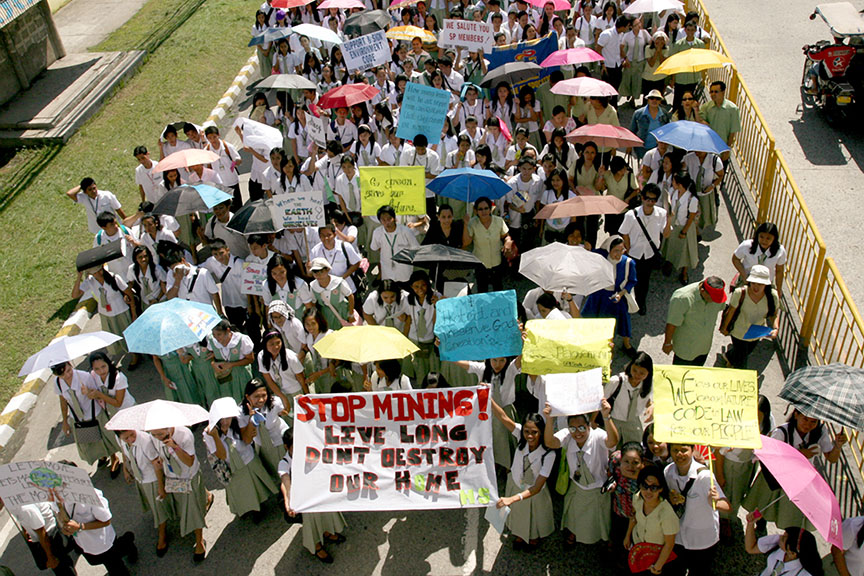
Notre Dame of Marbel University students and teachers protest in 2010 as they hail passage of the provincial government's Environment Code banning open-pit mining. Photo by Toto Lozano/Mindanews
My own family's part in this story starts here too. My grandparents personally knew Sister Susan Bolanio and Bishop Dinualdo Gutierrez, the two figures whose names defined this resistance for decades. Gutierrez’s moral authority could fill gymnasiums with thousands willing to fight for their forests. Bolanio would drive a four-wheel-drive deep into the mountains to directly organize Blaan communities.
But a figurehead doesn't do that work alone. Around every rally Gutierrez led, every community Bolanio reached, was a layer of people known to and trusted by them. These people kept relationships alive, information flowing, and communities connected between the crises that made the news. That layer is the reason there was still a movement left to inherit once the figureheads were gone.
I inherited that same work decades later, through three doors. First, Notre Dame of Marbel University, a Church-run institution that hosted anti-mining forums and ran a legal aid center challenging mining-friendly executive orders in court. Second, the writings of Bong Sarmiento, whose decades of reporting on this movement taught me the history before I ever lived it myself. Third, Rene Pamplona, who spent fifteen years doing this work through the Diocese before founding the Convergence of Initiatives for Environmental Justice (CIEJ) in 2013. CIEJ later brought me in directly, the same way Gutierrez and Bolanio once brought in people before me.
Locking in the Win
In 2010, South Cotabato legislators passed an outright ban on open-pit mining. It didn't happen by accident. It came after years of sustained pressure. A joint secretariat of three Mindanao bishops, a 10,000-person march to the provincial capitol pressing the outgoing governor to sign the code, and a widely circulated study, "Philippines: Mining or Food?" gave local officials a concrete reason to vote yes. The result was a law anyone could understand and defend. It became the movement's single most durable weapon, locking the momentum into something legally binding. It’s also part of why our movement members train as paralegals, so no technical ruling can slip past us.
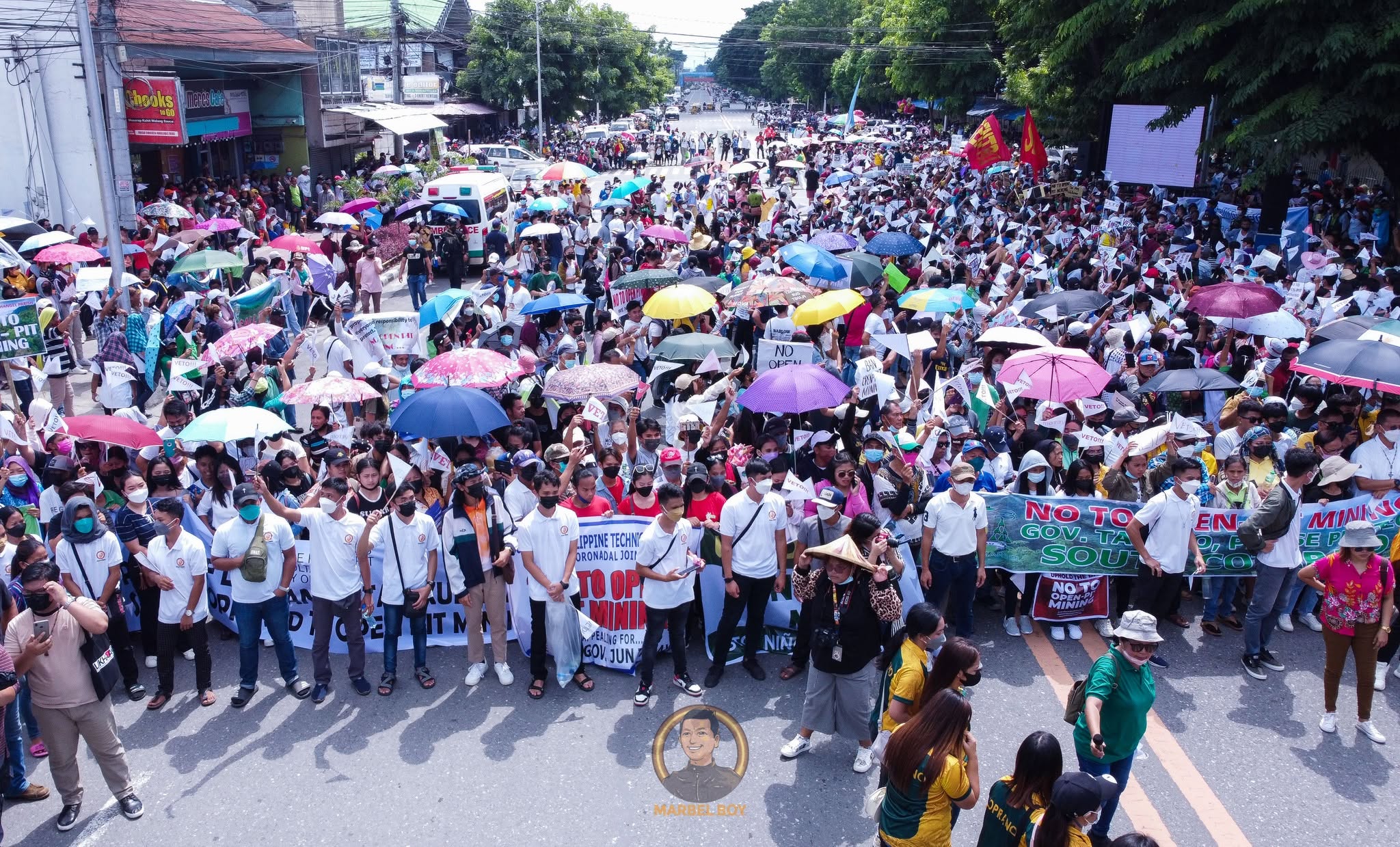
Thousands join the Diocese of Marbel's Peace March in Koronadal, June 1, 2022, calling on Governor Reynaldo Tamayo Jr. to veto the ordinance lifting South Cotabato's open-pit mining ban. The Diocese had just submitted a 93,453-signature petition against the lifting of the ban. Credit: Louie Pacardo
Mass sympathy becomes lasting power only when someone converts it into something structural. A court ruling with no one anchoring it in place can be undone quietly. A law that thousands of ordinary people understand and will defend in the streets is much harder to reverse.
That instinct showed up in 2022, when the provincial board voted to lift the ban. Thousands of us marched to press current Governor Tamayo to veto that decision. He couldn't ignore it. The ban stayed.
Building the movement's Pipeline
I am living proof that this movement's pipeline from participant to organizer works. I attended a few campaign activities. Soon, I was a dedicated direct CIEJ volunteer. People who come in through campaigns return decade after decade. That's how this movement has survived without a single permanent headquarters or large paid staff.
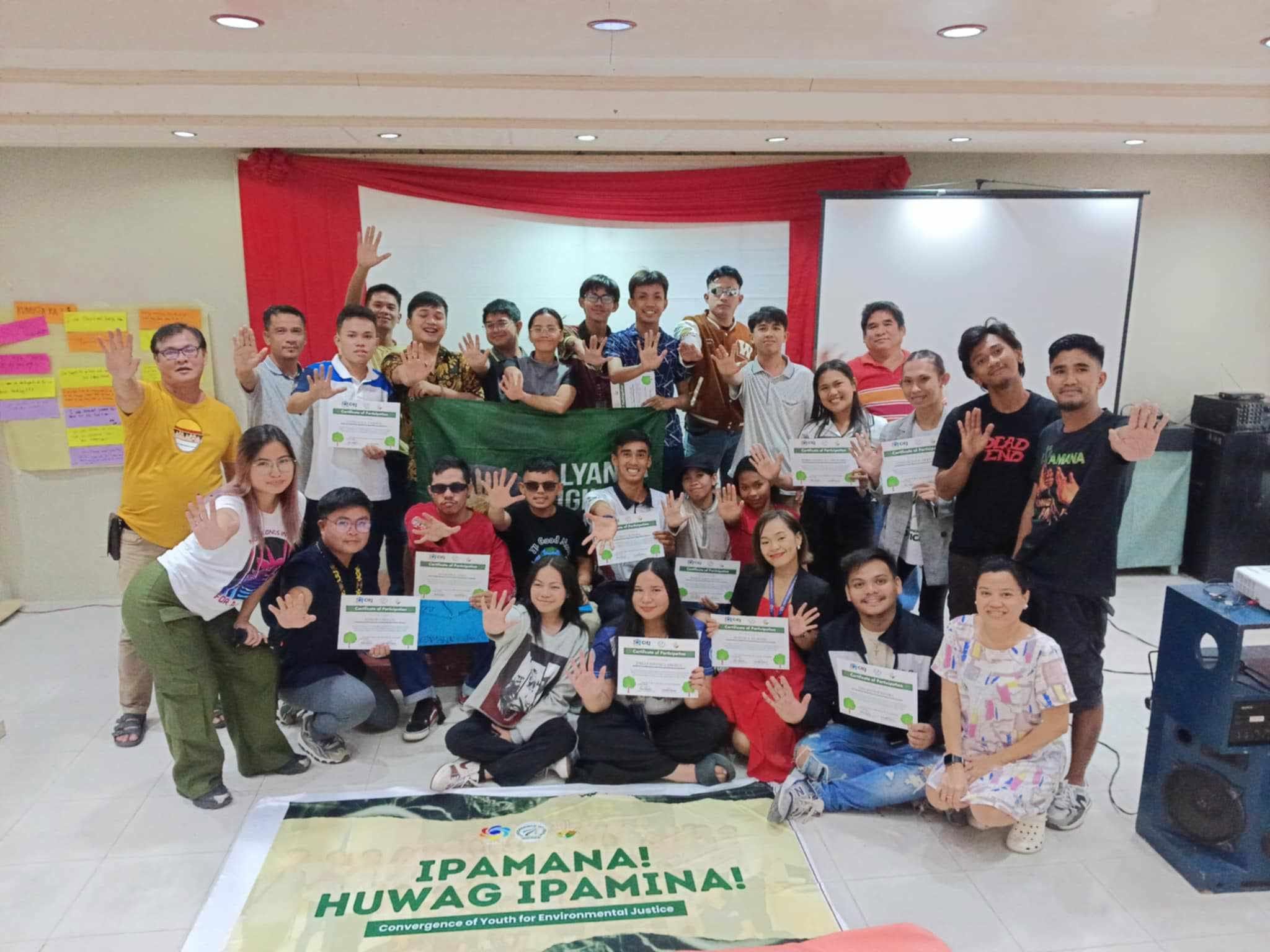
A CIEJ capacity-building workshop on environmental law and social media advocacy, Koronadal City. Training young organizers in digital rights-conscious advocacy and legal literacy. Credit: CIEJ.
The mentorship that pulled me in happened through direct, personal exposure to elders who had the time and trust to bring someone in individually. That's why I now formally train a new cohort of young leaders for CIEJ through the Convergence of Youth for Environmental Justice (CYEJ). Most had no prior connection to this movement at all. I find them through cultural events I help run, youth activities I show up to, and school organizations I partner with. Social media helps, too. A post can reach someone I would never have crossed paths with.
We haven't stopped the structural work either, and we’re not waiting for the next crisis to start it. We're building partnerships with local governments, among other things, while joining the national push to replace the Mining Act entirely with the Alternative Minerals Management Bill, still pending in Congress. If the lesson of 2010 was to convert a crisis into structure, this is us making sure the structure is ready before crisis arrives.
The Test Now
That inheritance is being tested again right now. This August, three of the country's most powerful business dynasties moved on Tampakan together: the Sy family, the second-richest in the Philippines; the Consunjis, owners of the country's largest coal producer; and the Alcantaras, whose patriarch has quietly sat as vice chairman of the mining company itself for years. Days later, President Marcos signed an executive order fast-tracking privatization of the country's mineral wealth, naming copper first. Domestic capital, aligned with the state, is now betting that this is finally the moment they get their hands on Tampakan. Increasingly, so is our fight: tracking stock filings and merger disclosures is now as much our work as tracking court dockets.
Their own timeline gives it away. This mine was supposed to open in 2016, then 2026. Neither happened. Now they target 2028. Every missed deadline is three decades of work still holding. We know what this moment requires of us, because we've done it before, twice over: take whatever the crisis hands us — a crowd, a cause, a moment of attention — and do the quiet work of building something out of it that doesn't disappear when the moment does.