Minds of the Movement
An ICNC blog on the people and power of civil resistance
Ukrainian volunteers building protection materials. Ukraine's very mature civil society plays diverse roles in civilian protection and resilience since the full-scale invasion. Credit:
Russia’s war against Ukraine is widely described as a war of attrition, fought not only on the battlefield, but across political, economic, social, and informational domains. In such a war, national survival depends on more than the strength of the armed forces. It also depends on whether society itself can withstand prolonged pressure, adapt under extreme conditions, and recover while the conflict is still ongoing. In Ukraine, civil society has become a decisive factor in this struggle.

Credit: NAKO.
Russia’s aggression has always aimed beyond just territorial gain. Its goals include undermining Ukraine’s sovereignty and identity, forcibly reshaping the European security order, and weakening democratic governance. These aims are pursued through a broad strategy often called “3D”: discrediting political and military leaders, destabilizing society, and demoralizing the defense forces. This strategy has been evident since 2007, after the proclamation of Putin’s famous speech at the Munich Security Conference, and intensified significantly after the full-scale invasion in 2022.
To advance these aims, Russia has relied on a mix of military and non-military tools: military pressure and occupation, forced passportization and deportations, suppression of language and culture, disinformation campaigns, psychological operations, and the manipulation of corruption narratives. These actions are designed not only to defeat Ukraine militarily but to exhaust and fragment society, to erode trust, cohesion, and the will to resist. In this sense, Ukrainian civil society has been a direct target of the war.
Closing urgent capability gaps

Credit: Akim Galimov, producer of Resistance, 1+1 Media.
Ukrainian civil society has responded to this unprovoked and unjustified Russian war of aggression by applying a comprehensive, multi-layered approach. Its actions have ranged from large-scale volunteer mobilization in support of the Defense Forces of Ukraine during the initial stages of the invasion, to strengthening the resilience of the defense industrial base, advocating for the critical operational needs of the security and defense forces, investigating the violation and circumvention of international sanctions imposed on Russia, and conducting human rights and community support initiatives. Through these efforts, Ukrainian civil society has demonstrated a notable level of organizational capacity and maturity.
Since 2014, and especially since the full-scale invasion in 2022, millions of Ukrainians have contributed money, time, skills, and expertise to support Ukrainian defense. Surveys suggest that between 79 and 86 percent of the population has participated in some form of support activity, including donations, volunteering, and fundraising. These efforts have financed humanitarian aid, community assistance, and equipment for the Defense Forces, effectively creating a parallel support system alongside the state. Large volunteer organizations such as Come Back Alive and the Serhiy Prytula Foundation have raised substantial funds to procure equipment, including drones and protective gear, for frontline Defense forces.
Their work illustrates how civil society has helped close urgent capability gaps while maintaining transparency and public trust. At the same time, smaller volunteer networks have supported logistics, evacuation, and basic needs, often responding faster than formal institutions in rapidly changing conditions.
Keeping souls alive
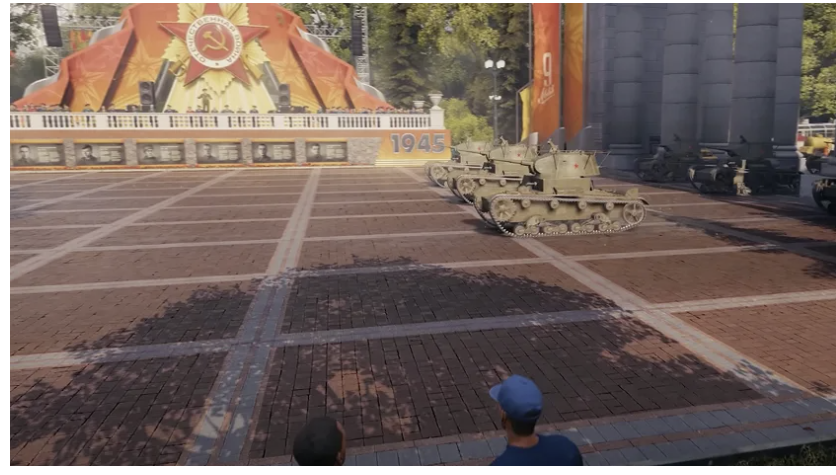
Credit: Propaganda is appearing in Minecraft and other popular games and discussion groups as the Kremlin tries to win over new audiences. Credit: Molfar Intelligence Institute.
Civil society has also played a crucial role in the information domain. Activists and NGOs have worked to counter disinformation, expose Russian psychological operations, and maintain access to reliable information. Organizations such as the Molfar Intelligence Institute, and the Snake Island Institute have contributed open-source intelligence, analytical products, and technology testing that support both domestic resilience and international advocacy. This informational resistance has been essential in preserving public morale and sustaining global attention to the war.
Beyond immediate resistance, civil society has taken on responsibilities related to care, recovery, and social cohesion. Ukrainian communities became the first line of crisis response, particularly at the local level. Territorial communities organized shelters, supported internally displaced persons, assisted local businesses, and coordinated humanitarian aid. In many cases, they acted as decentralized crisis-management hubs, demonstrating that resilience is built locally, not imposed from above.
Rehabilitation and medical support have become another critical area of civic engagement. New centers such as NEXT STEP Ukraine, UNBROKEN, Superhumans Center, and other rehabilitation initiatives have emerged to address the needs of wounded civilians and soldiers. These institutions, alongside hundreds of hospitals and healthcare sites damaged or repurposed by the war, reflect society’s capacity to care for its members while under attack. This form of resilience is inseparable from resistance: it sustains the people who make continued resistance possible.
Sustaining the country despite war
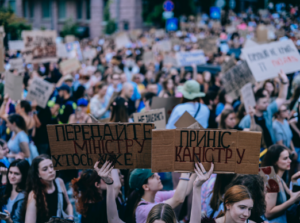
Cardboard Revolution to hold the government accountable even in the midst of war. Summer 2025. Credit: Seameer via Instagram.
Ukrainian activists work actively to safeguard access to objective information, transparency, accountability, and democratic participation—key pillars of societal resistance and resilience, and essential conditions for Ukraine’s future recovery. Organizations such as the Independent Anti-Corruption Commission (NAKO), led by Olena Tregub, monitor corruption risks and promote transparency and accountability in support of Ukraine’s national defense, security, and sovereignty.
At the same time, the International Center for Ukrainian Victory and the National Interests Advocacy Network (ANTS), under the leadership of former Member of Parliament Hanna Hopko, pursue accountability for Russian aggression, while the Anti-Corruption Action Center, led by Daria Kalyniuk and Vitalii Shabunin, advocates for more effective governance at both the local and central levels.
International support has been a vital enabler of Ukraine’s resistance and resilience. Political, economic, humanitarian, and military assistance from Western governments and societies has strengthened Ukraine’s capacity to defend itself and sustain its population. This support has been most effective where it has complemented, rather than substituted, the agency of Ukrainian institutions and civil society. The Ukrainian people remain deeply grateful for this solidarity.
What comes first, resilience or resistance? Collective agency
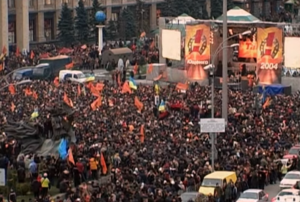
Credit: Orange Revolution, ICNC Films.
These contemporary efforts are not accidental. Ukraine’s strong civil society is rooted in a long tradition of collective self-governance and civic participation. Across different historical periods, Ukrainian society has repeatedly developed mechanisms for collective decision-making, accountability, and community-level organization in times of crisis or external threat. Ukraine also has a long history of nonviolent revolution, including among others the Revolution on Granite in 1990, the Orange Revolution in 2004, the Revolution of Dignity or Maidan Revolution in 2014, and the Cardboard Revolution in 2025. Ukrainians across the country accumulated social capital, organizing skills, and nonviolent battlefield experience, significantly contributing to civil society maturity.
Early forms of civic participation can be traced to the popular assemblies (veche) of Kyivan Rus (10th–13th centuries), which functioned as collective decision-making bodies in several major cities, including Kyiv, Chernihiv, and Halych. Although political power rested with princes, these assemblies enabled communities to approve leaders, negotiate alliances, and influence local governance.
Later, the spread of Magdeburg Law across Ukrainian cities between the 14th and 18th centuries further institutionalized local self-governance. Towns elected councils, burgomasters, and judges, and exercised authority over taxation, trade, and local courts. This tradition strengthened civic responsibility and embedded participatory governance at the urban level.
Democratic practices were even more pronounced in the Cossack political tradition. The Zaporizhian Sich functioned as one of the most participatory political systems in early modern Europe, with elected leadership, annual accountability, and major decisions taken through open assemblies (radas). Similarly, within the Cossack Hetmanate, both national and local leaders were elected, and authority was closely tied to community consent.
At the grassroots level, rural communities also practiced forms of self-rule through village assemblies and elected elders, managing land use, taxation, and dispute resolution. Together, these traditions reinforced a culture of collective responsibility and bottom-up organization that continues to shape Ukrainian civil society today.
Resistance as a social practice
Modern wars are not won by weapons and doctrines alone. They are won by societies that remain organized, motivated, and united under pressure. Ukrainian civil society has demonstrated that resistance is not only an armed act but a collective social practice, expressed through volunteering, care, accountability, and mutual support. People play many roles, whether auxiliary to military force or as unarmed defenders exercising a very peculiar force: people power.
What can Europe do for Ukraine and for itself?
Ukraine has learned some hard lessons. First, the National Defense and Security Council, Ministry of Defense, and other executive bodies should not have had to rely purely on volunteer energy, spontaneous civic courage, and sacrifice. If they had adopted a doctrinal framework of civilian-based defense—a National Civil Resilience Strategy, a Law on National
Resistance, and explicit roles for civil society networks in the Strategic National Defense Plan—our civic shield would have had a better starting position.Secondly, war fatigue after 2014 could have been mitigated by improved civilian-based defense literacy. Beyond digital security, counter-information, and first aid medical help, efforts were and are also needed in civilian resistance education and training and exercises of different scenarios of public survival.
Lastly, Ukrainian authorities' fear of provoking Russia and of economic weakness prevented them from acknowledging challenges, hindering civil society's readiness for worst-case scenarios. Part of being “leaders of people” is honest talk, and acknowledging one’s own fears as a leader is not the same as fearmongering.
If European decisionmakers want Ukraine—and their own countries—to withstand Russian aggression, they need to invest in both military support and social infrastructure. They should shift their focus from just security and defense reforms to supporting civilian-based defense, nonviolent resistance, and resilience during occupation. Governments can finance training seminars, anti-disinformation efforts, and integration programs for veterans and civil society. These actions could help reduce chaos in civil society during crises.
As an old Ukrainian proverb reminds us, “from the world, by a thread—a poor man’s shirt.” Each