Minds of the Movement
An ICNC blog on the people and power of civil resistance
Iran, September 2022. Credit: Anonymous source.
Three years ago, a tragedy ignited one of the most powerful civil movements in Iran’s modern history. In September 2022, Mahsa (Jina) Amini, a young Kurdish woman, was arrested by Iran’s so-called morality police for what the Islamic Republic deemed an “improper hijab.” She died in custody under suspicious circumstances, and her death sparked nationwide outrage.
The regime’s brutality toward women and its enforcement of compulsory hijab have persisted since the 1979 Islamic Revolution, but over the past decade- especially after the 2009 Green Movement- public resentment has deepened. Mahsa’s death ignited years of quiet anger into open revolt, a revolution that continues to live on despite the government’s relentless brutality.
This article examines the status and achievements of the Woman, Life, Freedom movement, explores its unique strategic components that could inform similar struggles in the region, and considers the possibilities for its future in Iran’s evolving social and political reality
Achievements of the Woman, Life, Freedom Movement
- Breaking the wall of fear. The movement shattered the culture of fear that had long silenced public dissent. For the first time since the 1979 Revolution, women and men across all 31 provinces (urban and rural, Persian and Kurdish, working class and elite) with over 3,000 recorded demonstrations openly defied the state. People shouted anti-regime slogans, removed hijabs, and filmed security forces without disguising their identities. This collective courage fundamentally eroded the regime’s psychological control over society.
- Challenging and transforming the compulsory hijab. Although the legal requirement remains on paper, Woman, Life, Freedom has made the compulsory hijab effectively unenforceable in many cities. Tens of thousands of women now appear unveiled in public spaces, universities, and workplaces.
- Raising awareness of women’s rights and gender equality. The movement redefined the national conversation about women’s rights. It connected issues of dress, autonomy, and bodily integrity with broader questions of justice, dignity, and democracy. Social media, art, music, and diaspora networks helped spread the message globally. Iranian women’s demands are now understood as human-rights demands, not just gender-specific grievances.
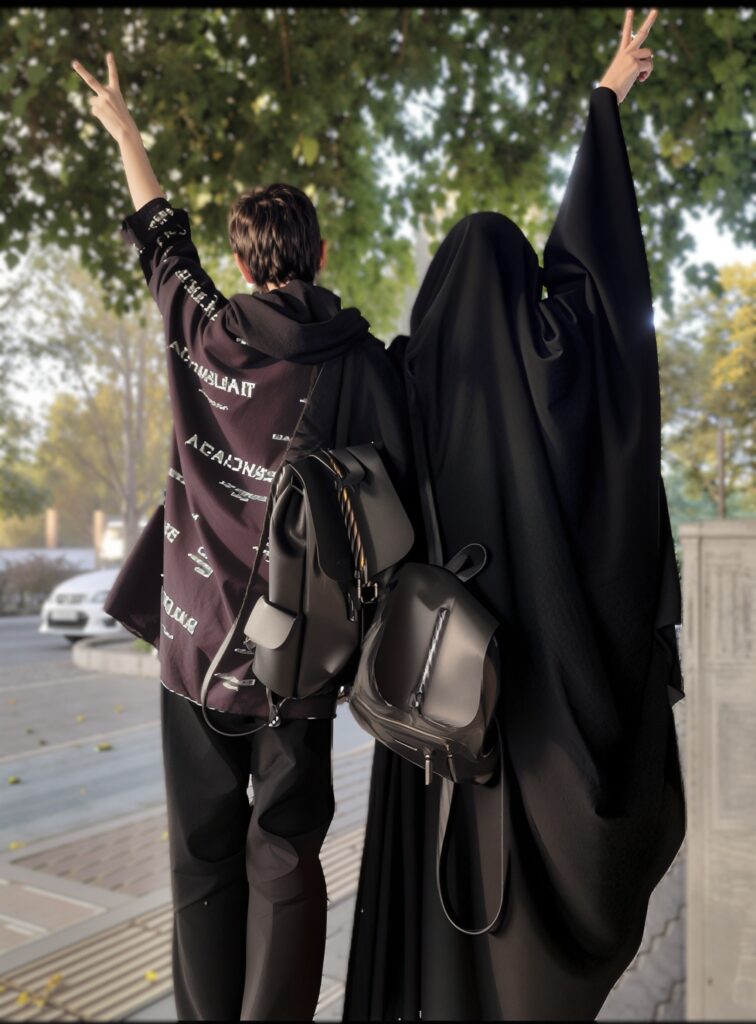
Iran, September 2022. Credit: Anonymous source.
- Strengthening male solidarity and shared civic identity. Woman, Life, Freedom generated unprecedented support from men, especially young generations. Many men joined demonstrations, protected female protesters, and publicly rejected patriarchal control. This solidarity transformed the uprising from a “women’s issue” into a national civic movement rooted in empathy, equality, and mutual respect. It also altered gender norms within families and communities, legitimizing women’s autonomy in everyday life. Human Rights Watch writes that the movement has also reshaped dynamics within families. For example, nine months after her release, Sepideh Rashno wrote on Instagram that her previously conservative brother and father had come to support her stance on women’s rights; something she described as unimaginable before her detention. HRW notes that many other women have reported similar shifts, explaining that the Woman, Life, Freedom uprising opened space for new conversations within their families about personal autonomy, dress, and their broader roles in society.
- Exposing regime fragility. The demonstrations severely undermined the regime’s legitimacy at home and abroad. Security crackdowns revealed the extent of state violence and human-rights abuses. Ladan Broumand says The movement’s success in undermining the theocracy’s legitimacy on the world stage was unprecedented in the history of Iranians’ struggles against the totalitarian regime that dominates their country,
An Iranian Model: Bottom-Up Defiance
Woman, Life, Freedom began as an act of grief and transformed into a revolutionary assertion of dignity. Denied access to NGOs and free media, Iranian women turned informal networks, art, and digital activism into powerful tools of resistance. Their courage exposed the limits of global indices that measure rights only through formal institutions, revealing a deeper truth: civic power can thrive even under repression. By confronting the state’s monopoly over public life, Iranian women transformed personal resistance into a national moral awakening.
Despite having one of the Middle East’s highest rates of female higher-education enrollment (over 60%), Iranian women remain largely excluded from public power, with labor-force participation at about 13% and only 5% of parliamentary seats. In this restrictive environment, Woman, Life, Freedom represents both rupture and revelation: a surge of collective energy long suppressed by the state.
Although countries such as Saudi Arabia and Egypt report higher female labor-force participation, their reforms have been largely state-directed and confined within controlled civic spaces. By contrast, Woman, Life, Freedom stands out as a genuine grassroots women-led movement, pioneering a form of bottom-up civic participation rarely seen elsewhere in the region.
Regional Influence
Beyond Iran’s borders, "Woman, Life, Freedom" resonated across the region, most visibly in Afghanistan and Iraqi, where women held public demonstrations chanting “Zan, Zendegi, Azadi” and directly linked their protests to the Iranian uprising. In Lebanon and Turkey, feminist organizations organized solidarity rallies and adopted the movement’s slogan in marches against gender-based violence. In Egypt, although no street protests occurred, Iranian women’s defiance sparked renewed online feminist discourse, reinforcing campaigns against harassment and state control over women’s bodies.
Education, Secularization, and Men’s Role
A defining feature of Woman, Life, Freedom is men’s active and organic participation. Fathers, brothers, and husbands encouraged women to participate in street actions, a rare phenomenon in patriarchal societies where control often begins at home. During both the 2009 Green Movement and Woman, Life, Freedom, male students protected female protesters and joined them in acts of resistance, transforming a women’s movement into a shared civic uprising. For example, a friend of mine who was active in the Green Movement was arrested, and after her release from prison, she was forced by her family to resign from her academic position in the capital and return to her small hometown. In contrast, during Woman, Life, Freedom, I heard numerous stories of young women whose male family members encouraged them to remove the compulsory hijab or join the protests.
This solidarity is rooted in two social shifts:
First, education: for two decades, Iranian women have outnumbered men in universities, normalizing gender equality. By contrast, Egypt’s coeducation remains conservative, and Saudi Arabia’s system is largely gender-segregated.
Second, secularization: a 2022 GAMAAN survey found only 32% of Iranians identify as practicing Shi’a Muslims, while over half favor separating religion from politics—a sharp contrast to Egypt and Saudi Arabia, where over 70% describe religion as central to daily life. Together, education and secularization have eroded patriarchy and fostered male empathy and egalitarianism unique to Iran.
A Gravel Path to a Bright Future
With Woman, Life, Freedom emerging as a Unique type of campaign for bottom-up civic transformation, and with rising male awareness, fading patriarchy, and declining religious radicalism, the future of Iran’s women’s movement looks promising. Iranian society has evolved beyond the regime’s control, developing resilience and solidarity in the face of repression. Although the state still uses its economic, judicial, and policing power to restrain citizens, it grows weaker under internal dissent and international pressure. Each protest, act of disobedience, and moral stand makes it harder to reverse social change. Step by step, Iranians are shaping a new civic reality rooted in equality, dignity, and shared humanity.
And as many now say with conviction: “The savior of Iran will be a woman.”