Minds of the Movement
An ICNC blog on the people and power of civil resistance
Razan’ny Vohibola members gather to sustain a struggle rooted in solidarity, shared responsibility, and collective endurance. Credit: Angélique Razafindrazoary
I am writing these lines from a place where beauty and fear coexist. Protecting the Vohibola forest has been part of my life for years, and yet every day I wonder how long it is possible to hold out without losing oneself. I continue because giving up would be more painful than fear.
In eastern Madagascar, on the edge of the Indian Ocean, the Vohibola coastal forest is one of the last remaining intact forests of its kind. For local communities, it is not just an ecosystem to be preserved. It is a sacred space, a repository of memory, passed down from generation to generation through stories, songs, and traditional rituals.
Defending the forest means defending people
In 2016, I founded the Razan'ny Vohibola ("The Ancestors of Vohibola") association to protect the forest and mobilise the community. Around 4,000 indigenous people performed a traditional ritual, sacrificing one zebu per village to symbolically entrust the forest to their ancestors. This founding act did more than mark the beginning of an organisation. It rooted the struggle in customary legitimacy and in a collective responsibility carried by the villagers themselves.
At first, the association's objective was to protect the forest from illegal deforestation and poaching. Very quickly, however, reality on the ground made clear that defending the environment was inseparable from defending fundamental rights. Razan'ny Vohibola therefore became not only a conservation structure, but also a community mechanism for protection. It supports families affected by arrests, relays information, documents pressure, and tries to preserve spaces for dialogue despite a very limited margin for manoeuvre.
That evolution is central to understanding Vohibola today. Here, environmental defense cannot be separated from the social and human costs of repression. Protecting the forest also means protecting the people who are most exposed when they choose to defend it.
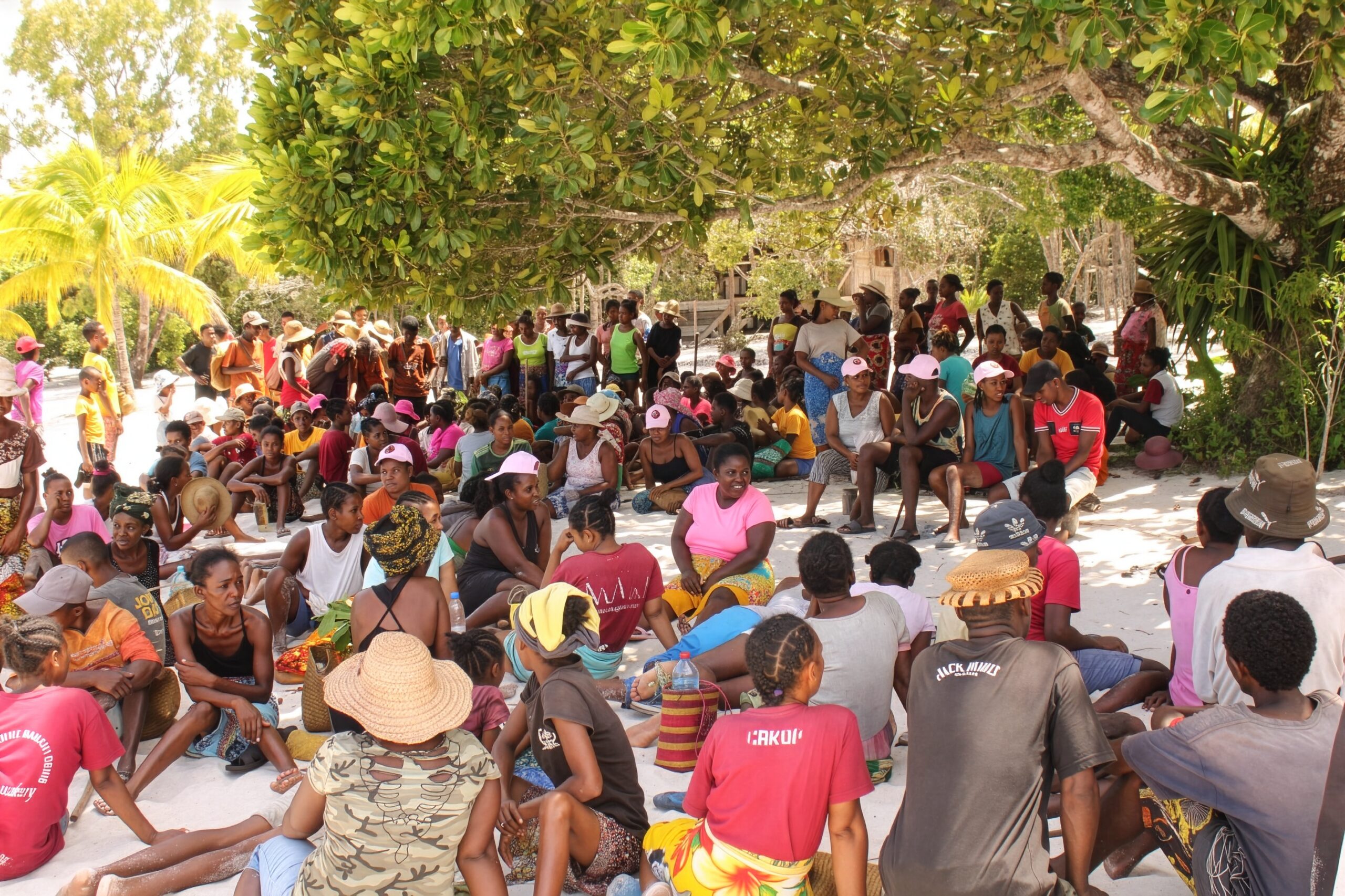
Razan’ny Vohibola gatherings reflect a form of resistance built on collective care, continuity, and local legitimacy. Credit: Angélique Razafindrazoary
Repression, visibility, and the cost of speaking out
In Madagascar, denouncing abuses, challenging unfair decisions, or opposing powerful interests exposes people to significant risks. Environmental defenders are regularly subjected to arbitrary arrests and to lengthy, uncertain legal proceedings. Pre-trial detention can last up to two years before a case is heard by a court. During that time, detention conditions are precarious, and detainees are largely dependent on their families for food.
In Vohibola, two men involved in defending the forest died in detention without ever having been tried. Their deaths profoundly impacted the community and reinforced my conviction that protecting the environment goes hand in hand with protecting people. Repression here does not only punish individuals; it seeks to exhaust families, frighten communities, and weaken the will to continue.
I felt this tension very concretely in September 2025 during the filming of The Sixth Mass Extinction, a documentary by Austrian director Werner Boote to be released in 2026. Werner Boote came specifically to understand my fight for the Vohibola forest. For me, this was both an opportunity and a moment of fear: publicising our struggle also meant exposing ourselves. During filming, I felt the pressure and the threat of arrest hanging over me and the villagers, as two soldiers were ready to arrest me if filming took place.
We had to adapt our movements, limit certain statements, and film with caution. That moment reminded me that visibility is never neutral. Silence can erase a struggle, but visibility can also increase danger for those who remain on the ground. Even peaceful testimony had to be treated as something strategic.
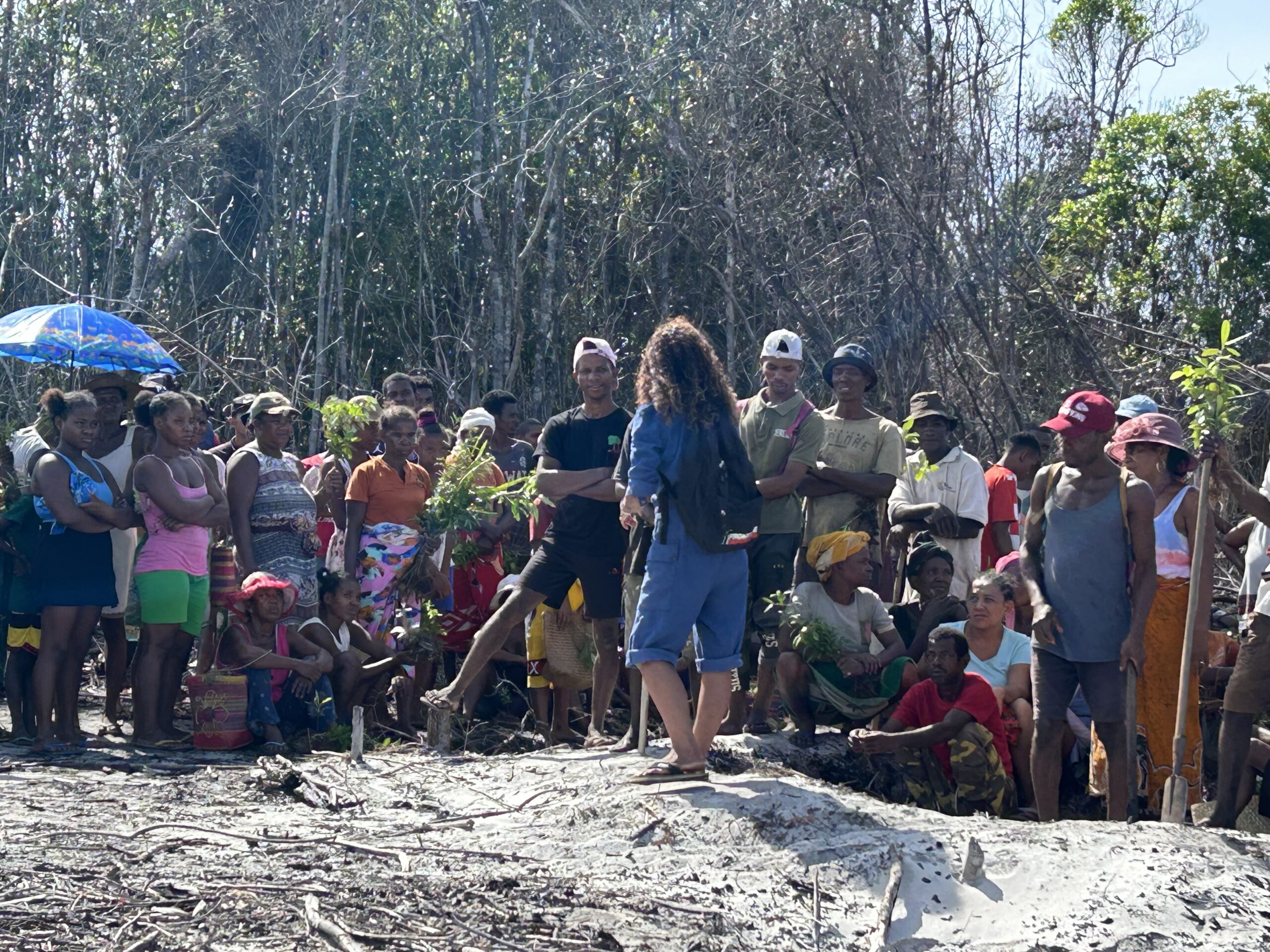
The meetings are part of the movement’s strength: spaces to listen, decide, and persevere together. Credit: Angélique Razafindrazoary
Collective organising under pressure
Since September 2025, Madagascar has been undergoing a period of political transition marked by increased security presence. Presented as a stabilisation measure, this situation has had mixed effects on the ground. In some rural areas, it has further reduced the already narrow space for expression available to local communities living with poverty and geographical isolation.
In Vohibola, this context has been used to try to impose a contested forest management structure, created without real consultation with indigenous people and in contradiction with existing customary rules. This initiative has sidelined the historic community association and traditional leaders while opening the way for deeper exploitation of the forest. While communities are under pressure, poaching and other illegal activities continue, often in a climate of impunity.
Faced with these pressures, the community's response has not been confrontation, but collective organisation. Razan'ny Vohibola works through open meetings, rotation of responsibilities, shared roles, and the right to temporary withdrawal to avoid exhaustion. The Tangalamena (kings and elders) play a central role in moral arbitration and transmission. This way of organising matters because it reduces dependence on any one individual and allows the struggle to continue even under fear and legal precarity.
The struggle in Vohibola is therefore conceived as a long-term effort, not as an act of heroism or individual sacrifice. Endurance is not secondary to resistance here; it is part of the strategy.
Protecting biodiversity requires protecting defenders
What is happening in Vohibola highlights a central issue for conservation policy: there can be no sustainable protection of biodiversity without effective protection of the people who defend it. When environmental defenders are criminalised or silenced, it is ecosystems themselves that become more vulnerable.
Even today, Madagascar does not have a fully operational legal framework for the protection of human rights and environmental defenders. In the meantime, communities like Vohibola continue to resist with the means at their disposal: memory, solidarity, and speech. These may appear fragile in the face of armed pressure and institutional exclusion, but they are what allow a community to remain present, organised, and accountable to future generations.
Of course, I am afraid sometimes. But I also carry a stubborn hope: that our voices, however fragile, will eventually count. I continue to write and to stay here because I deeply believe that caring for living things also means refusing to give up our humanity. Every time I walk in this forest, I hear the breath of those who came before me and the strength of those who will continue after me, and that gives me the courage to persevere.