Minds of the Movement
An ICNC blog on the people and power of civil resistance
Who are my people, what change do we seek, how do we get there, and what is our goal? Paris, 12 June 2026. Credit: Institut pour la paix
This article benefited from contributions from CNCR and the Minds of the Movement editorial team. It is a modified version of an article published on the Institut pour la Paix's website.
On June 12, 2026, in Paris, civic organizers, trainers, researchers, and students gathered for a presentation and workshop with Marshall Ganz titled “How Can We Protect Democracy Both Through Elections and Beyond?” The session brought together participants to examine how civil resistance movements sustain democratic engagement outside standard electoral cycles.
The relational basis of leadership
Ganz, the Rita E. Hauser Senior Lecturer in Leadership, Organizing, and Civil Society at the Harvard Kennedy School, challenged standard political definitions of leadership. Leadership functions as a practice. Official titles and positions do not create leadership. In Ganz’s framework, leadership requires accepting responsibility to enable others to achieve shared purpose under uncertain conditions.
Modern political campaigns frequently treat citizens as voters to mobilize or targets for persuasion. Ganz argued that effective civil resistance depends on direct human connections. Leadership functions through relational commitments. Transactional exchanges fail to build long-term power. Instead of starting with an abstract policy demand or a pre-packaged manifesto, organizers begin with a relational question: Who are my people? Once an organizer identifies their constituency, two operational questions follow: What do my people want, and how do we get there?
Distinguishing mobilization from organizing
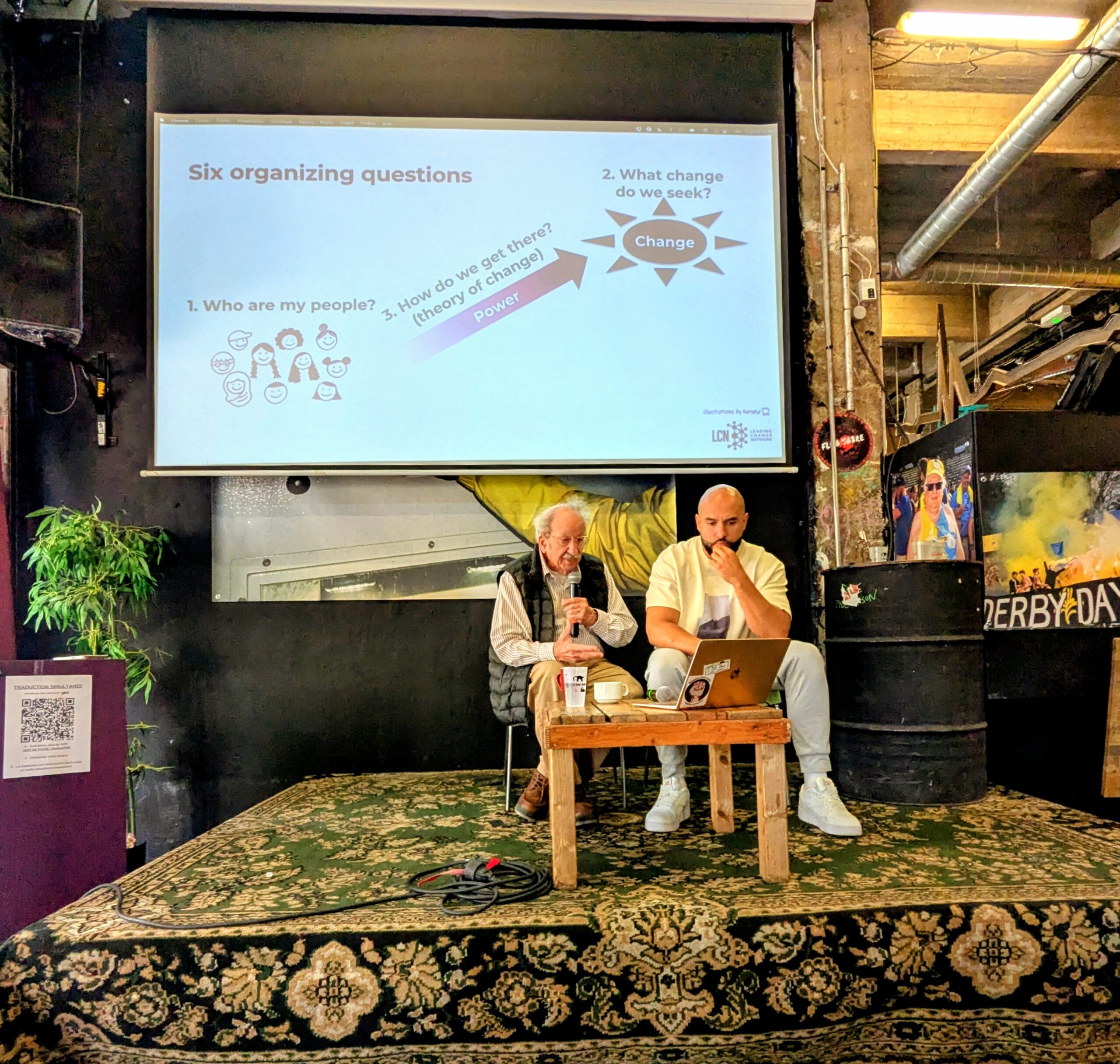
Marshall Ganz discusses the first of six organizing questions: who are my people? Credit: Institut pour la paix
Social movements frequently confuse mobilization with organizing. Mobilization gathers people for a specific event or street demonstration. High turnout at a rally creates short-term public visibility, yet large gatherings can leave behind no lasting structure once the crowd disperses. Mobilization produces visible moments that often fail to generate long-term change. Organizing builds durable capacity. It converts brief moments of public outrage into stable relationships, shared skills, structured roles, and accumulated power.
The organizing progression connects people to power, and power to change. Power exists relationally. Elites do not hold power in isolation. Power depends on how resources are combined and pooled. A group that appears weak alters power dynamics when its members pool their resources, time, energy, and collective action. Organizing measures success by what remains after an action ends. The primary test for any movement is whether a community has built the organizational capacity to act again tomorrow.
Narrative as a leadership practice
Storytelling in nonviolent resistance is often reduced to press releases or media communications. Ganz framed narrative as a core leadership practice that speaks directly to human emotion and values. Strategic arguments address the head, but narrative motivates action by engaging the heart. Nonviolent resistance requires emotional resources to overcome fear, apathy, fatigue, and isolation during prolonged struggles. Public narrative allows individuals to connect personal experiences to broader collective goals.
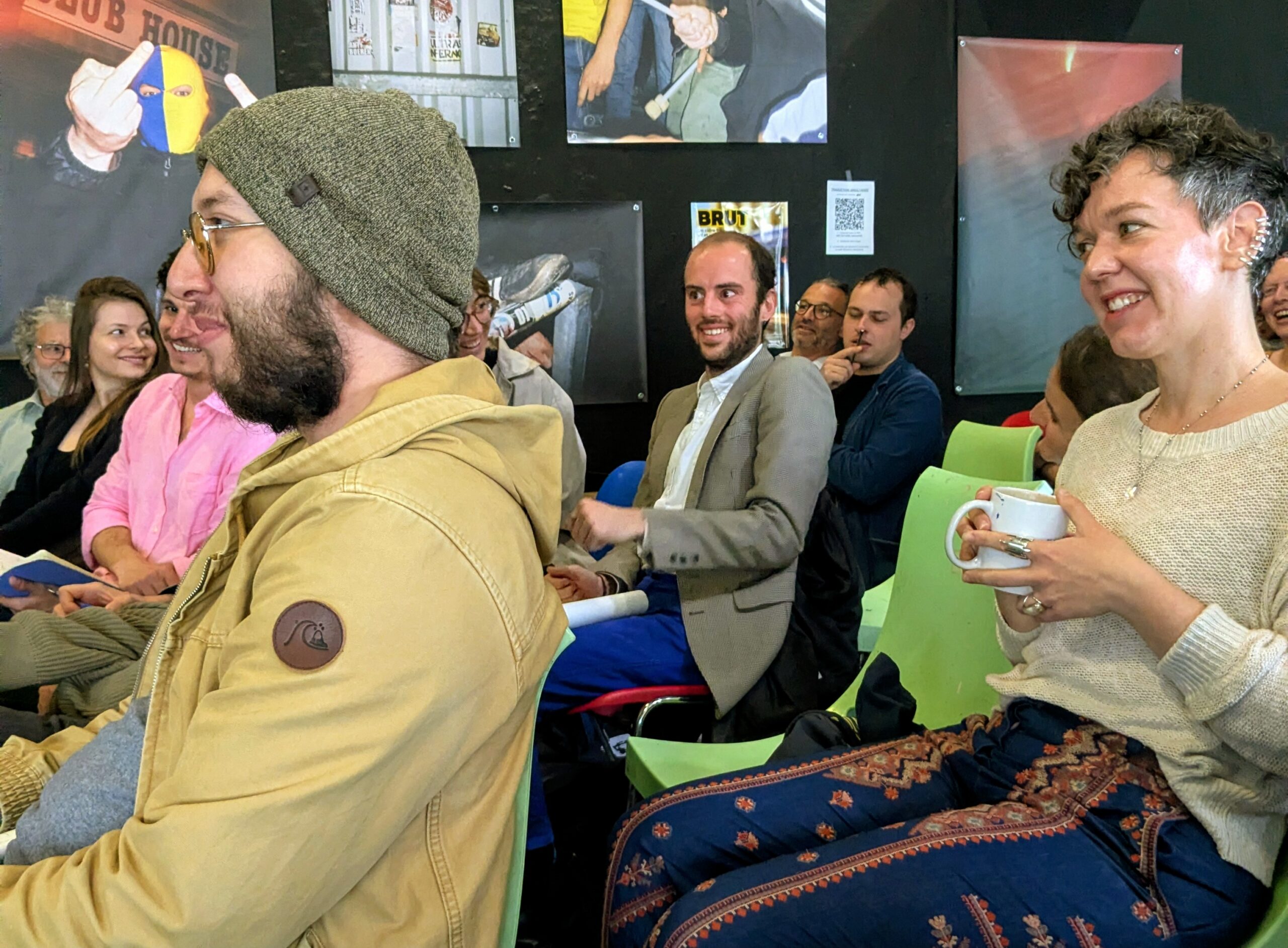
The session brought together organizers, trainers, volunteers, students, and researchers. Credit: Institut pour la paix
Ganz divides public narrative into three structured components. First is the story of self. This narrative communicates individual experiences and core values, explaining why a person feels called to take responsibility. Second is the story of us. This narrative draws upon collective experiences and shared values. It binds individuals into a unified community with a shared identity. Third is the story of now. This narrative identifies the urgent challenge facing the community, conveys hope, and specifies the concrete action required immediately. Narrative provides the emotional grounding needed to act amid uncertainty without falling into paralysis.
Values are experienced emotionally before they are grasped conceptually. “The moral of a successful story is emotionally experienced understanding, not only conceptual understanding, and a lesson of the heart, not only the head.” Argument reaches the head. Narrative is how a group finds the motivation to act at all.
Strategy as an ongoing hypothesis
Strategy is an ongoing hypothesis about how a movement moves toward a desired goal. Movements often treat strategy as a fixed document or a rigid five-year plan. Ganz emphasized that strategy develops through action, observation, evaluation, and continuous adjustment. Learning flows directly from action. Movements learn by doing. They evaluate unexpected outcomes as operational data. Strategic creativity requires accepting risk and testing new approaches in real time.
Core values guide strategy, while tactics represent the specific activities used to execute the hypothesis. Protests, strikes, boycotts, and petitions serve as tactics. A movement fails when it treats a single tactic as the full strategy. Tactical choices must continually adapt as power dynamics shift and opponents react. Strategic creativity emerges when organized groups combine resources in new ways to target opponent vulnerabilities. Tracking what works and measuring outcomes provides the empirical feedback necessary to adjust strategic hypotheses.
Structure and accountability in civil resistance
The least glamorous practice is structure, which Ganz treats as the framework that tells a group how decisions get made and who is accountable for what. Without explicit structure, collective efforts lose momentum and burn out. Structure provides clear frameworks for how decisions are made and how leaders remain accountable. Unstructured movements often collapse into informal hierarchies where unchosen figures make unmonitored choices. Structured organizations build long-term sustainability by training new leaders, sharing responsibilities, distributing tasks, and sustaining action across time.
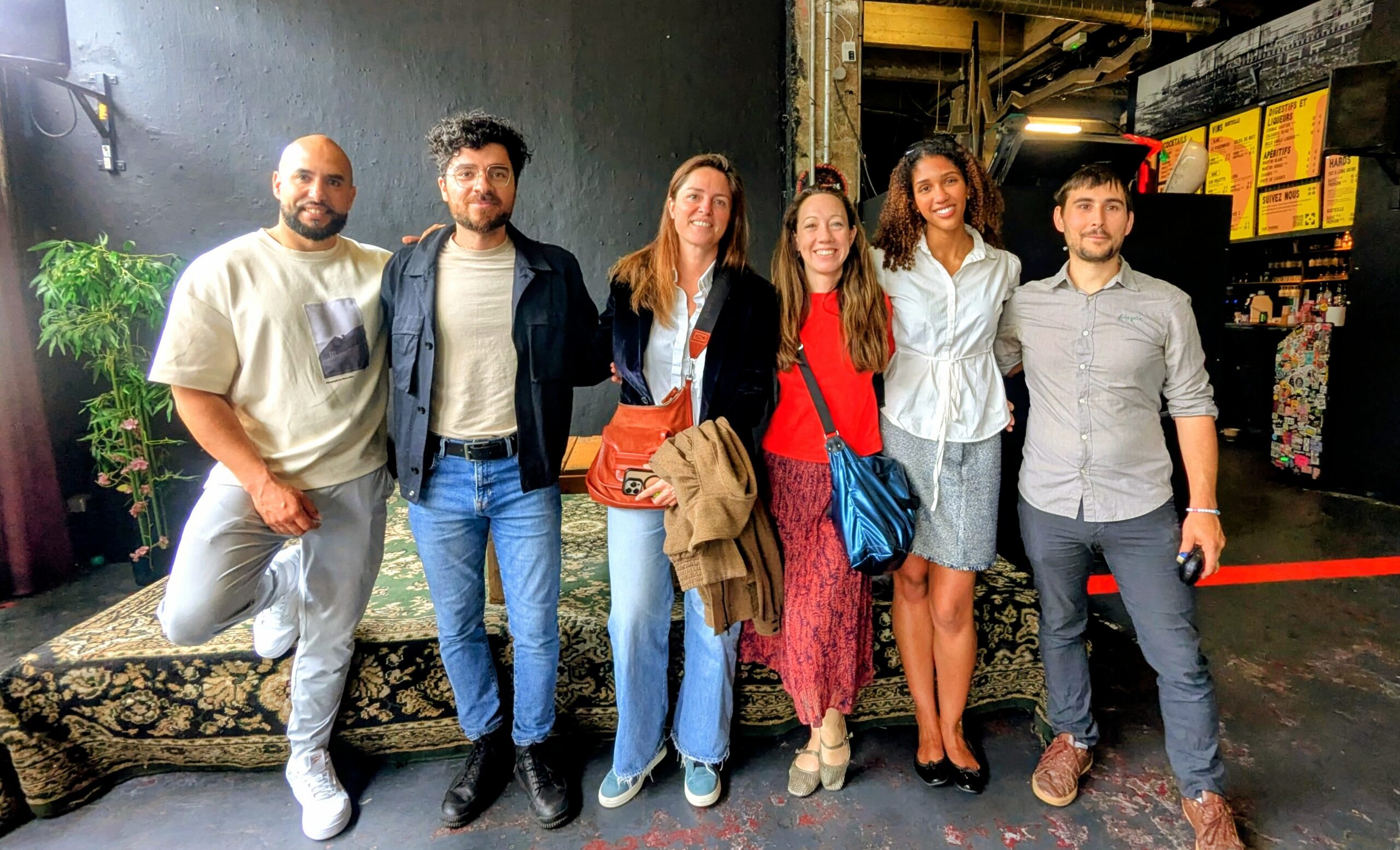
The event organizing team. Paris, 12 June 2026. Credit: Institut pour la paix
The test he sets for a leadership team is demanding: “How do you invest in developing leadership but not in creating dependency of that leadership upon you?” A structure that keeps producing new leaders is working. A structure organized around a few indispensable people has an expiry date, whether or not anyone has noticed it yet.
The Paris gathering concluded with a live coaching session featuring an organization engaged in nonviolent resistance. Participants examined how relational organizing, public narrative, strategic adaptation, and organizational structure apply to active struggles. An open audience discussion followed, connecting Ganz’s framework to current challenges in defending democratic institutions. Protecting democracy requires building civic power that persists well beyond election day.
The workshop was co-organized by the Organization for Nonviolent Movements, Non-violence XXI, Paris Centre for Democracy (PADEM), Friends of the Earth France, the Institut pour la Paix and Leading Change Network.