
Tuesday, February 10 | 12:00 – 1:30pm EST | Register Today
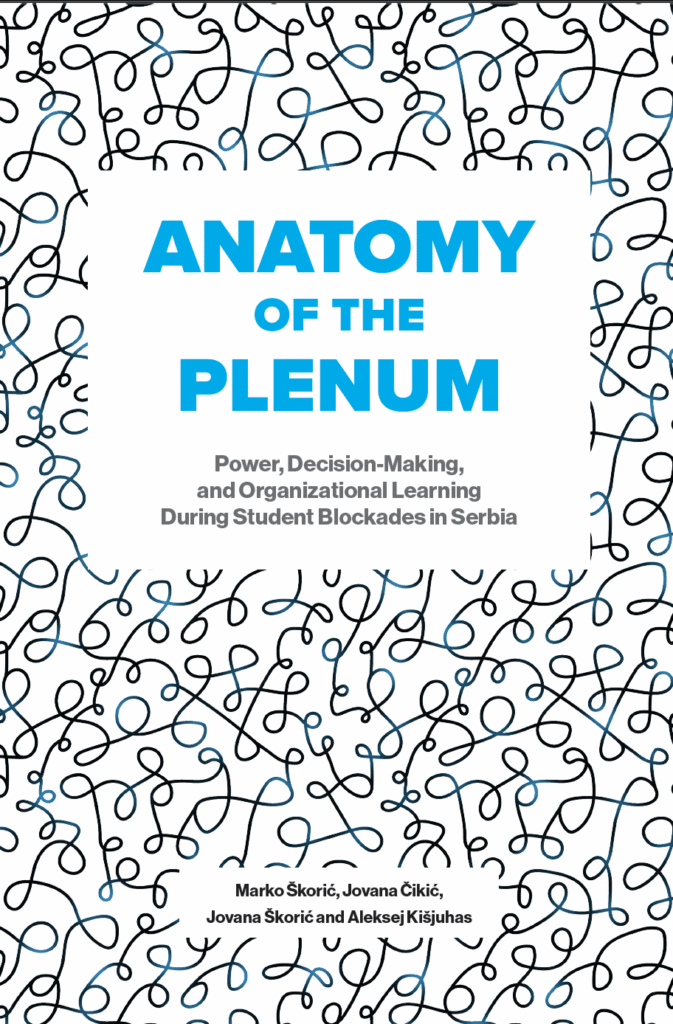 What really happens inside a movement when people decide to govern themselves? Anatomy of the Plenum takes readers inside the student blockades that swept Serbian universities after the deadly Novi Sad railway station collapse, offering a rare, ground-level view of how ordinary students built extraordinary systems of collective decision-making. Drawing on dozens of in-depth interviews, the book reveals how plenums—horizontal, participatory assemblies—became living laboratories of democracy: spaces where students debated strategy, managed conflict, organized logistics, confronted repression, and wrestled with the messy realities of direct rule by the many.
Join three of the book’s authors for a live conversation unpacking what the plenum experience teaches us about power, legitimacy, organization, and the limits—and possibilities—of participatory democracy. An activist respondent from New Generation Germany will reflect on the book’s insights from the perspective of lived movement experience, connecting the Serbian case to broader struggles for democratic agency around the world. This webinar offers a timely discussion about how movements learn, adapt, and make decisions under pressure.
Learn more about the book and download a copy in English or Serbian.
Report Release in Novi Sad, Serbia
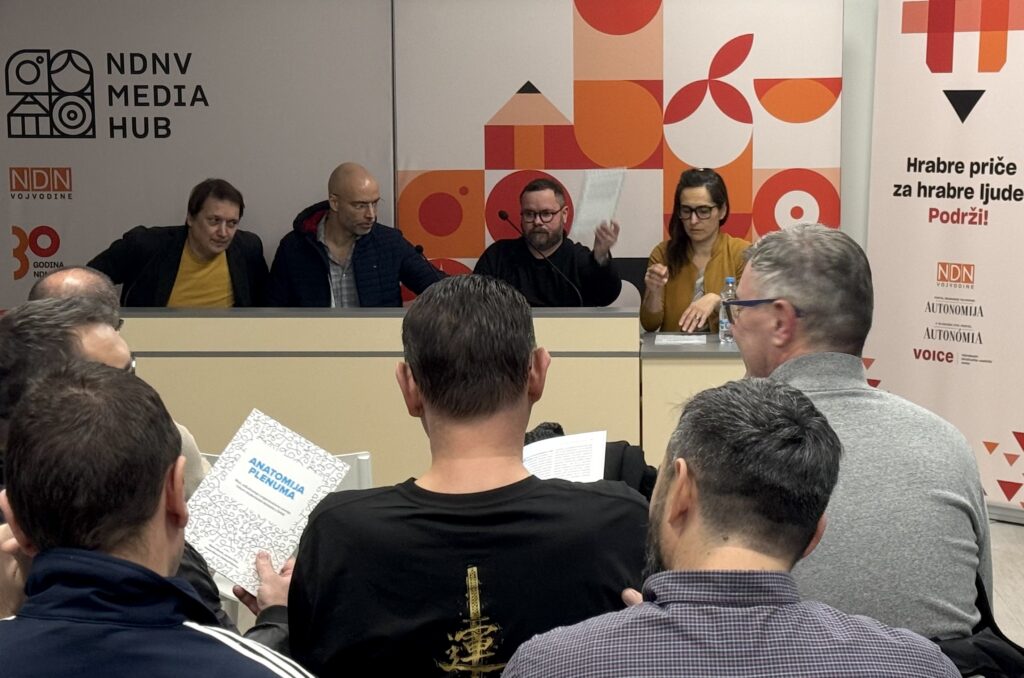
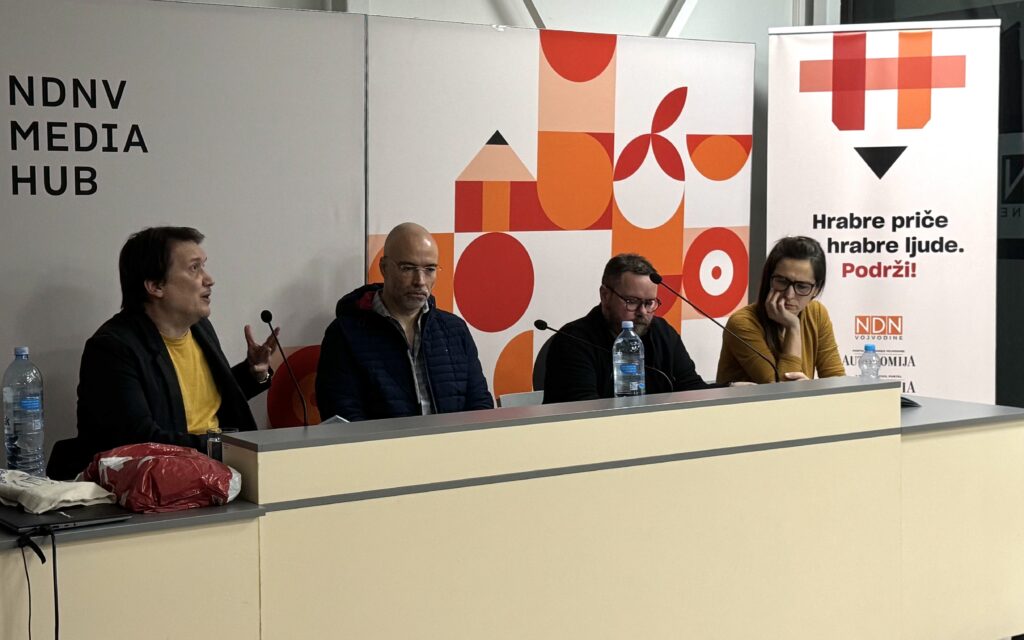
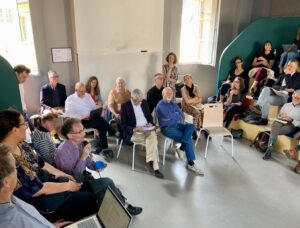
On Monday, January 26, the Center on Nonviolent Conflict Research (CNCR) hosted in Serbia the release event of our new book, Anatomy of the Plenum: Power, Decision-Making, and Organizational Learning During Student Blockades in Serbia at the Independent Journalists’ Association of Vojvodina in Novi Sad. Authors Marko Škorić, Aleksej Kišjuhas, and Jovana Čikić took the stage to present the book, sparking insightful conversations with the audience — several of whom arrived directly from a protest held earlier that day in Novi Sad.
Published by People Power Publishers, CNCR’s new publishing initiative, the book is part of the Nonviolent Conflict Special Report series, which continues the legacy of the ICNC Special Report series and ICNC Press.

 The 2025 round-up of activist writing on ICNC’s blog, Minds of the Movement is underway! Amos Oluwatoye, Merab Ingabire, Rosie Motene and many others have been reflecting on their activism and the unique ways that writing is power for them, both individually and in their communities.
 Steward Muhindo Kalyamughuma, Activist, REACT Guest Editor, DR Congo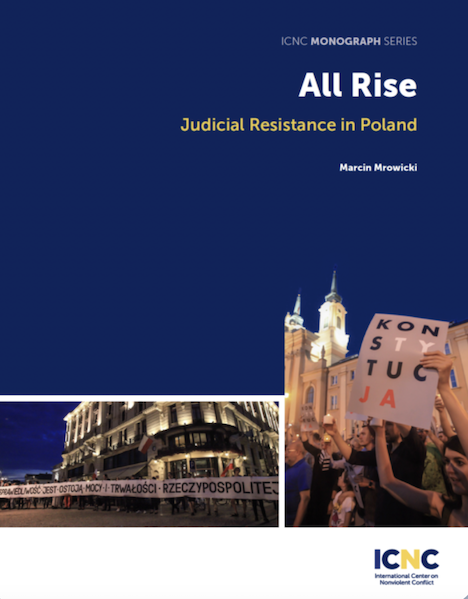
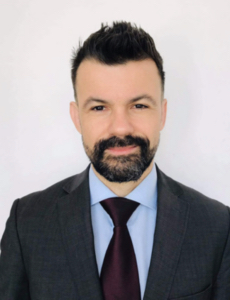 Marcin Mrowicki, PhD, is Assistant Professor of EU Law and Human Rights at the University of Warsaw (Centre for Europe). He is an author of many academic and popular science publications. He worked as a lawyer at the European Court for Human Rights in Strasbourg (2012-2016), and at the Polish Commissioner for Human Rights’ Office in Poland (2016-2024). Since February 2024, he is also a Secretary of the Inter-ministerial Committee for Restoring Rule of Law and Constitutional Order and a Deputy Head of the Criminal Law Department of the Ministry of Justice in Poland.
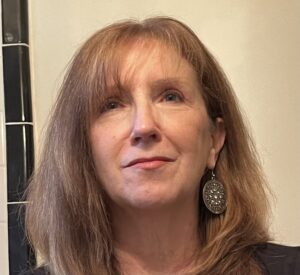 Elizabeth A. Wilson has a JD from Harvard Law School and a PhD from the University of Pennsylvania. She has taught public international law and international human rights at Seton Hall’s School of Diplomacy, Rutgers Law School, and Columbia University’s Institute for Human Rights, and has been a visiting senior fellow at the Max Planck Institute for Comparative Public Law and International Law in Heidelberg, Germany. She is the author of
 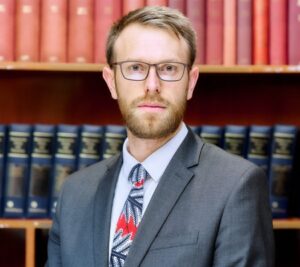 Doug Coltart is a Zimbabwean lawyer, human rights activist, social movement coach, and writer. His legal practice focuses on providing representation to journalists, activists, trade unionists, etc who are prosecuted for exercising their rights. Mostly, he just loves to dance!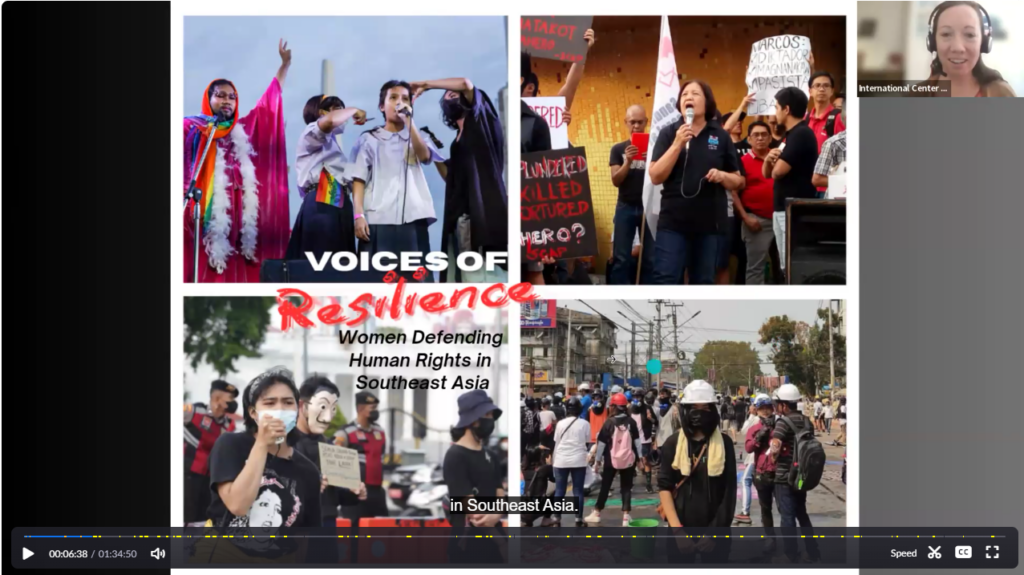

 Nitchakarn Rakwongrit (Memee) Nitchakarn Rakwongrit (Memee) is a young feminist activist based in Bangkok, Thailand. She became involved in the Thai pro-democracy protests in 2020 and has been actively engaged in activism ever since. Despite her young age, she has faced political prosecution in at least seven cases, with five occurring when she was still a minor. Currently, Memee is actively involved with the Milk Tea Alliance Thailand and strives to incorporate feminism and collective culture into social movements.
 Evy Zulyani is a history graduate working in the fields of communication and knowledge management. After graduating, she focused on labor, human rights and gender issues. Her research was published in the 2020 edition of the Indonesian Feminist Journal, focusing on women migrant workers. She is also an active member of the Asia solidarity movement, known as the Milk Tea Alliance. Currently, Evy serves as an education and research coordinator at the Media and Creative Industry Workers Union for Democracy (SINDIKASI). In her free time, she enjoys walking to explore the city and making zines.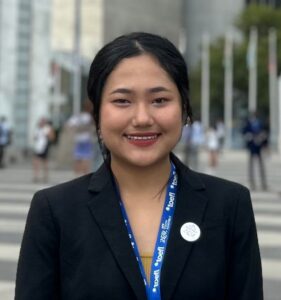
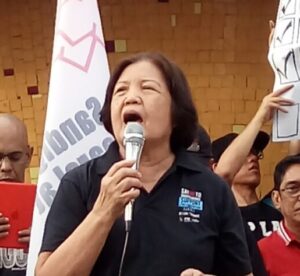 As a human rights defender for over fifty years, Nilda Sevilla steadfastly worked for institutional reforms and societal justice in the Philippines. She taught political science in college before, during and after the Ferdinand Marcos dictatorship. At the height of the resistance to the repressive regime, she helped organize a faculty union, serving as its president and achieving legal victory for her illegally dismissed colleagues. As Co-chairperson of the Families of Victims of Involuntary Disappearance (FIND) and as legislative staff chief in the House of Representatives, she actively participated in lawmaking that led to landmark human rights laws notably against enforced disappearance and torture, on death penalty prohibition, and giving martial law victims recognition and reparation, among others.
 As a young woman from one of the ethnic minorities in Myanmar, Yin Lae Aung started her activism during at university and worked for academic freedom and environmental issues. After the 2021 coup in Myanmar, she mobilized and organized youth protests against the military dictatorship, including boycotting education under junta control and joining art strikes. When the military government threatened and attempted to arrest her because of her activism, she was forced to flee to the border area in Thailand. She initiated Rangoon Voice-Cast (RVC), a platform for marginalized voices, youth and the working-class community.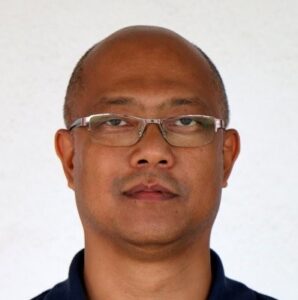
 Sarah Sheik Ali is a migrant woman of color, a feminist, and a human rights defender from Lebanon, fighting double battles against patriarchy and dictatorships and advocating for the engagement of activists in exile in change-making back home. She is a Ph.D. candidate in political science with a concentration on diaspora and gender at the Universite Libre de Bruxelles. She is the co-founder and executive director of
 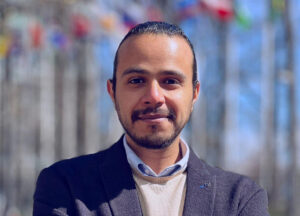 Mostafa Fouad is an exiled Egyptian human rights defender and lawyer with over ten years of experience in MENA civil society. He previously worked as a researcher at Columbia University’s Global Freedom of Expression project. Currently, he leads HuMENA’s programs, focusing on capacity building and empowering HRDs, activists, the MENA diaspora, and social movements across the region to foster transformational change in innovative ways. He is also a co-founder of several networks, including the Innovation for Change Network – MENA Hub and the MENA Network for Countering Hate Speech. His human rights research covers various topics such as gender, exile, democracy, justice, hate speech, and accountability. Mostafa is dedicated to creating positive change.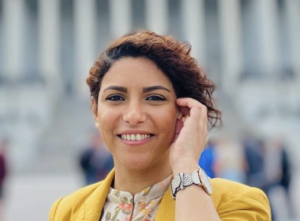
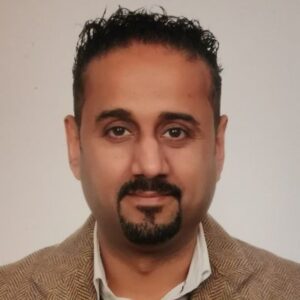 Sayed Yusuf Almuhafdha is a prominent human rights defender, researcher, trainer and expert with 15 years experience in human rights advocacy in Bahrain. He has been awarded several international awards in recognition of his continuous efforts in advocating for justice and freedom of the press in Bahrain. Sayed held leadership positions with the Bahrain Center for Human Rights and Salam for Democracy and Human Rights working on human rights advocacy in Europe. In spring of 2014, Sayed Yusuf went into exile in Germany, following continuous judicial harassment and threats to his life.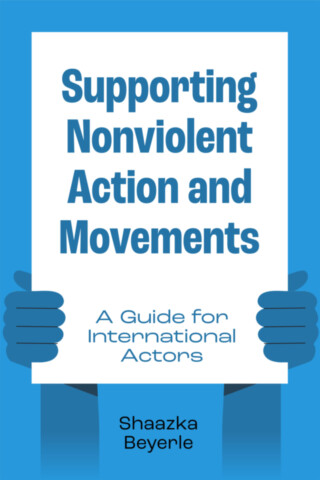
 Shaazka Beyerle is a senior fellow with the Terrorism, Transnational Crime, and Corruption Center, George Mason University. She’s a researcher, writer, and educator in nonviolent action, focusing on anti-corruption, accountability, peacebuilding, gender, and human rights. Her new publication is Supporting Nonviolent Action and Movements: A Guide for International Actors (United States Institute of Peace). She’s also the author of Curtailing Corruption: People Power for Accountability and Justice (Lynne Rienner Publishers); and chapter coauthor on enabling civil society and social movements in Untapped Power: Leveraging Diversity and Inclusion for Conflict and Development (Oxford University Press).
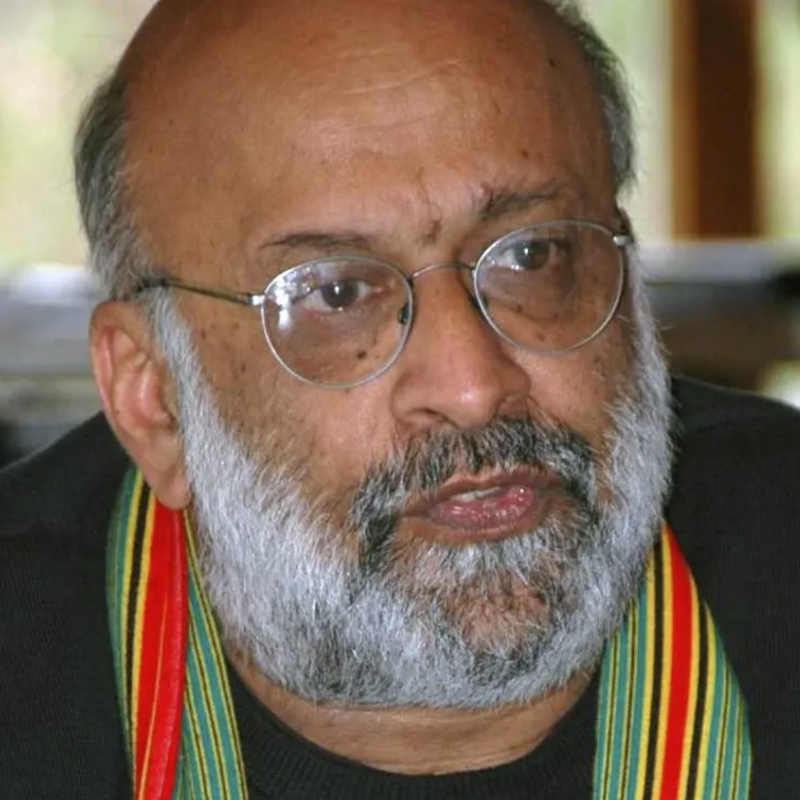 Firoze Manji is a Kenyan with more than 40 years’ experience in international development, health and human rights, founder of Daraja Press,the prize-winning pan African social justice newsletter and website Pambazuka News and Pambazuka Press, founder of Fahamu – Networks for Social Justice (1997-2010), and host of the online interview series Organising in the time of Covid-19. He is Adjunct Professor at the Institute of African Studies and Contract Instructor, Carleton University, Ottawa, Canada; Richard von Weizsäcker Fellow at the Robert Bosch Academy, Berlin; Visiting Fellow at Kellogg College, University of Oxford (2001-2016) and Associate Fellow of the Institute for Policy Studies. He is a member of several editorial and editorial review boards including the Global Critical Caribbean Thought, Nokoko, to name a few.
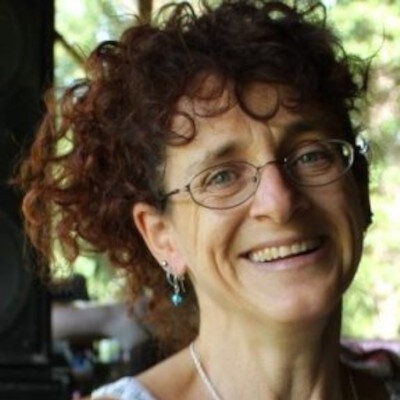 Nadine Bloch is an activist artist, political community organizer, strategic nonviolent actionista and the Training Director for Beautiful Trouble. Her work explores the potent intersection of art and politics, where creative cultural resistance is an effective political action, and a powerful way to reclaim agency over our own lives, fight oppressive systems, and invest in our communities — all while having more fun than the other side! In addition to contributing content to Beautiful Trouble, Beautiful Rising, and We Are Many: Reflections on Movement Strategy from Occupation to Liberation (2012, AK Press), she is the author of Education & Training in Nonviolent Resistance (2016, USIP) and the co-author of SNAP: An Action Guide to Synergizing Nonviolent Action and Peacebuilding (2019, USIP). Find more of her writing on arts and activism at WagingNonviolence.org.
 Amber French is ICNC Senior Editorial Advisor, Managing Editor of the Minds of the Movement blog (est. June 2017) and Project Co-Lead of REACT (Research-in-Action). For the Minds of the Movement blog, she has commissioned 290+ articles by 130+ activist writers, academics, and others around the world. Having launched and managed ICNC Press in its first three years, she edited nine publications written by scholars and activists. Currently based in Paris, France, writes frequently about civil resistance for a variety of French journals; teaches a People Power course at the European School of Social and Political Science in Lille; and is leading the development of an ICNC online course in French (forthcoming 2024/2025). She is originally from New Orleans, Louisiana, USA.
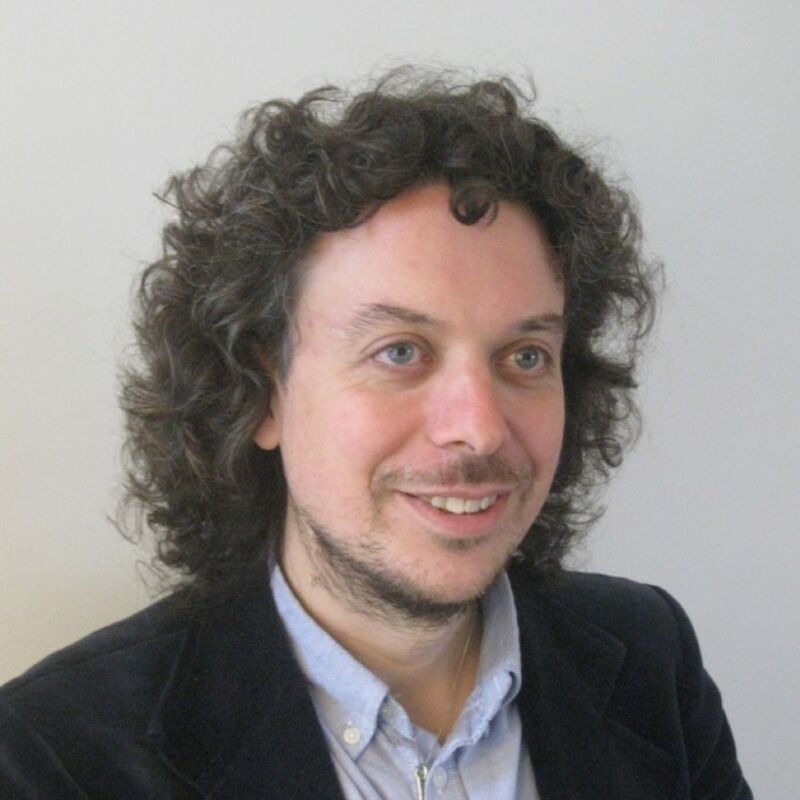 Laurence Cox is a Dublin-based writer, teacher and researcher who has been involved in many different movements since the 1980s. He has edited many activists’ work as co-editor of Interface (https://www.interfacejournal.net/), the activist/academic journal for social movement research. Laurence has written and edited 15 books, ranging from an ebook to support the Zapatista delegation to Europe to an Oxford University Press hardback (The Irish Buddhist: the Forgotten Monk who Faced Down the British Empire). With Sutapa Chattopadhyay, Alberto Arribas Lozano and Ania Szolucha he’s just edited the Handbook of Research Methods and Applications for Social Movements (introduction available for free here: https://www.elgaronline.com/downloadpdf/edcollchap/book/9781803922027/book-part-9781803922027-6.pdf) which emphasizes research from and for movements and experiences from the global South. Laurence is professor of sociology at the National University of Ireland Maynooth and has been writing for ICNC’s blog, Minds of the Movement since January 2020.
 Eric Stoner is a co-founding editor at Waging Nonviolence, a non-profit media platform that covers social movements and activism around the world. Since 2009, it has published original reporting from contributors in more than 90 countries. He also teaches civil resistance at St. Joseph’s University, New York.
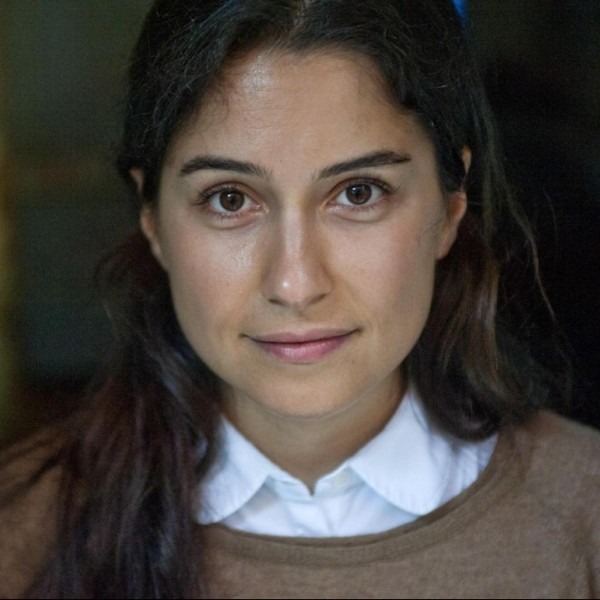 Arzu Geybullayeva is Board Member, South Caucasus and Turkey Editor of Global Voices, which she joined in 2010. An Azerbaijani columnist and writer, she has a special focus in digital authoritarianism and its implications on human rights and press freedom in Azerbaijan. Arzu has written for Al Jazeera, Eurasianet, Foreign Policy Democracy Lab, CODA, Open Democracy, Radio Free Europe, and CNN International. She is a regular contributor at IWPR, Osservatorio Balcani e Caucaso and Global Voices. In 2019, Arzu launched Azerbaijan Internet Watch, a platform that documents, and monitors information controls in Azerbaijan.
 Steward Muhindo Kalyamughuma is an activist with the non-violent, non-partisan citizen movement LUCHA (Lutte pour le Changement), which has been campaigning peacefully for peace, democracy, justice and good governance in the Democratic Republic of Congo since 2012. A lawyer by training, Steward Muhindo is also attached to the Centre de Recherche sur l’Environnement, la Démocratie et les Droits de l’Homme (CREDDHO) as a researcher on human rights and the armed conflicts that have shaken the eastern Democratic Republic of Congo since 1996.
 Abdou Khafor Kandji was born and raised in Diourbel, a region of Senegal located over a hundred kilometers from Dakar. He holds a degree in business and organization management from the Institut Africain de Management (IAM). He became an activist in the Y en a Marre movement in 2012. Since 2014, he has held various positions within the movement, notably in coordination. Since October 2023, he has been pursuing a master’s degree in monitoring and evaluation of projects, programs and policies at the Centre Africain d’Etudes Supérieur en Gestion (Cesag).
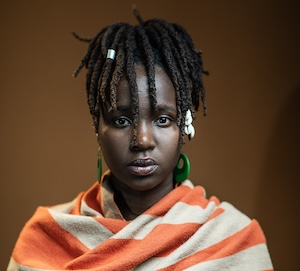 Eliane Feza was born in Goma in the province of Nord-Kivu in the east of the Democratic Republic of the Congo. Trained as a lawyer with a master’s degree in criminal law, Eliane is a slam artist with the Goma slam session collective, and a trainer in slam therapy and slam-feminin. Blogger, women’s and children’s rights activist, environmental activist, public speaking trainer, peacebuilder, humanitarian volunteer with the GOMA ACTIF collective, PRIX RÉGIONAL DES JEUNES INNOVATEURS (2023) of the Great Lakes region and PRIX JEUNES ESPOIRS (2023) of the Democratic Republic of the Congo and its diaspora, awarded to 100 young Congolese who initiate initiatives contributing to the achievement of the 2030 Agenda.
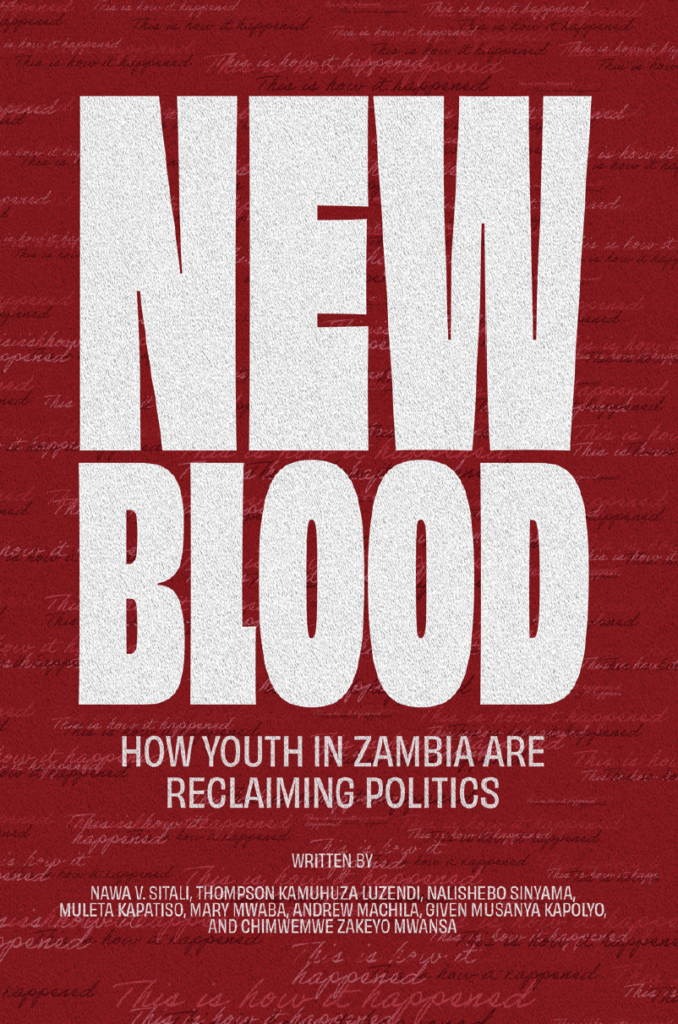
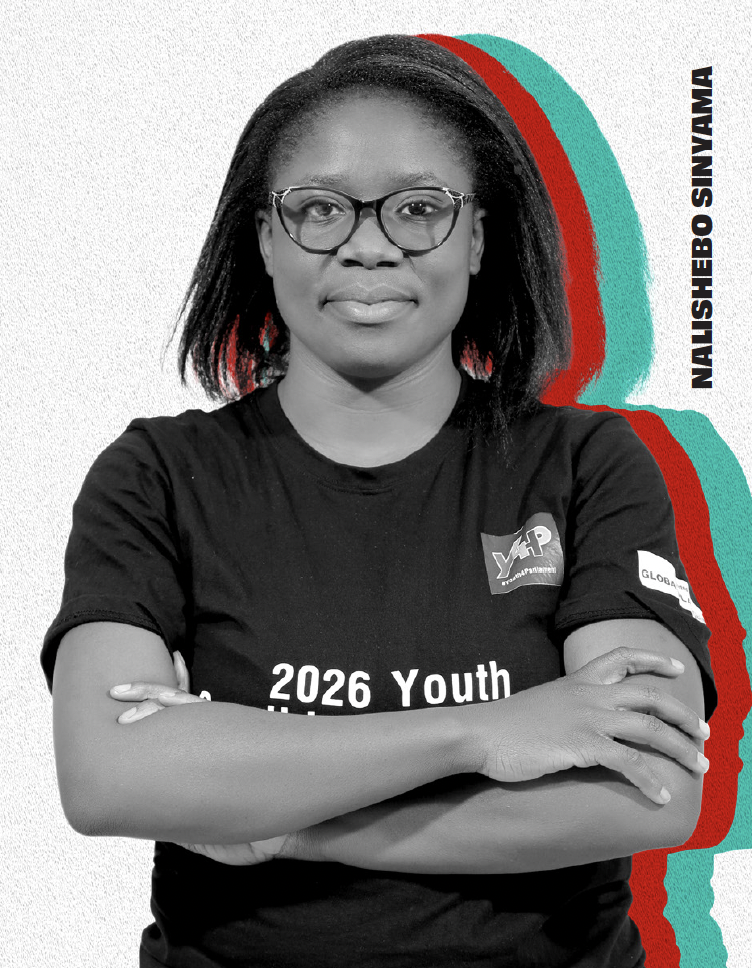 Nalishebo Sinyama is co-author of New Blood and currently serves as the Movement Manager of Youth4Parliament. She is a community organizing specialist, feminist, and young female politician. Nalishebo is the first and youngest woman to be appointed as provincial chairperson in one of the biggest political parties in Zambia. In 2021, Nalishebo was the only female aspirant vying for the Kabwata Constituency parliamentary elections under the opposition political party (the Patriotic Front).
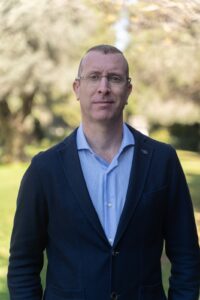 Doron Shultziner received his B.A. from the Political Science Department and the Middle Eastern Studies Department in the Hebrew University (2000), and his M.A. (Summa Cum Laude) from the Political Science Department at the Hebrew University (2004). He received his Ph.D. from the Politics & IR Department at the University of Oxford (2008). Later he worked as a post-doctoral fellow and visiting lecturer at Emory University. He returned to Israel in 2009 and worked as a post-doctoral fellow until 2012. He then became the academic director of an Israeli think tank for Zionist, democratic, and liberal thought. Prof. Shultziner joined the Politics & Communication Department at Hadassah Academic College in 2014.