 ICNC is launching its second edition of a grant program for high school educators from around the world to support development and implementation of the civil resistance education for high school students in fall 2017 and winter/spring 2018.
The application deadline: July 5, 2017.
Before applying, check for more information about the Fellowship by reviewing the following sections:
Fellowship Award
What is Expected from a Fellow
Why to Teach Civil Resistance in High School
Eligibility
Time Frame for Teaching
Language of Instruction
Fellowship Requirement
Required Documentation
Resources in Support of Curriculum Proposal Development
Funds Distribution
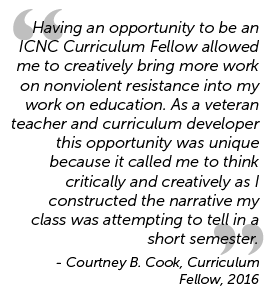
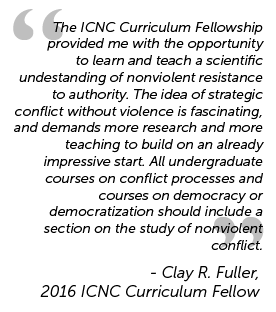
Check also the profiles of our 2016 High School Fellows

The support grant is in the amount of $1,000 each and will be offered for up to 8 motivated educators who will embark on the task of developing and teaching a curriculum on nonviolent civil resistance to high school students in either fall semester of 2017 or winter and spring 2018.
What is Expected from a Fellow
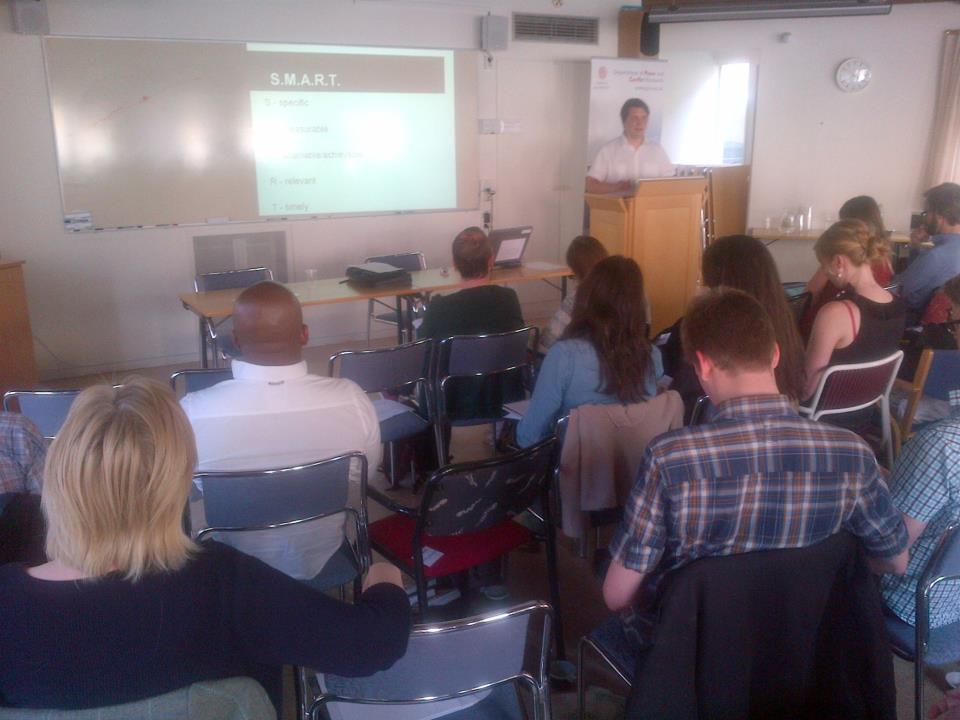
Selected fellows will integrate at least six, 45-minute long curriculum units on civil resistance into one of their existing social science courses or create a self-standing seminar on civil resistance as part of the high school senior/junior curriculum, or will set up an after-school seminar.
Why to Teach Civil Resistance in High School
Civil resistance education is emerging as an important element of the college-level educational experience, with a growing number of courses on civil resistance offered at various universities, including in the areas of conflict, peace and security studies, political science, international relations and sociology. As an interdisciplinary topic, civil resistance intersects various academic disciplines: politics, history, sociology, social-psychology, international relations.
A specialized course on civil resistance for high school students can offer them knowledge and skills that are relevant to future advanced studies in broadly understood social sciences.
At the same time, high school students who may be interested in careers in foreign policy, government, community organizing, or civil society organizations can find a course on civil resistance to be a career-oriented learning opportunity. As nonviolent civil resistance movements increasingly shape international affairs and domestic politics in countries around the world, government and civic actors, as well as journalists, are increasingly likely to encounter this phenomenon in their work. In such cases, knowledge about civil resistance movements can constitute an additional career advantage. Such a course may also enhance the students’ skills and commitment to be active citizens in their communities.
Educators with teaching experience from:
- Public/state high schools
- Charter high schools
- Private high schools
- After or out-of-school programs and enrichment organizations working with high school-aged students
can apply for the ICNC High School Curriculum Fellowship.
Fellows are expected to set up and teach the course either in Fall and Winter 2017 or Spring 2018 for a minimum of 6 weeks.
Language of Reporting and Instruction
- Application documents (e.g. application for, syllabus proposal, CV) must be in English
- Reporting to ICNC (two reports with requested documentation will be due at the beginning and end of the course) must be done in English regardless of the language of instruction
- Non-English languages of instruction can be considered provided there are enough translated readings on civil resistance in a specific language; or if a fellow takes it upon him/herself to translate relevant English-language texts
Required Teaching Load
- Fellows have to develop and teach a curriculum on civil resistance. The curriculum should consist of a minimum of 6 class units, each at least 45 minutes long, that will be distributed over a minimum of 6 weeks (not longer than 12 weeks) to give students ample time to reflect on the material, review assigned readings, participate meaningfully in classroom discussions and be able to complete written or oral homework. (see also Class Type)
Acceptable Student Grade Level
The class will be open to:
- high school seniors (final year of high school; 17-18 years old),
- high school juniors (two years prior to high school graduation; 16-17 years old) and, possibly,
- high school sophomores (three years prior to high school graduation; 15-16 years old), provided that seats are not filled by seniors or juniors that must be given preference in enrollment.
Required Enrollment Numbers
- A minimum of 15 students will need to enroll and attend the class. Preference must be given to high school seniors and juniors though, if seats remain available, the class can be opened to interested high school sophomores
Possible Class Type
- integrated curriculum units: a minimum of six, 45-minute long units on civil resistance over a minimum of a 6 week period that are integrated into an existing social science course (e.g., Politics, Civics, Sociology, History, Geography)
or
- a self-standing mandatory or elective course on civil resistance with a minimum of six, 45-minute long units on civil resistance, distributed over a minimum of 6 weeks
or
- a seminar on civil resistance organized as part of a social science club, after school, or enrichment program or study club: a minimum of six, 45-minute long, units on civil resistance, distributed over a minimum of 6 weeks
I. Completed online application with applicant’s CV included
II. Curriculum/syllabus proposal on civil resistance that at a minimum includes the following topics with relevant readings and class assignments:
- Defining civil resistance and movements: What are they and what are they not? (with a possible focus on misconceptions about civil resistance)
- Civil resistance in history: historical cases of nonviolent civil resistance movements and campaigns, which may include international, national, or sub-national examples. Examination of the origin and emergence, conduct, impact and aftermath of these movements and campaigns
- The record and effectiveness of civil resistance movements: What have they achieved, and what is their historic success rate?
- Strategies and tactics of civil resistance campaigns
Additional possible topics include:
- Playing the computer-based game People Power throughout the duration of the course as part of the student home assignment. See the instructions on how to integrate the game into the course.
- Examining the dynamics of civil resistance including but not limited to how populations unify, mobilize, resist repression and cause it to backfire, engage in public communications, gain defections from their opponents, choose tactics and strategies.
In the proposed curriculum/syllabus:
- Specify at least 6 weekly session topics/titles
- Provide descriptions for each of the topics (in addition, you might include questions that will be explored/discussed for each topic session)
- List relevant readings (on average 15-20 pages of reading per week) for each session and any assignments and classwork that will be expected for a specific session or sessions as well as any midterm or final assignments
- Include a sample of the course assignments relevant to the subject of civil resistance that students will be required to complete during the course and the information on how these assignments will be evaluated/assessed. Possible final essay could assess a civil resistance campaign along the lines of “How ‘powerless’ youth and others helped organize ‘people power’ toward change in a public, institutional, or corporate policy”
- Utilize the resources listed below in developing your syllabus/curriculum proposal
Resources in Support of Curriculum Proposal Development
In developing the curriculum proposal on civil resistance applicants are encouraged to review the following resources:
- ICNC Conflict Summaries on Civil Resistance
- ICNC Educational Resources
- ICNC Academic Online Curriculum (that provides a comprehensive list of topics in civil resistance studies, reading lists, videos, teaching aid and syllabi samples and other useful resources)
- Recorded ICNC Webinars (where appropriate, consider integrating selected webinars into the syllabus as part of the student assignments)
- People Power: The Game of Civil Resistance
- Swarthmore Global Nonviolent Action Database
- Nonviolent Conflict News (for current events)
Documentaries
- A Force More Powerful, 2000
- Bringing Down a Dictator, 2001
- The Singing Revolution, 2006
- Orange Revolution, 2007
Selected chapters from the following books can be considered for reading assignments for the senior and junior high schoolers:
- Peter Ackerman and Jack DuVall, A Force More Powerful: A Century of Nonviolent Conflict (New York: Macmillan, 2000)
- Maciej Bartkowski, ed. Recovering Nonviolent History. Civil Resistance in Liberation Struggles (Boulder, CO: Lynne Rienner Publishers, 2013)
- Shaazka Beyerle, Curtailing Corruption. People Power for Accountability and Justice (Boulder, CO: Lynne Rienner Publishers, 2014)
- Kurt Schock, Civil Resistance Today, (Cambridge: Polity Press, 2015)
More advanced core reading on civil resistance includes:
- Erica Chenoweth and Maria Stephan, Why Civil Resistance Works. The Strategic Logic of Nonviolent Conflict (New York: Columbia University Press, 2011)
Additional resources
- Selected Bibliography on Civil Resistance (March 2016): for readings more accessible for high school students check: Online publications, blogs, media articles & studies
- A Diplomat’s Handbook for Democracy Development Support
As part of the grant award, fellows will also be expected to prepare, among others:
- learning gains instrument(s) prior to the start of the course to be used to monitor and assess progress in students’ learning about civil resistance. Review the learning gains templates that will need to be customized depending on the developed course content on civil resistance:
- Template of a pre-seminar learning gains survey (distributed prior to the start of the course)
- Template of a post-seminar learning gains survey (distributed at the end of the course)
- Learning gains survey and results submitted by one of the High School Fellows.
- final course evaluation with students’ feedback on the course content on civil resistance. Review a template of a final course evaluation that will need to be customized according to the course content developed as part of the accepted curriculum proposal
- final report to be submitted to ICNC after the course ends on the delivered content, including any innovative teaching tools used, students’ learning gains (how they were measured and what the results were), results of students’ final evaluation, and student feedback on the game or other relevant course exercises, and general lessons learnt
The funds for the Fellowship will be disbursed in two equal installments:
- at the beginning of the course, after the submission of the updated syllabus and the confirmation of the enrollment numbers and list of students
- at the end of the course after the submission of the final report and evaluation results

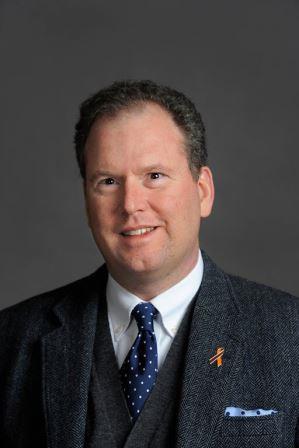
 Michael Beer serves as the Director of Nonviolence International, an innovative and respected Washington DC based nonprofit promoting nonviolent approaches to international conflicts. Since 1991 he has worked with NVI to serve marginalized people who seek to use nonviolent tactics often in difficult and dangerous environments. This includes diaspora activists, multinational coalitions, global social movements, as well as within countries including: Myanmar, Tibet, Indonesia, Russia, Thailand, Palestine, Cambodia, East Timor, Iran, India, Kosovo, Zimbabwe, Sudan, and the United States. Michael Beer has a special expertise in supporting movements against dictators and in support of global organizing for justice, environment, and peace. Michael co-parents two teenagers with his patient life partner, Latanja.




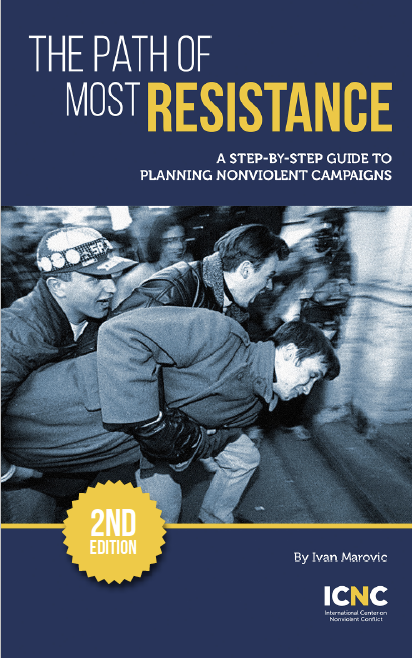
 Ivan Marovic was one of the leaders of Otpor, the student resistance movement that played an important role in the downfall of Slobodan Milosevic in Serbia.

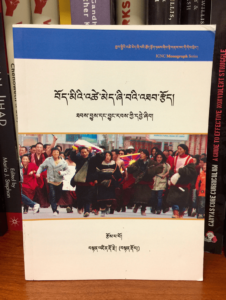
 Abstract: New research has recently raised the profile of nonviolent civil resistance as a major and particularly effective form of political struggle. Yet the dynamics of nonviolent movements for change in repressive non-democracies remain poorly-understood. In particular, little empirical research has addressed the crucial question of nonviolent discipline; how the leaders of nonviolent movements maintain their followers’ adherence to nonviolent practice, an aspect of civil resistance often argued to be crucial in explaining its success. In this monograph I use new event-level data from the Nonviolent and Violent Campaigns and Outcomes (NAVCO) 3.0 dataset as well as comparative case studies to answer crucial questions about the aspects of movement tactics, strategy, and organization, as well as the broader political and social environment, which facilitate or undermine nonviolent discipline. The findings of this study will increase scholarly knowledge of the dynamics of civil resistance, as well as providing important insights for activists, civic educators, and policymakers.

 By Juan Masullo J., Department of Political and Social Sciences at the European University Institute (EUI)

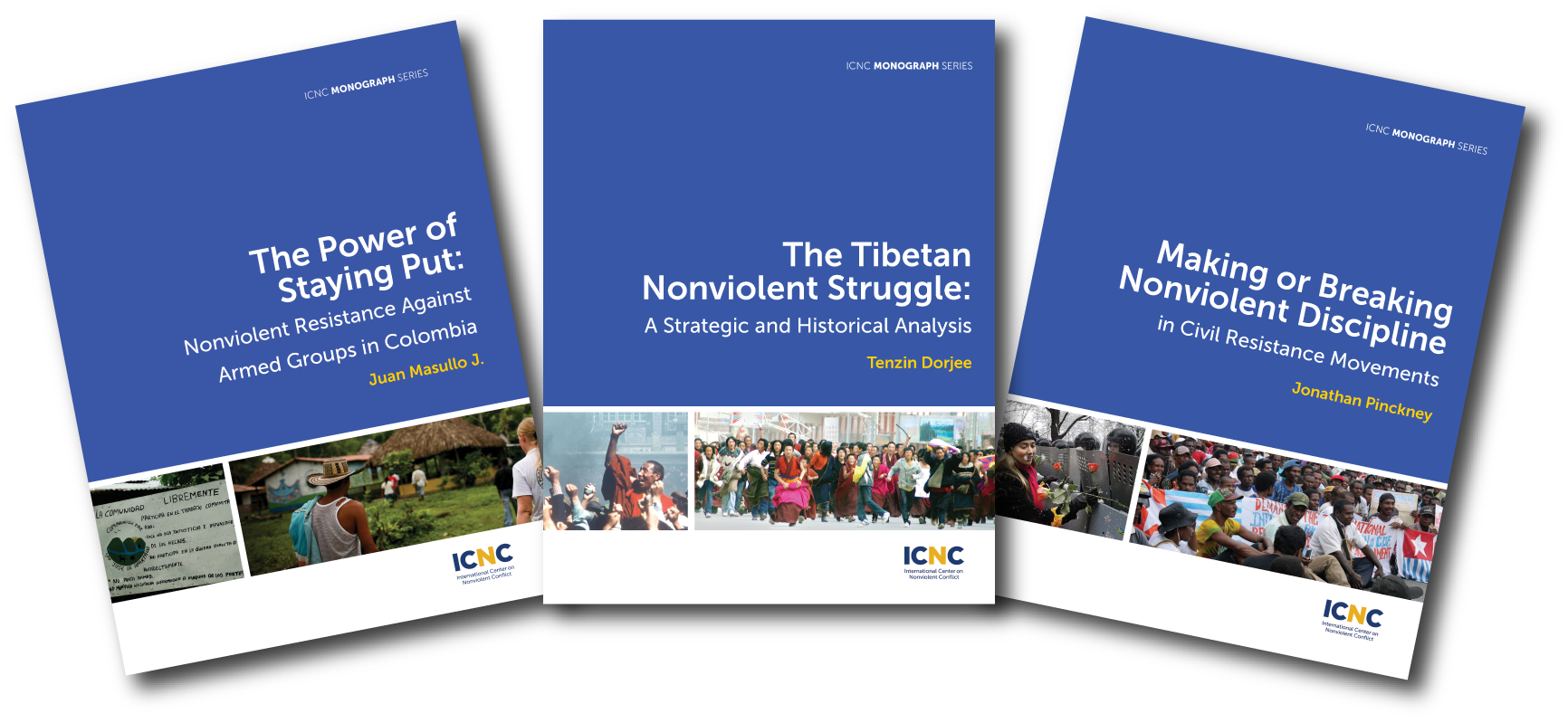

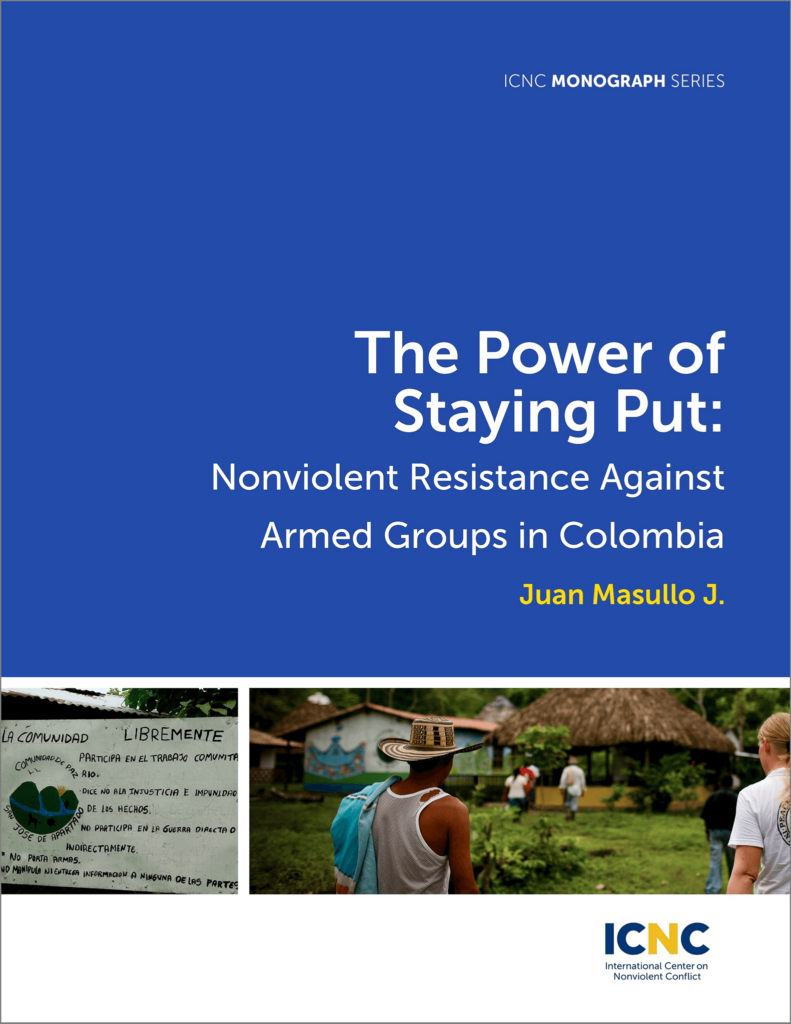
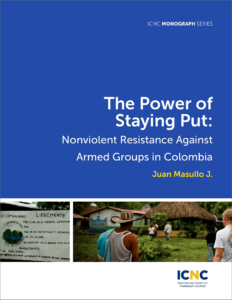 Confronted with civil war, local civilians typically either collaborate with the strongest actor in town or flee the area. Yet civilians are not stuck with only these choices. Collectively defying armed groups by engaging in organized nonviolent forms of noncooperation, self-organization and disruption is another option. This monograph explores this alternative through sustained and organized civil resistance led by ordinary peasants against state and non-state repressive actors in Colombia’s longstanding civil war: the case of the Peace Community of San José de Apartadó.







 This seminar aims to facilitate learning and teaching on basic themes in civil resistance studies. This course provides a foundation knowledge on civil resistance, including its history and commonly employed strategies. It discusses topics such as Pakistan’s nonviolent history, Abdul Ghaffar Khan, nonviolent strategies against violent extremism, and the role of Islam and civil resistance. The course examines challenges and opportunities for nonviolent mobilization and campaigns, drawing on lessons from the region. Finally, the course discusses how to teach and train young people in the field of civil resistance.
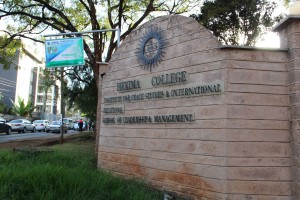 This seminar aims to provide a general introduction to civil resistance, examining its history and common misconceptions. It discusses movement formation as well as effective strategies and tactics commonly used in nonviolent campaigns. Other topics include mobilization, repression & backfire, and the roles of women and external actors. A session in the program also included case studies while looking into contemporary nonviolent campaigns in West Africa and the challenges, opportunism, and impact associated with them.
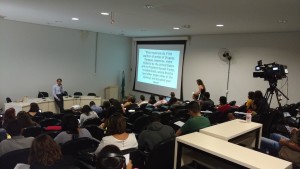 This is a multidisciplinary seminar designed to facilitate learning on the part of participants. The goal of the course is to offer an introduction to the field of civil resistance studies and analyze the driving ideas behind it, discussing various case studies, tactics, and research materials.
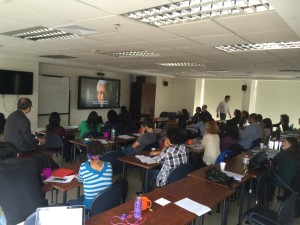 This course provides general introduction to the field of civil resistance, explore different understandings of political power in society with regard to the practice of organized, mass-based civil resistance and discuss why civil resistance can be an effective force for bringing about a significant political change.
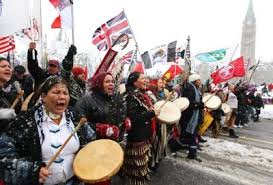

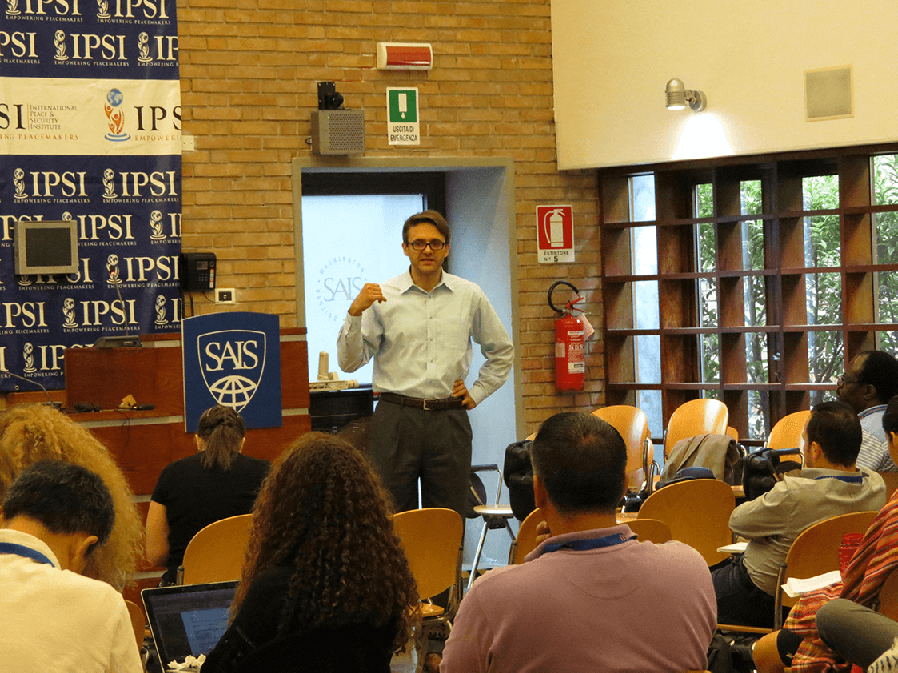

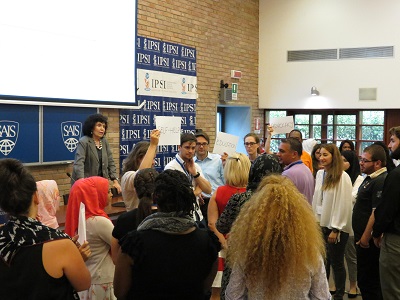

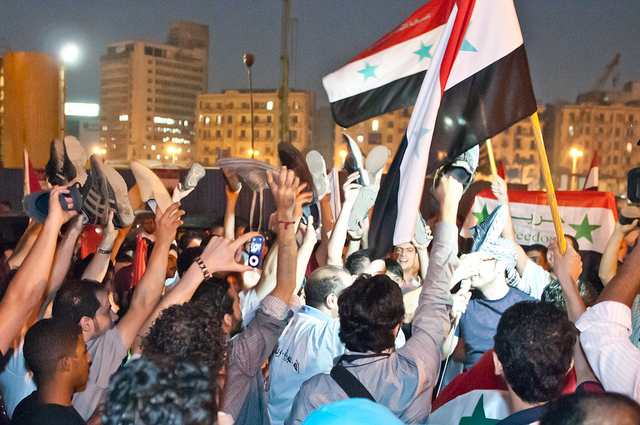
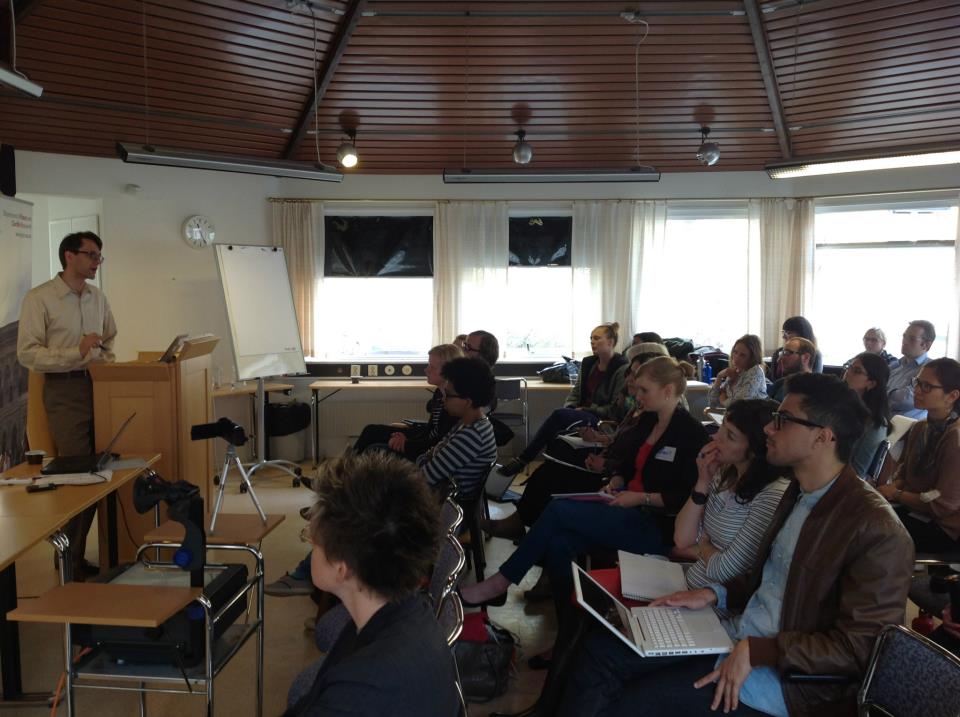
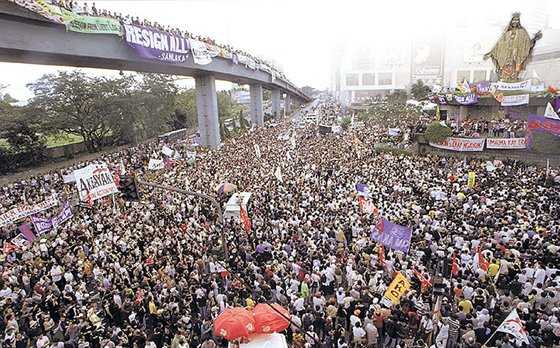
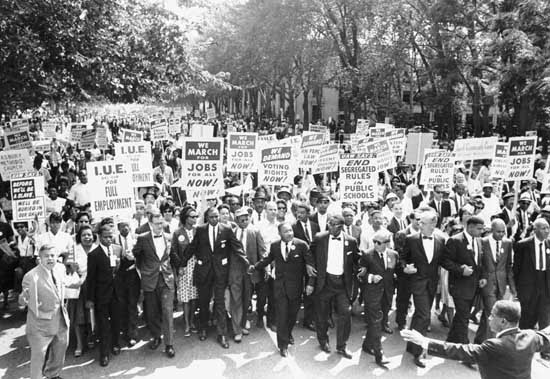
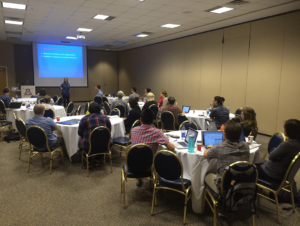 This participatory short course was designed to provide a multi-disciplinary perspective on nonviolent, civilian-based movements and campaigns that defend and obtain basic rights and justice around the world – from Zimbabwe to West Papua, Mexico to China, and throughout the Middle East-North Africa region. Historically, political change in countries that curtail freedom and ignore international human rights norms has been difficult to achieve. Violent revolution or the use of armed force by external actors is typically seen as the primary means of overcoming oppression. Yet people power, relying on a variety of methods of nonviolent action, has been used for this purpose for well over a century in different parts of the world, by different peoples and societies, in different cultures and political systems, and with some impressive results as well as some apparent failures. Furthermore, countries that experience bottom-up, civilian-based resistance are known to have a better track record of successful democratic transitions than the states that initiated their systemic transformation after a protracted civil war, or due to top-down, elite-to-elite negotiations or external military interventions.
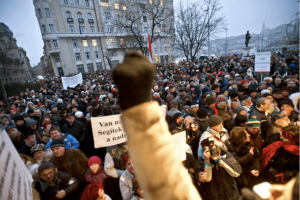 This course was designed to provide an in-depth and multi-disciplinary perspective on civilian-based movements and campaigns that defend and obtain basic rights and justice around the world – from Egypt to Russia, from Zimbabwe to West Papua. Civil resistance, relying on a variety of methods of nonviolent action, has been used for this purpose for well over a century in different parts of the world, by different peoples and societies, in different cultures and political systems, and with impressive results as well as some apparent failures.
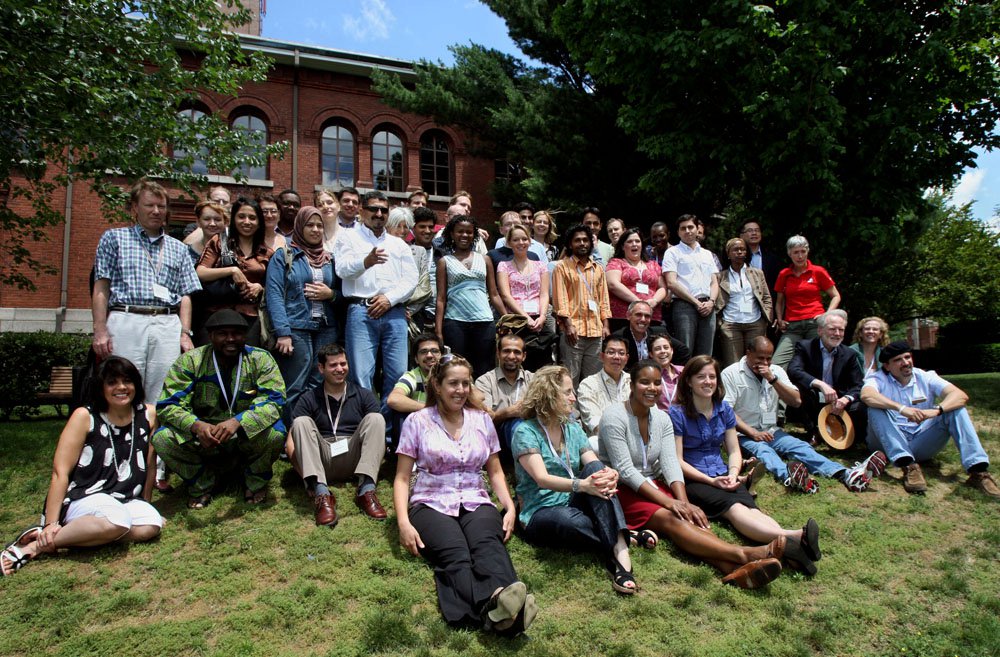

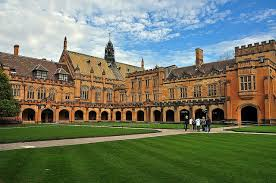
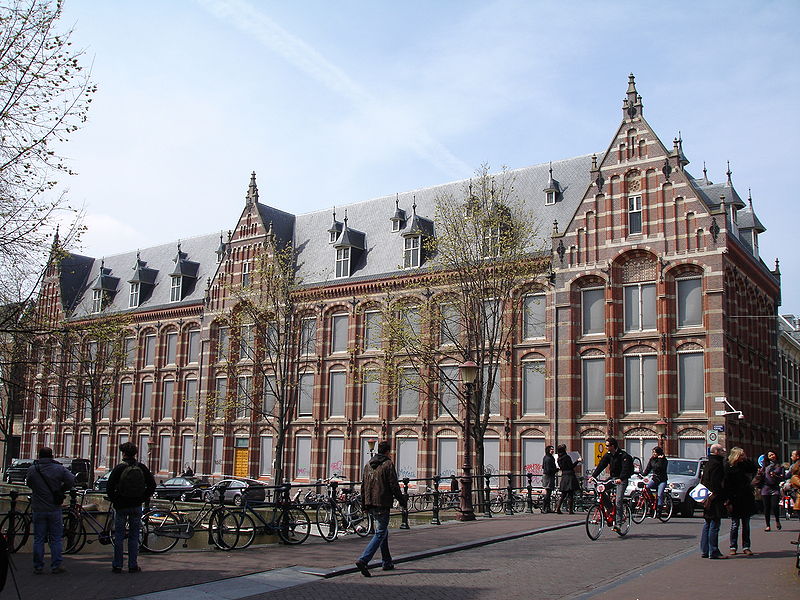
 This ICNC course addressed the void of academic study on civil resistance as a tool for ordinary people to achieve basic rights and justice, despite a long history of the practice of civil resistance and strategic nonviolent conflict that goes back at least to the eighteenth century. The course covered numerous topics that contribute to the practice and strategy of nonviolent conflict including third part actors, security defections, social media, and democratic transition.